PM denies lobbying GCC to delay General Election
Chaudhry alleges Rabuka privately sought support while publicly committing to the election timeframe.
Friday 11 September 2026 | 08:00
Updated 11 September 2026 | 09:40 FJT

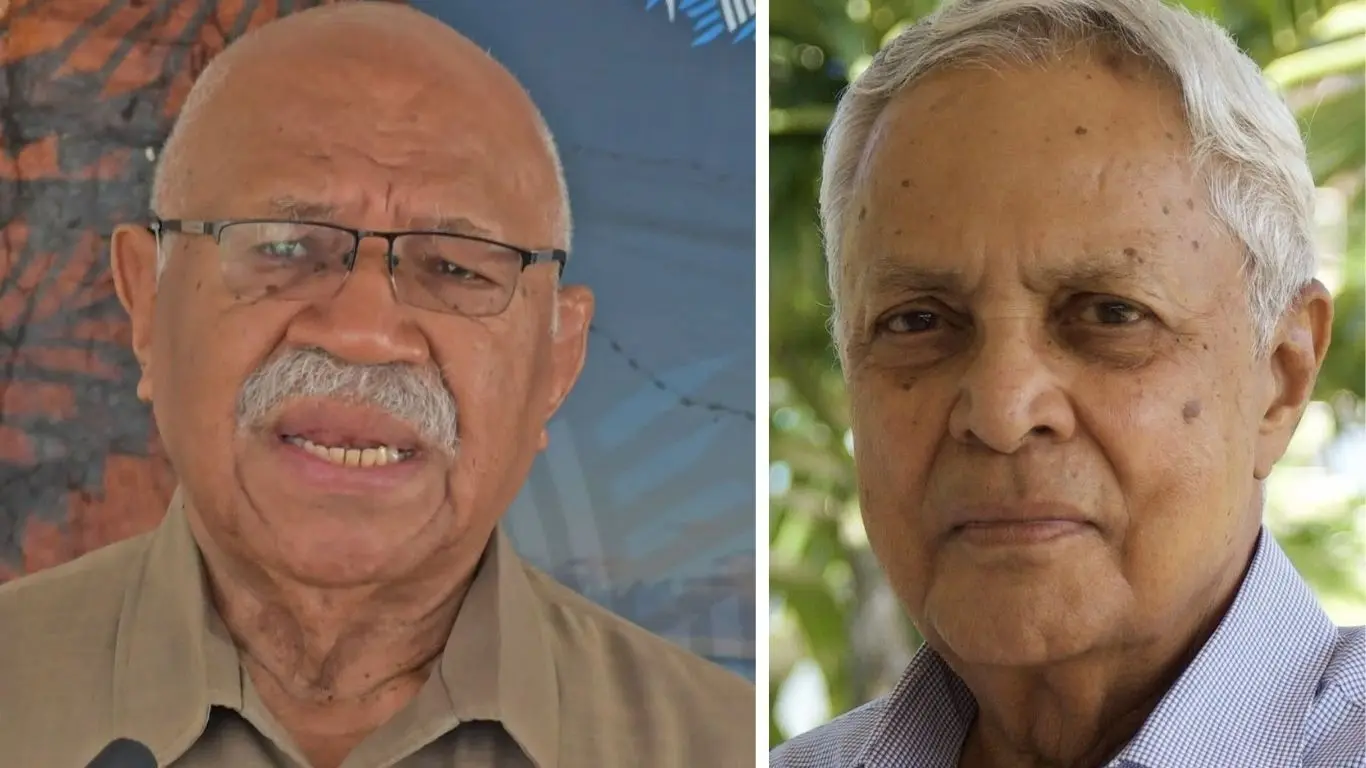
Prime Minister Sitiveni Rabuka (left) and Fiji Labour Party leader Mahendra Chaudhry.
Prime Minister Sitiveni Rabuka has rejected claims by former Prime Minister Mahendra Chaudhry that he lobbied the Great Council of Chiefs (GCC) to postpone the coming General Election and extend his term in office.
“The claim is not true,” Mr Rabuka told this masthead yesterday. “The PM doesn’t lobby the BLV (Bose Levu Vakaturaga), let alone, as alleged.”
He said the constitutional pathway to the GCC was through the Minister for iTaukei Affairs, Ifereimi Vasu, not the Prime Minister.
Related stories
“I understand and respect the role of the BLV as apolitical,” he said.
Mr Chaudhry, leader of the Fiji Labour Party, made the claim yesterday, alleging Mr Rabuka lobbied the GCC “on the quiet” while publicly promising to honour the election timeframe.
He accused Mr Rabuka of rushing constitutional changes through Parliament without public debate.
GCC chairman Ratu Viliame Seruvakula told this masthead he had not heard of Mr Chaudhry’s comments when contacted yesterday, and was not aware of the allegations raised by Mr Chaudhry.
Attempts to reach Minister Vasu were unsuccessful.
Election timeline
There is no way around the election date. Under the Constitution, the General Election must be held between August 7, 2026, and the absolute latest date, February 6, 2027.
The Writ of Election must be issued by President Ratu Naiqama Lalabalavu no later than December 24, which will formally close voter registration and political party registration.
The only exception is force majeure.
Under Section 47(1) of the Electoral Act 2014, polling may not commence or may be adjourned at one or more stations due to events such as storms, floods, riots or loss of electricity.
Section 47(5) allows the Electoral Commission to adjourn polling across an entire region, while Section 47(7) allows the Supervisor to adjourn the whole election if too many stations are affected, with a new date gazetted and published nationally under Section 47(8).
Section 41(5) also bars changes to polling venues once published, except under force majeure.
Mr Chaudhry’s claim follows months of work by the Constitutional Review Commission, which handed its final report and Draft Constitution to the President on August 28.
Mr Rabuka tabled it in Cabinet this week, with Bills expected before Parliament from September 28.