Children with Type 1 diabetes need more support, says Diabetes Fiji
Families continue to face the cost of insulin syringes, despite Government providing insulin medication through the public health system.
Monday 19 October 2026 | 15:30
Updated 19 October 2026 | 18:26 FJT
A parent caring for a child with Type 1 diabetes should not have to worry about whether the family can afford the syringe needed to administer tomorrow’s insulin.
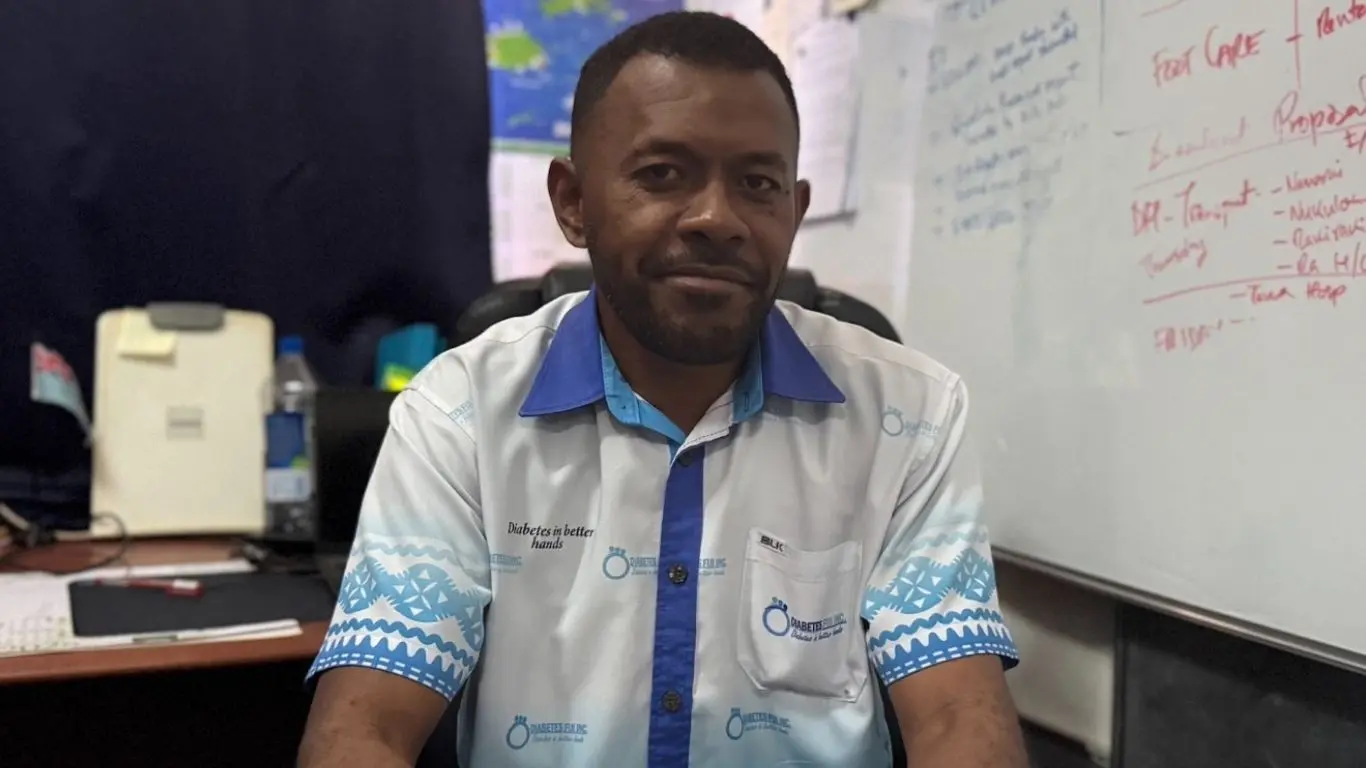
That is the concern raised by Diabetes Fiji Incorporation executive director Kini Marawa, who is calling for greater support for children and young people living with Type 1 diabetes.
While acknowledging the Government and the Ministry of Health and Medical Services for their efforts to address Fiji’s growing health challenges, Mr Marawa said children who depended on daily insulin also needed urgent attention.
Related stories
“For many children living with Type 1 diabetes, insulin is life itself,” he said.
Mr Marawa said insulin was not optional, a lifestyle preference or a treatment that could simply be stopped when household finances became strained.
He said families continued to face the recurring cost of insulin syringes, which were essential for administering the medication.
“We acknowledge with gratitude that Government continues to provide insulin medication through the public health system,” he said.
“However, when a medicine is supplied without consistent access to the essential device required to administer that medicine, the continuum of treatment remains incomplete.
“A parent caring for a child with Type 1 diabetes should not have to calculate whether the household can afford tomorrow’s syringe.
“A young person should not have to ration an essential medical consumable.
“And no family should be pushed towards financial hardship simply because their child requires insulin several times every day.”
Diabetes Fiji currently supports 98 active members through its Young Diabetes Fiji Programme across the Central, Western and Northern divisions.
Programme records from 2020 to 2023 had previously included about 500 children and young people, from infancy to young adulthood.
Mr Marawa said the challenges faced by these families raised questions about whether the same urgency shown in responding to other national health emergencies could be extended to people who relied on essential diabetes supplies every day.
Following the Government’s declaration of HIV as a national crisis on September 16, 2026, a strengthened response was announced, including expanded prevention, testing and treatment, alongside a needle and syringe programme as a public-health harm-reduction intervention.
Diabetes Fiji said it supported appropriate, evidence-based public-health interventions that protected life and human dignity.
However, Mr Marawa said the response also highlighted the need to ensure that children and other vulnerable Fijians who depended on insulin received the support required to manage their condition.
“If our country has the capacity to mobilise resources, commodities and policy reforms to address one national health emergency, can we demonstrate the same urgency for children and other vulnerable Fijians who depend upon insulin every single day to stay alive,” he said.
“Insulin is life, but insulin without access to its delivery device is an incomplete response.”