HIV advocate calls for stronger support for women living with HIV
Rebecca Kubunavanua says Fiji’s efforts to eliminate mother-to-child transmission of HIV must ensure mothers are supported alongside their babies.
Thursday 20 August 2026 | 06:30
Updated 20 August 2026 | 07:54 FJT

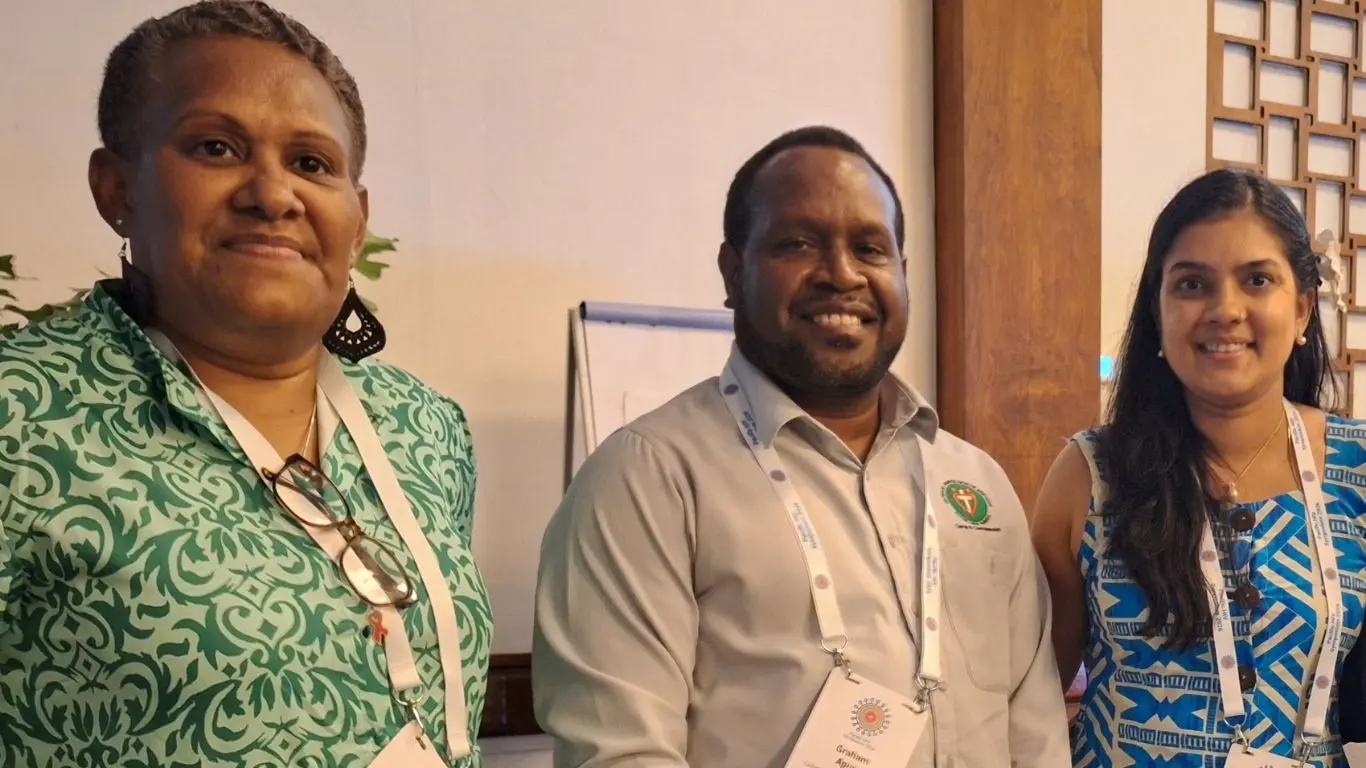
From left: Feminist and HIV advocate Rebecca Kubunavanua, Graham Apian and Fiji Ministry of Health and Medical Service's Priya Kaur.
Photo: Waisea Nasokia
Women living with HIV must be treated with dignity, respect and compassion as Fiji works towards eliminating mother-to-child transmission of HIV, says feminist and HIV advocate Rebecca Kubunavanua.
Speaking at the Pacific HIV Symposium in Nadi on Wednesday, Ms Kubunavanua, a mother and grandmother living with HIV who also works as a counsellor with the Ministry of Health’s HIV unit, said the focus on eliminating vertical transmission must extend beyond protecting the baby to caring for the mother.
“When we talk about elimination of vertical transmission, we often talk about the virus, the infant, the test results, the viral load and the treatment,” Ms Kubunavanua said.
Related stories
“But sometimes in all of that clinical language, we forget the woman who is at the centre of it all.”
Ms Kubunavanua said Fiji had the medical tools to significantly reduce the risk of vertical transmission, including early diagnosis, effective antiretroviral therapy, linkage to care and sustained viral suppression. However, she said treatment alone was not enough.
Women diagnosed with HIV during pregnancy could face fear, stigma, disclosure concerns, relationship difficulties, financial pressures and transport challenges, all of which could affect their ability to remain connected to care.
“What looks like poor adherence from the outside is actually a woman struggling with circumstances that we cannot see,” she said.
Ms Kubunavanua said success should not be measured only by an HIV-negative baby, but by ensuring both mother and child remained healthy and supported.
She called for stronger peer-support systems to help women navigate health services, understand treatment and overcome fears and stigma.
“Sometimes the barrier is not the medication. Sometimes the barrier is everything that surrounds the medication,” she said.
She urged health workers to understand the reasons behind missed appointments rather than simply labelling women as non-adherent.
Ms Kubunavanua identified confidentiality, peer support, continuity of care and greater involvement of women living with HIV in policy and programme development as key areas for strengthening Fiji’s response.
“If we are designing services for women living with HIV, women living with HIV must be part of designing those services,” she said.
“When the mother is supported, the child benefits. When the mother is respected, the whole family benefits.”