Labasa taxi operators say fare rollback will worsen financial struggles
Labasa association cites rising repair, fuel and operating costs and competition from illegal taxis.
Friday 14 August 2026 | 15:30

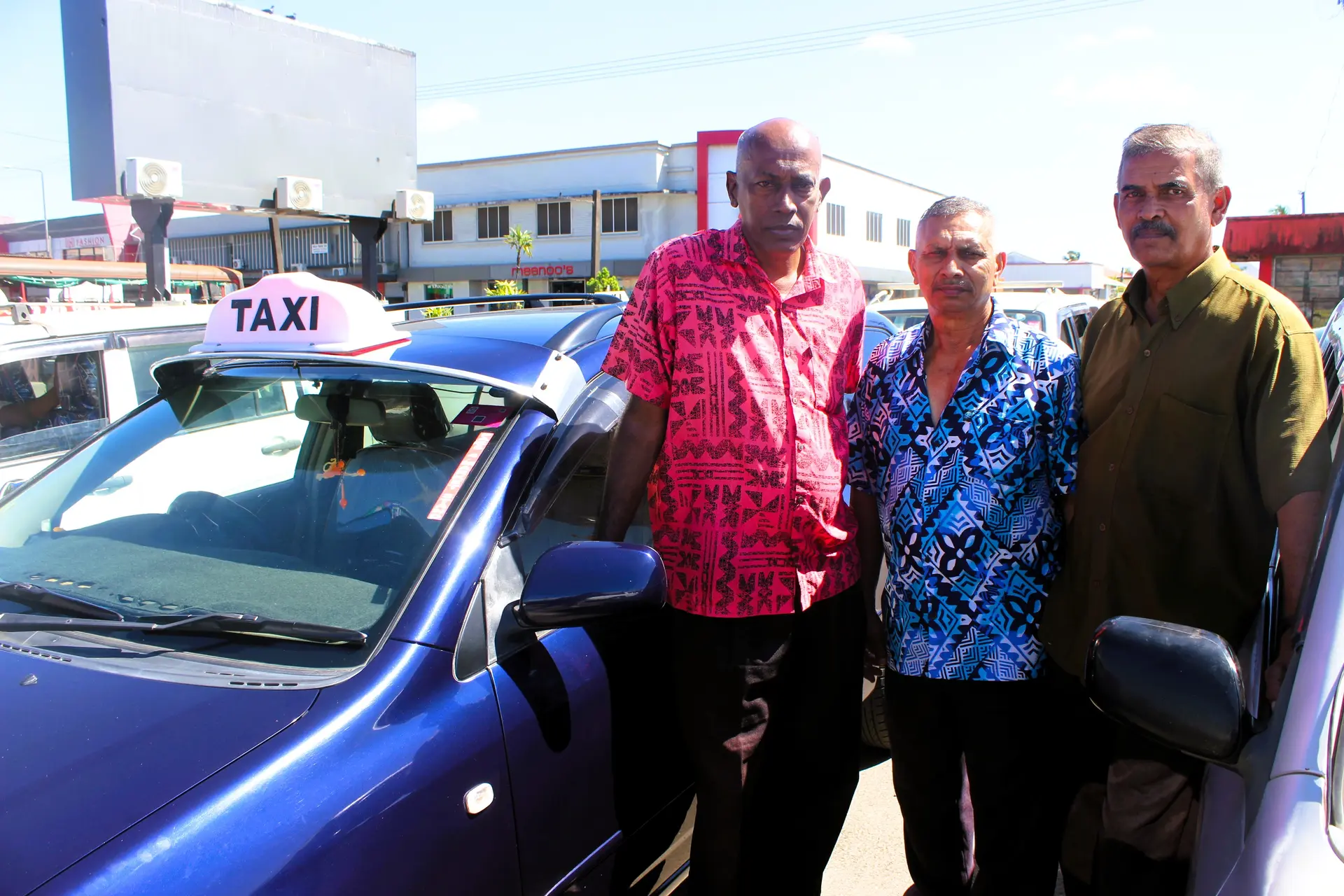
Far right, in green shirt) Labasa Taxi Association general secretary Sujit Sharma with association members in Labasa Town on August 14, 2026.
Photo: Sampras Anand
Labasa taxi operators are opposing the return to lower fares from September 1.
Labasa Taxi Association general secretary Sujit Sharma says taxi operators are struggling to make ends meet financially because of high operating costs and illegal pirate taxis.
Mr Sharma made the comments after expressing disappointment with the Fijian Competition and Consumer Council’s (FCCC) decision to revert taxi fares to their previous rates.
Related stories
The decision means a reduction of four cents per 100 metres of travel, from 14 cents to 10 cents, effective September 1.
He said while he understood the Government had acted in good faith by temporarily increasing taxi fares for three months to address high fuel prices, the industry had requested that the increase be continued.
“The cost of living as well as the wear and tear of taxis is too much which leads to low income earned,” he said.
The four-cent increase helped operators meet their operating costs and earn a better income each week.
Mr Sharma said taxi operators had waited 15 years for the industry to finally receive a fare increase and urged the Government to maintain the current fares.
“The temporary fare was good for us and we were able to cater for expenses and earn a decent income, we want FCCC to reconsider their decision,” he emphasised.
The high cost of vehicle tyres and spare parts, along with uncertainty over fuel prices, continues to pose challenges for the industry.
Mr Sharma said “poverty” had affected the industry, with expenses outweighing income as many drivers spent more on vehicle repairs than they earned from servicing customers.
Poor and deteriorating road infrastructure in Vanua Levu also continues to increase vehicle repair costs.
Taxi meter calibration costs each operator around $100, and operators have to bear the additional cost every time recalibration is required.
Mr Sharma reiterated that private vehicles operating as illegal taxis, or paris, had affected the growth of legitimate taxi businesses.
“We have raised so many complaints with the relevant authorities yet paris remain operational without fear.”
The national body, Fiji Taxi Association (FTA), has also expressed its opposition to plans to revise taxi fares.
“The industry is undergoing its toughest phase with spike in illegal taxis, drug peddling, high operational cost, traffic congestion all impacting the taxi business,” he added.