Drought drives up vegetable prices in Nadi
Market vendors say farmers are charging up to $20 more as dry conditions slash harvests.
Tuesday 10 November 2026 | 14:00

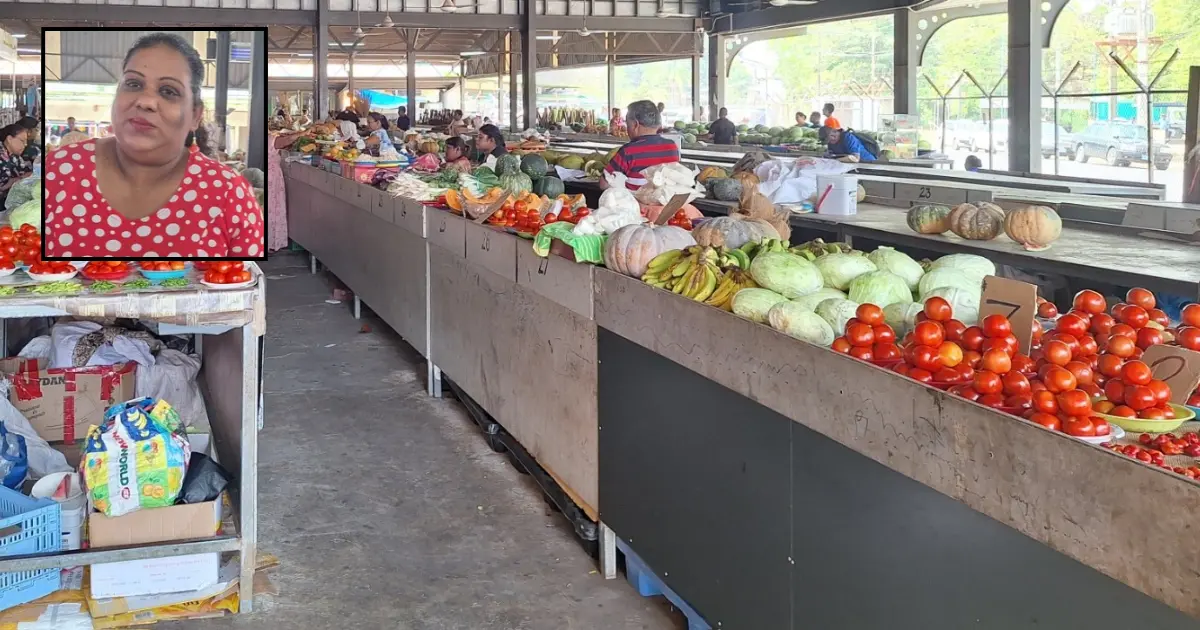
Nadi Market vendors say rising vegetable costs, driven by the prolonged dry spell, are putting pressure on their businesses and livelihoods. INSET: Nadi Market vendor Monisha Prasad
Photo: Katherine Naidu
Market vendors in Nadi say the prices they pay farmers for vegetables have increased by $10 to $20, with some produce doubling in price as the prolonged dry spell affects harvests.
The rising costs are putting pressure on vendors, who face a difficult choice: increase their selling prices and risk losing customers, or absorb the extra expense and put their livelihoods under pressure.
For Nadi Market vendor Monisha Prasad, 34, of Korovuto, the rising cost of sourcing vegetables has become a major challenge.
Related stories
Ms Prasad, who has been selling vegetables for three years, said farmers had increased their prices because drought conditions had affected their harvests.
“This dry season has been devastating. There has been very little rainfall, and water shortages have made things even more difficult,” she said.
“Because of the drought, farmers are struggling with their harvests, making it harder for us to source vegetables. I mostly buy from farmers in the valley, but their production has also been affected by the dry conditions.”
“Farmers have increased the prices of their produce because of the difficulties they are facing, and we have no choice but to buy at those prices. However, we cannot increase our selling prices by too much because customers will not be able to afford them. If we make the vegetables too expensive, people will simply choose not to buy.”
Another vendor, Shalvina Lata, 43, of Navo, Nadi, said the quality and availability of vegetables had declined during her 10 years in the business.
Ms Lata, who sources vegetables from Sigatoka farmers, said unpredictable weather conditions, including drought, water shortages and heavy rainfall, continued to disrupt agricultural production.
“This dry season has also brought low water pressure, making things even more difficult when access to basic necessities such as water becomes a challenge,” she said.
She said vendors were also struggling with increased purchasing costs.
“We cannot blame the farmers for increasing their prices because their harvests are also affected. We are also struggling to keep our businesses going.”
“We have to slightly increase our selling prices to cover the higher costs or reduce the quantity of vegetables we sell. There is also competition in the market, so we have to strike a balance between covering our costs and keeping our prices affordable for customers,” she said.