El Niño water shortages trigger assistance at 69 locations
The equipment would screen the material before water was added and the processed slurry pumped through flexible hoses to the main processing plant.
Wednesday 11 November 2026 | 09:00

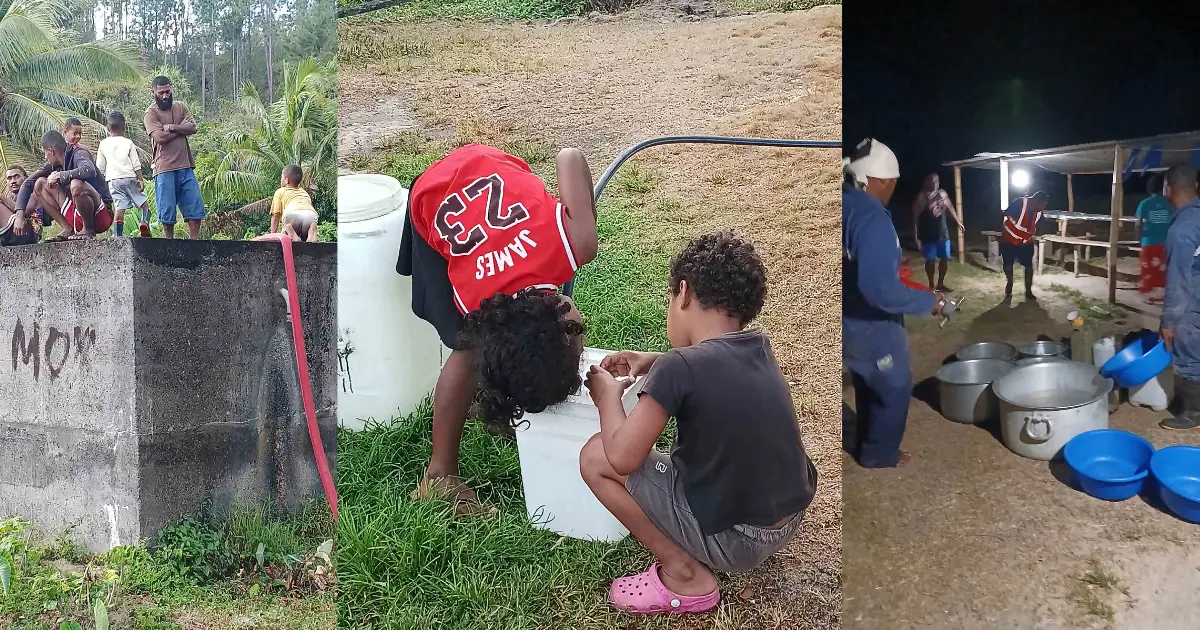
A divisional team has also been deployed to monitor water levels and gather updates from affected communities.
Prolonged dry conditions linked to El Niño have prompted water assistance at 69 locations across Fiji, including schools, health facilities and communities struggling with water shortages.
The National Disaster Risk Management Office (NDRMO) confirmed that assistance had reached 23 schools, 31 communities, six health facilities, six nursing stations, two police stations and one weather station.
The response comes as Government agencies step up assessments to determine the extent of the dry spell's impact and identify areas requiring further assistance.
Related stories
Water shortages under assessment
In the Western Division, the Ministry of Health and Medical Services, through its Water, Sanitation and Hygiene (WASH) Cluster, has begun preliminary assessments to identify emerging water, sanitation and hygiene needs.
A divisional team has also been deployed to monitor water levels and gather updates from affected communities.
The Government is planning joint, multi-sectoral assessments across the remaining divisions to establish the extent of the impacts, identify priority needs and determine what further assistance is required.
Meanwhile, emergency water supplies have been delivered to Druadrua and Macuata-i-Wai islands, where communities are experiencing shortages.
The operation was carried out by the MLC Vatulawa through the Divisional Commissioner Northern Office under the Ministry of Rural and Maritime Development and National Disaster Risk Management.
It involved collaboration with the Ministry of Public Works, Fiji Meteorological Services and the Water Authority of Fiji (WAF).
Authorities are continuing to coordinate with relevant agencies and stakeholders to monitor conditions and provide assistance, particularly to rural and maritime communities.
Households have been urged to conserve water, manage available supplies carefully and maintain safe water storage practices.
Food supplies remain stable
Despite the prolonged dry spell, Minister for Agriculture Tomasi Tunabuna said Fiji's food supplies had not yet been significantly affected.
“We still have a lot of food available. There’s still a lot of vegetables in the markets,” he said.
Mr Tunabuna said the ministry was monitoring conditions through regular contact with farmers and by checking produce available at markets.
“There’s still a lot of positive indication that we’re still managing very well,” he said.
He said farmers had been warned months earlier about the expected dry conditions.
“As compared to hurricane, for El Niño we had quite a lot of time for us to communicate on what we should be doing,” he said.
“The response from farmers is very positive.”
Uncontrolled burning damages farms
Mr Tunabuna said uncontrolled burning in the Western Division was a greater immediate concern for farmers.
“That’s contributing to a lot of damage on our farms,” he said.
He said the fires were not caused by farmers' land management practices.
Sugarcane farmers were particularly concerned about how long it would take to recover from fires during the dry conditions.
The ministry had advised farmers against burning this year because leaving plant material on the land could help retain soil moisture.
“I don’t know what intention, but it’s creating a lot of problems for our farmers,” he said.
Ministry officials were scheduled to meet to discuss sugarcane and other agricultural concerns.
Irrigation support planned
Mr Tunabuna said water tanks had already been distributed across the main islands to assist with the dry conditions.
Water pumps for irrigation and pipelines would be deployed once conditions reached a critical stage.
With farmers unable to plant under the current conditions, the ministry had begun purchasing planting materials to support agricultural rehabilitation when conditions improved.