Opinion: Divine appointment or corrupt rotation?
Leadership changes should be measured by the Church’s response to Fiji’s social crises
Friday 28 August 2026 | 06:00
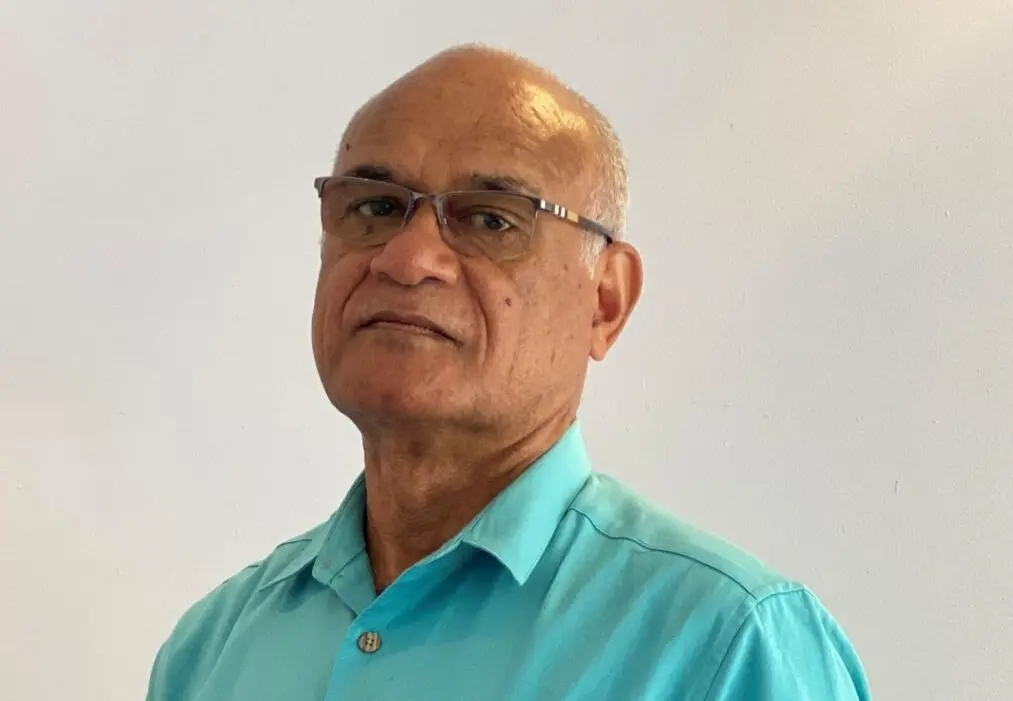
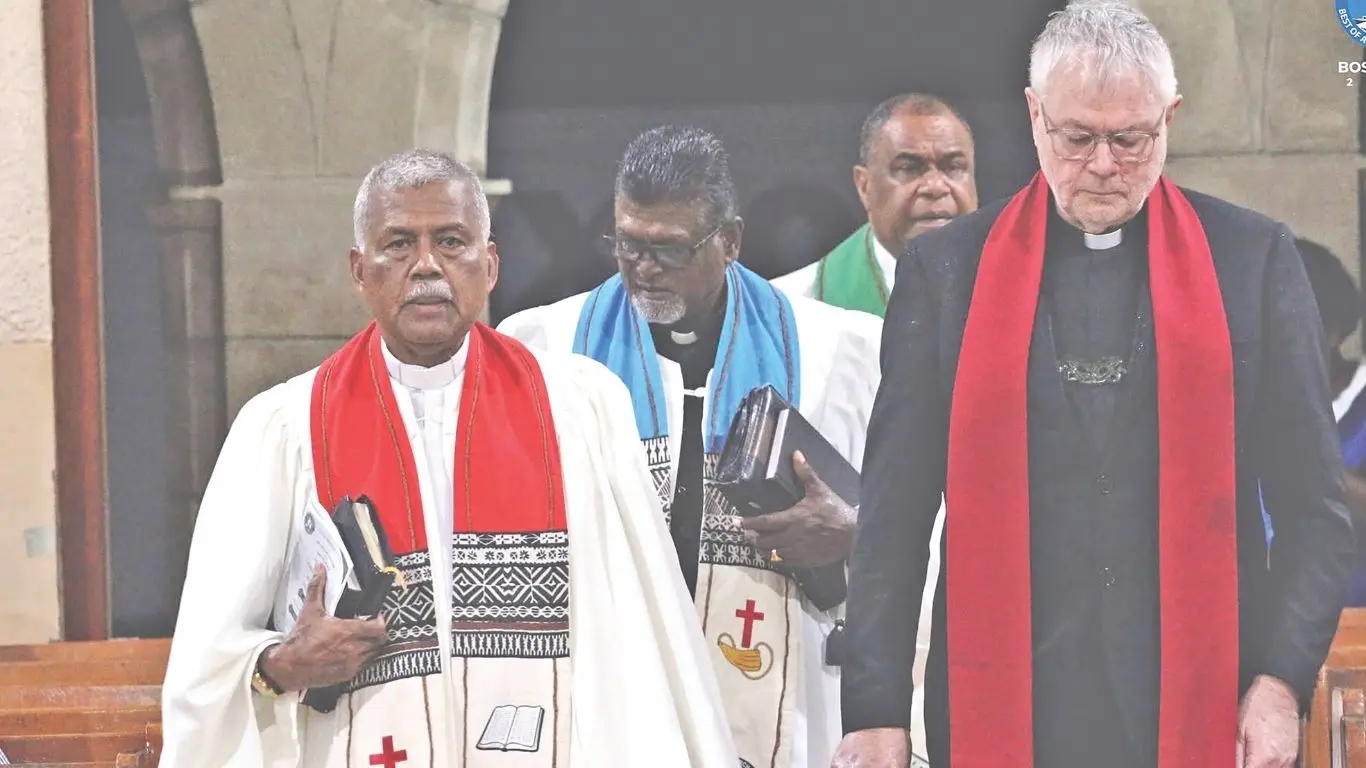
Methodist Church in Fiji and Rotuma president Reverend Semisi Turagavou (front, left), and Reverend Anil Reuben (back, left) at the annual conference in Suva. Reverend Semisi Turagavou has been elected general secretary and will take up the position in 2027.
Photo: Methodist Church in Fiji and Rotuma
The recent leadership shuffle at the Methodist Church in Fiji and Rotuma has all the hallmarks of a well-rehearsed drama—a script where the president becomes general secretary and the general secretary becomes president.
The question that demands an answer is whether this is a divinely inspired transition or simply a managed rotation within a closed circle.
When Reverend Dr (academic) Semisi Turagavou was elected general secretary-elect, following the election of current general secretary Reverend Dr (academic) Jolami Lasawa as president-elect, the optics were unmistakable: the two most powerful positions in the nation’s largest Christian denomination had simply swapped incumbents.
Related stories
This is not the language of prophetic succession, it is the vocabulary of a gentlemen’s club. Meanwhile, Reverend Dr (academic) Anil Reuben, approaching 50 years of service to the church, was re-elected as deputy general secretary.
Some have quietly suggested he was overlooked as general secretary. President even—a question that hangs in the air like incense in an empty sanctuary.
Whether true or not, the perception of a closed leadership circuit is damaging to a church that claims to be the spiritual home of the iTaukei.
The money and the pharisees
This brings us to the uncomfortable question I had previously raised: Is the Church becoming a modern-day pharisees’ club, more concerned with its business ventures and institutional machinery than with the weightier matters of justice, mercy, and faithfulness?
The Methodist Church is a significant property holder and business entity in Fiji. Its conference deliberations are as much about budgets and assets as they are about souls and salvation.
The temptation to prioritise institutional maintenance over spiritual revival is ever-present. When leadership transitions resemble corporate boardroom manoeuvers rather than Spirit-led discernment, the church risks losing its prophetic voice and becoming just another institution concerned with profit margins and its own survival.
Jesus reserved his harshest words for the pharisees—not because they were irreligious, but because they were so meticulously religious that they missed the point entirely. They tithed mint and cumin but neglected justice and mercy. They built elaborate systems of ritual purity while ignoring the cries of the poor. Sound familiar?
Parroting the American model?
There is also a deeper concern: is Fijian Christianity, particularly its prominent denominations, simply parroting the American model of religiosity—the focus on institutional politics, the cult of personality around leaders, and the spectacle of power?
This is part of the colonised mind I have written about: adopting external forms of faith while neglecting the internal transformation that Christ demands. The American model often equates ecclesiastical success with institutional size, political influence, and financial prosperity. When a Fijian church adopts these markers of success, it risks abandoning the very humility and service that Christ modelled. We look outward to foreign models of success while ignoring the cries of the suffering at our doorstep.
The true test of leadership
The leadership transitions in the Methodist Church will ultimately be judged not by how smoothly they were executed, but by their fruits.
Does the Church, under this new configuration, show a renewed commitment to:
- Fighting the scourge of domestic and gender-based violence?
- Addressing the crises of drug abuse, HIV, and NCD?
- Championing justice for the marginalised?
- Prioritising soul-saving over revenue-earning?
If the church remains preoccupied with its internal mechanics while these crises fester, then the leadership shuffle is merely rearranging deck chairs on a spiritual ship called the Titanic. The question is not who holds which office, but whether the church is truly following the way of Christ or merely managing an institution.
A call to reflection
The lesson is the same one I have consistently offered: the church must look in the mirror. The pharisee in the pulpit is not a figure from history; it is the constant temptation of any religious institution to substitute external form for internal transformation.
The Methodist Church, as Fiji’s largest Christian denomination, carries a weighty responsibility. Its leadership transitions should be moments of deep spiritual reflection, not just political repositioning. The new leadership has a choice: to become a vehicle for the Kingdom of God, or to remain a monument to itself.
The cridecoeur of our suffering—our victims of domestic abuse, our youth lost to drugs, our newborn infected with HIV—demands nothing less than a radical reorientation of priorities. Let us hope the Church answers that call before it is too late.
The nation is watching. And so is the God of justice, mercy, and faithfulness.
Feedback: newsroom@fijisun.com.fj
(Ro Naulu is a commentator on current Fijian affairs. The views are his own and not the Fiji Sun.)