72-hour work week proposed to lift security officers' pay
Security provider backs proposal but says labour laws must change, while warning that work-family balance must be considered
Friday 14 August 2026 | 12:30

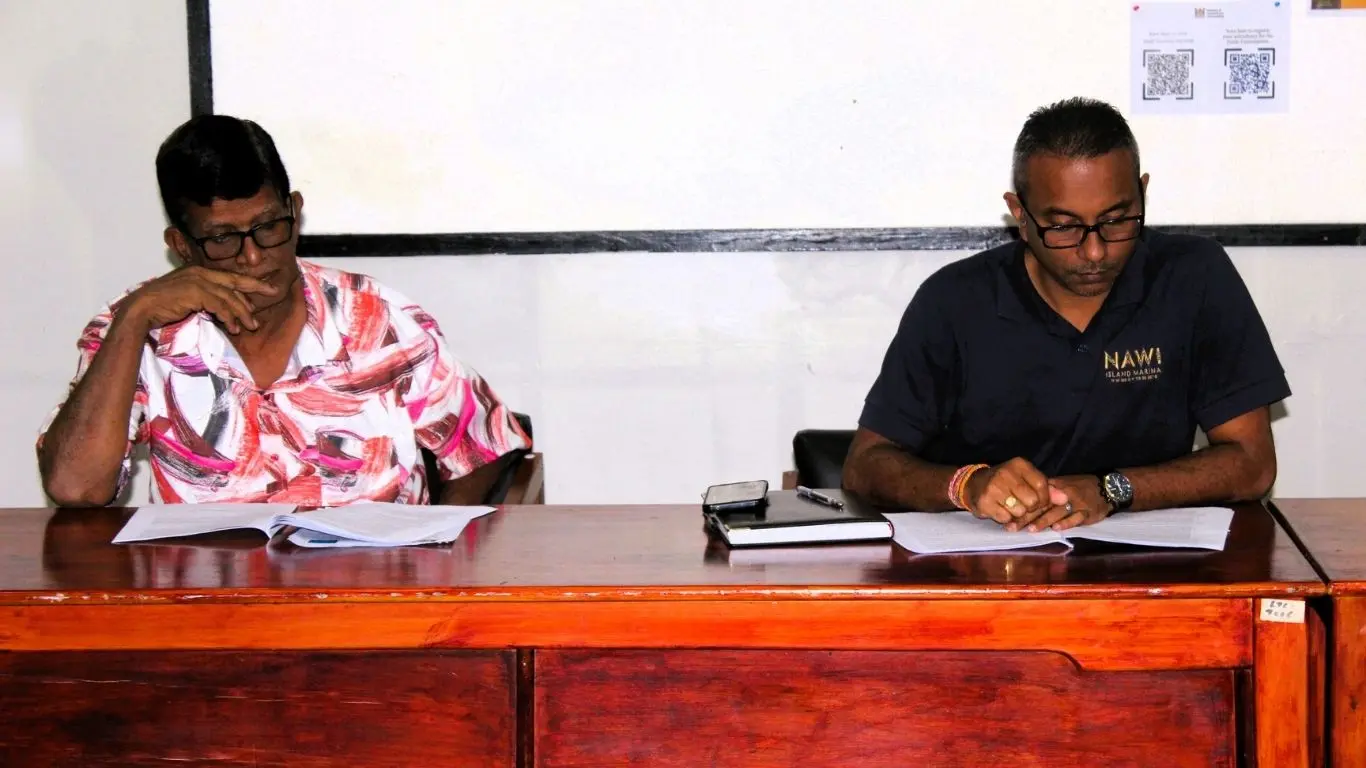
(From left) Shield Security office assistant Asahel Manyam and South Pacific Marine Ltd general manager Jitendra Prasad during the review of the Security Industry Act 2010 held in Labasa on August 13, 2026.
Photo: Sampras Anand
A proposal to increase the wages of security officers by extending their normal working hours from 48 to 72 hours a week, with six days of work and one day of rest, could improve their weekly earnings and financial wellbeing.
Fiji Law Reform Commission Commissioner Ana Rokomokoti asked private security providers in Vanua Levu whether the proposal would be sustainable during public consultations on the review of the Security Industry Act 2010 in Labasa this week.
Security officers are among the lowest-paid workers, with many receiving the minimum wage of $5 an hour or slightly above, leaving some workers struggling with poverty.
Related stories
South Pacific Marine Ltd general manager Jitendra Prasad said the proposal could work but would require amendments to labour laws to ensure compliance.
According to Mr Prasad, labour laws provide for a maximum of 48 normal working hours a week, meaning an additional 24 hours would require legislative changes.
When Ms Rokomokoti asked whether he would support an amendment to accommodate the proposed extension, Mr Prasad assured her that he would implement it.
The Savusavu-based security provider had previously trialled two 12-hour shifts over four days, which Mr Prasad said had worked effectively.
"We tried to implement, some of our security guards were supportive, they wanted to do 12-hour shifts," he said.
"The labour regulation requires eight-hour normal shifts, but, when we go beyond that, then we have to pay one time and a half or double time, so amending it will be better".
Ms Rokomokoti said the challenge remained in making the industry attractive as a potential career path for youths and younger generations, but said changes that resulted in better wages could help.
She said the industry included retirees, former police officers, people with limited education and those in urgent need of employment, with fewer highly educated or highly motivated employees entering the sector.
Ms Rokomokoti said the next step would be to help transition the industry into a professional workforce.
This could create greater value for security services, with employees potentially benefiting from higher wages.
She said these benefits would depend on providing quality training for security officers to ensure they delivered professional-level customer service.
Mr Prasad said any changes would need to consider workers' family responsibilities and maintain a balance to prevent staff burnout.
Despite this, he said security officers willing to work longer hours to improve their families' financial circumstances could be prepared to accommodate the proposed arrangement.
He added that the industry needed Government support, including grants for private security providers to facilitate professional training programmes.