Fiji launches five-year child protection plan
The National Action Plan 2026–2031 aims to strengthen laws, improve services and ensure children receive timely protection and support.
Friday 13 November 2026 | 16:30
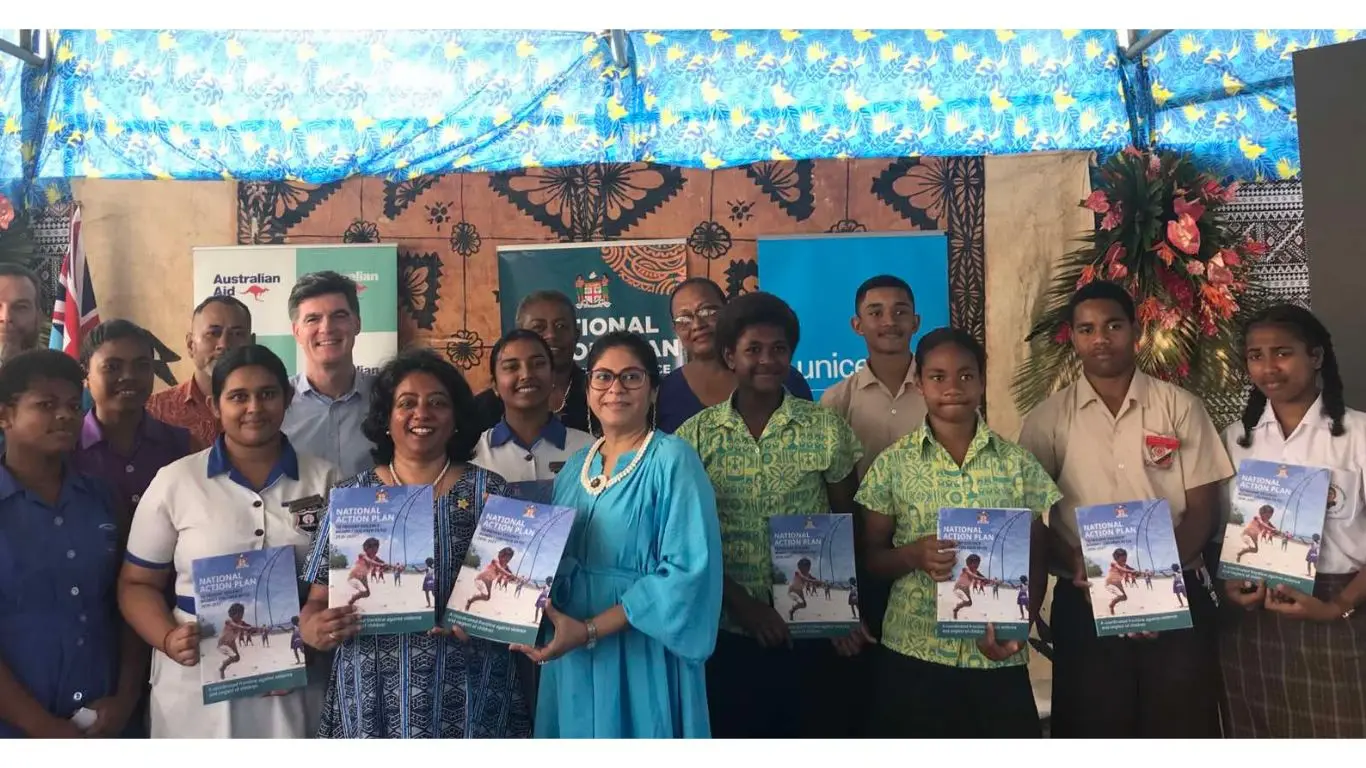
From left: Minister for Women, Children and Social Protection Sashi Kiran, UNICEF Pacific Deputy Representative Roshni Basu with students from John Wesley Primary School, Saint Marcellin Primary School and Mahatma Gandhi Memorial Primary School during the launch of the National Action Plan 2026–2031 at PRB Lagilagi House in Vatuwaqa on November 13, 2026.
Photo: Lavenia Waqanivanua
Fiji has launched a five-year National Action Plan to Prevent Violence Against Children, committing government agencies, communities and families to strengthen child protection and ensure children grow up in safe and nurturing environments.
The National Action Plan 2026–2031 was officially launched by Minister for Women, Children and Social Protection Sashi Kiran yesterday, marking a major step towards coordinated efforts to prevent abuse, neglect and violence against children.
The launch also marked the beginning of activities leading up to the International Day for the Prevention of Child Abuse and Neglect on November 19, 2026.
Ms Kiran said the plan provided a clear direction for the next five years, with protecting children requiring collective responsibility rather than relying on government alone.
“This plan is our promise to work harder, to work together and do everything in our power to make Fiji a safer place for you, our children,” she said.
The plan provides a costed roadmap aligned with the Child Care and Protection Act 2024 and the Child Justice Act 2024. It focuses on strengthening laws and policies, improving community awareness, enhancing child-centred care and investing in frontline workers.
It also aims to strengthen coordination among government agencies, improve referral pathways, expand psychosocial support and ensure children receive timely medical care, protection and justice when they experience abuse.
Ms Kiran said children would remain at the centre of the plan’s implementation, with their voices and experiences guiding decisions.
One of the immediate priorities is establishing a children and youth advisory group to ensure young people have a meaningful role in shaping policies that affect them.
The Ministry will also map child protection services nationwide to identify gaps, improve coordination and ensure vulnerable children are not overlooked.
UNICEF Pacific Deputy Representative Roshni Basu said the plan was an important milestone in translating commitments into practical action.
She said protecting children required sustained cooperation across government, communities, schools, health services, law enforcement and faith-based organisations.
Permanent Secretary for Women, Children and Social Protection Selina Kuruleca said violence against children was preventable and required an evidence-based response across every sector.
She said the plan was developed through consultations and collaboration with UNICEF and other stakeholders.
Ms Kiran said the true measure of the plan would be the difference it made in children’s daily lives.
“Let us raise our children with love, not fear,” she said.