Labasa's 'salad bowl' farmers feel El Niño's heat
Vegetation cover declining during el-nino: Kumar
Thursday 03 September 2026 | 13:00
Updated 03 September 2026 | 14:31 FJT

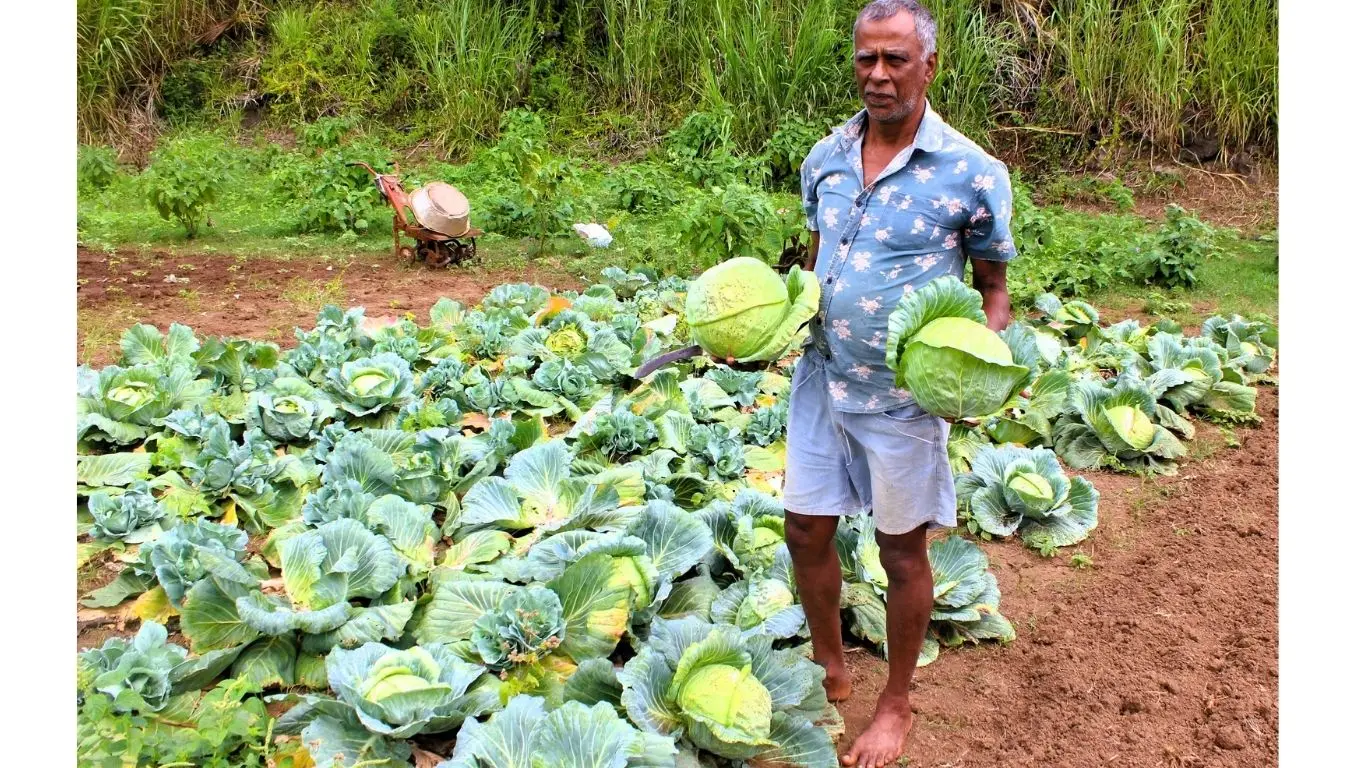
Vegetable farmer, Anand Kumar, on his farm at Korotari in Labasa on September 2, 2026.
Photo: Sampras Anand
Korotari farmers in Labasa are facing a decline in vegetable production and supply due to the ongoing El Niño conditions being experienced across the country.
The Korotari locality is often referred to as the “salad bowl” of Labasa because of its high concentration of vegetable farms supplying the Labasa market.
Large-scale vegetable farmer Anand Kumar said he was struggling with reduced production, which was affecting his income.
Related stories
Mr Kumar said he had observed a 30 per cent decline in vegetable production and supply, which he described as a “drastic impact” considering the hard work he put into farming every day.
His vegetable farm covers about half an acre and has provided a livelihood for the past 41 years, since he joined the vegetable farming business as a child.
“This drought (El Niño) is more severe than the 2003 and 1987 drought spell,” he said, adding that he believed it could last several more months this year.
To avoid a total loss of income, Mr Kumar has turned to intercropping to harvest a variety of vegetables and remain competitive in the market.
“With the small piece of land I have, intercropping, especially during drought, will ensure we can plant maximum vegetables amid this drought spell,” he said.
Mr Kumar highlighted that managing soil health remained crucial to the sustainability of his farming business and said he had also invested in water storage tanks.
To prevent further losses beyond 30 per cent, he has had to spend more time on his farm using a water pump to constantly irrigate the crops, sourcing water from a nearby river.
Farmer Shreymen Chand said vegetable farming had been in his family for generations, with his grandparents also involved in the trade.
With changing weather patterns and the El Niño phase, Mr Chand said farmers needed to brace themselves and find ways to survive the conditions.
“We have to ensure irrigation back-up and constant care for our farms to fight this challenging situation,” he said.
Another vegetable farmer, Gaya Chand, said this year’s El Niño or drought conditions were more challenging compared with previous years.
Mr Chand said vegetable farming contributed immensely to his financial sustainability and that seeing it affected by El Niño was something he planned to fight and overcome.
“We farmers have to become innovative and multitask our responsibilities. Regular irrigation via the river and erecting shades to avoid evaporation are some strategies,” he said.
Minister for Agriculture and Waterways Tomasi Tunabuna, during his numerous visits to Labasa, has urged farmers to invest in vegetable farming because it could provide good returns.
However, Mr Tunabuna cautioned farmers to be prepared for climate change events such as El Niño periods.
The nationwide El Niño conditions continue to affect farmers, who have been urged to take the situation seriously.
PUBLIC SERVICE BROADCAST: This content is produced with support from the Public Service Broadcast grant. Connecting Fijians with transparent, timely, and trusted information.