‘The teacher in him never disappeared’: Fiji farewells Agni Deo Singh
Prime Minister Sitiveni Rabuka remembered Mr Singh as a man of many seasons who became an agent of change in the lives of ordinary Fijians and in the systems he served.
Monday 21 September 2026 | 07:00

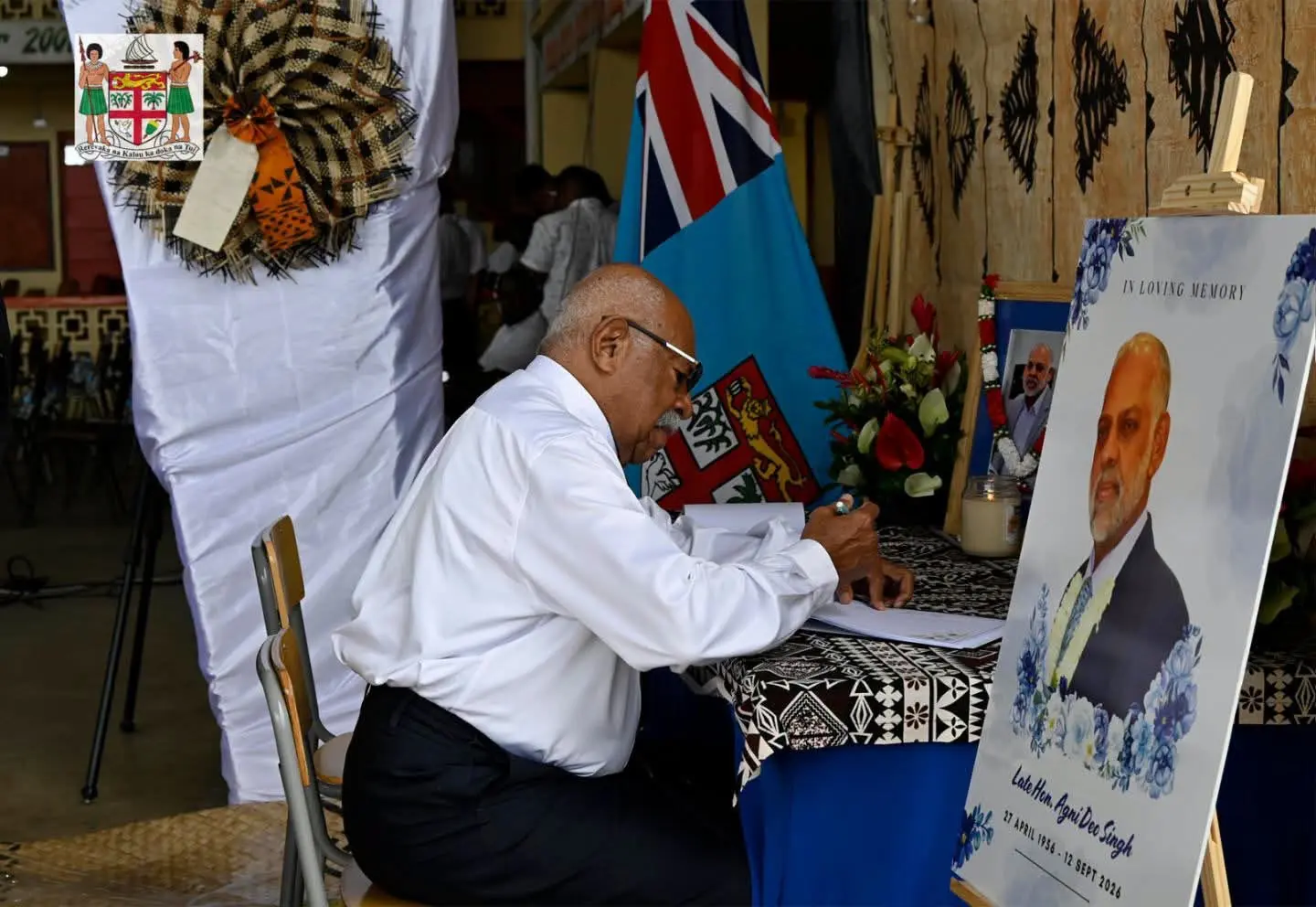
Prime Minister Sitiveni Rabuka signs the condolence book at Mr Agni Deo Singh's funeral service in Nasinu on September 20, 2026.
Fiji Government
Agni Deo Singh may have risen from the classroom to Cabinet, but the teacher in him never left.
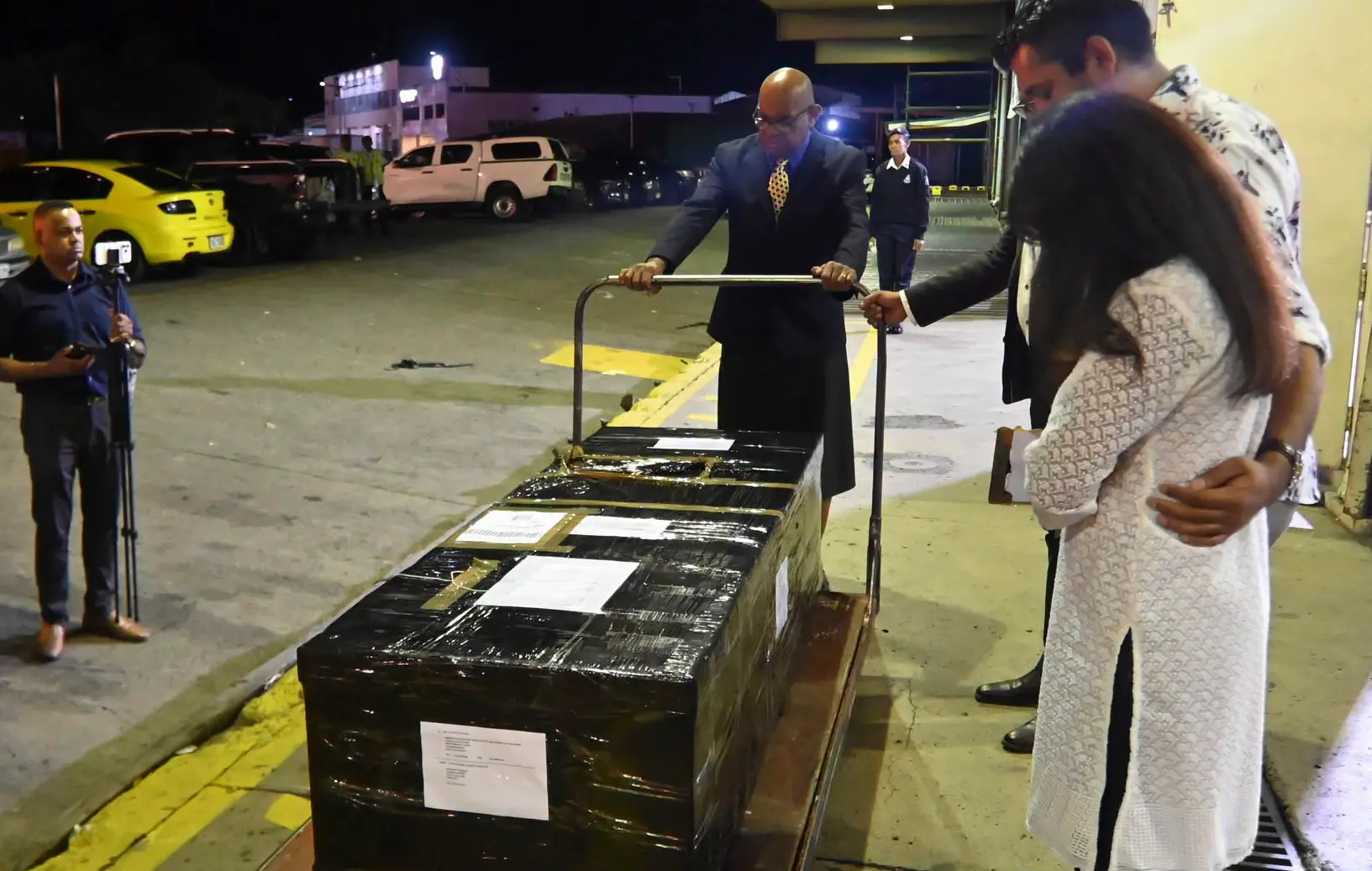
That was among the reflections shared as family, colleagues and members of the public gathered to farewell the late Minister for Employment, Productivity and Workplace Relations at Rishikul Sanatan College yesterday.
In an emotional eulogy, Prime Minister Sitiveni Rabuka remembered Mr Singh as a man of many seasons who became an agent of change in the lives of ordinary Fijians and in the systems he served.
Related stories
Mr Rabuka said Mr Singh understood the assignment entrusted to him and served Fiji with integrity and humility.
From decades of service as a teacher and trade unionist to Parliament and Cabinet, Mr Singh believed economic growth and workers’ welfare should go hand in hand.
“When workers raised concerns, he wanted those concerns followed up and addressed. He understood that both Parliament and Cabinet were vital forums for advancing the interests of workers in Fiji,” Mr Rabuka said.
“As minister, he consistently used these platforms to ensure that the concerns of ordinary Fijians were heard at the highest levels of national decision-making.”
Mr Singh was instrumental in the review of the national minimum wage to $5, the removal of contractual appointments in the civil service and the restoration of the retirement age to 60.
He also oversaw the reconvening of the Fiji Wages Council and promoted a balanced approach to wage setting that considered business viability, job protection, productivity growth and fair compensation for workers.
Mr Rabuka said Mr Singh also played a significant role in rebuilding Fiji’s relationship with international labour bodies, particularly the International Labour Organisation (ILO).
“He was tenacious in the functioning of tripartism, helping Fiji rebuild confidence with international labor organisations. Honourable Singh recognised that the world of work was changing,” he said.
“Economies were more interconnected, Fijians were taking up employment overseas, and many of the labor challenges confronting Fiji were shared by our Pacific neighbors.
“He believed the Pacific needed a stronger voice on the international stage and worked with fellow Pacific labor ministers to advance regional dialogue. He wanted the Pacific to speak, but more importantly, he wanted the world to listen to the Pacific.”
Mr Singh also placed strong importance on the welfare of Fijians working overseas through Australia’s Pacific Australia Labour Mobility scheme and New Zealand’s Recognised Seasonal Employer scheme.
But despite his achievements in politics and Government, those paying tribute remembered qualities that went back to his earliest profession.
“The teacher in him never disappeared,” a tribute noted, describing him as someone who listened, guided and encouraged others to achieve their full potential.
Mr Rabuka said Mr Singh’s lasting legacy would not only be found in legislation, Government policies or international initiatives, but in the countless lives he influenced.
His impact lives on through the students he taught, workers whose grievances were heard, families whose livelihoods improved, public servants he mentored and communities that benefited from his leadership.
Mr Singh died during a work trip to Brisbane, Australia, last Saturday.
He was cremated at the Raralevu Gas Crematorium in Nausori.
He is survived by his wife, two children and grandchildren.