Pacific media needs stronger AI strategy, research finds
Personal accounts, limited training and poor Pacific-language performance among key concerns
Monday 28 September 2026 | 10:00

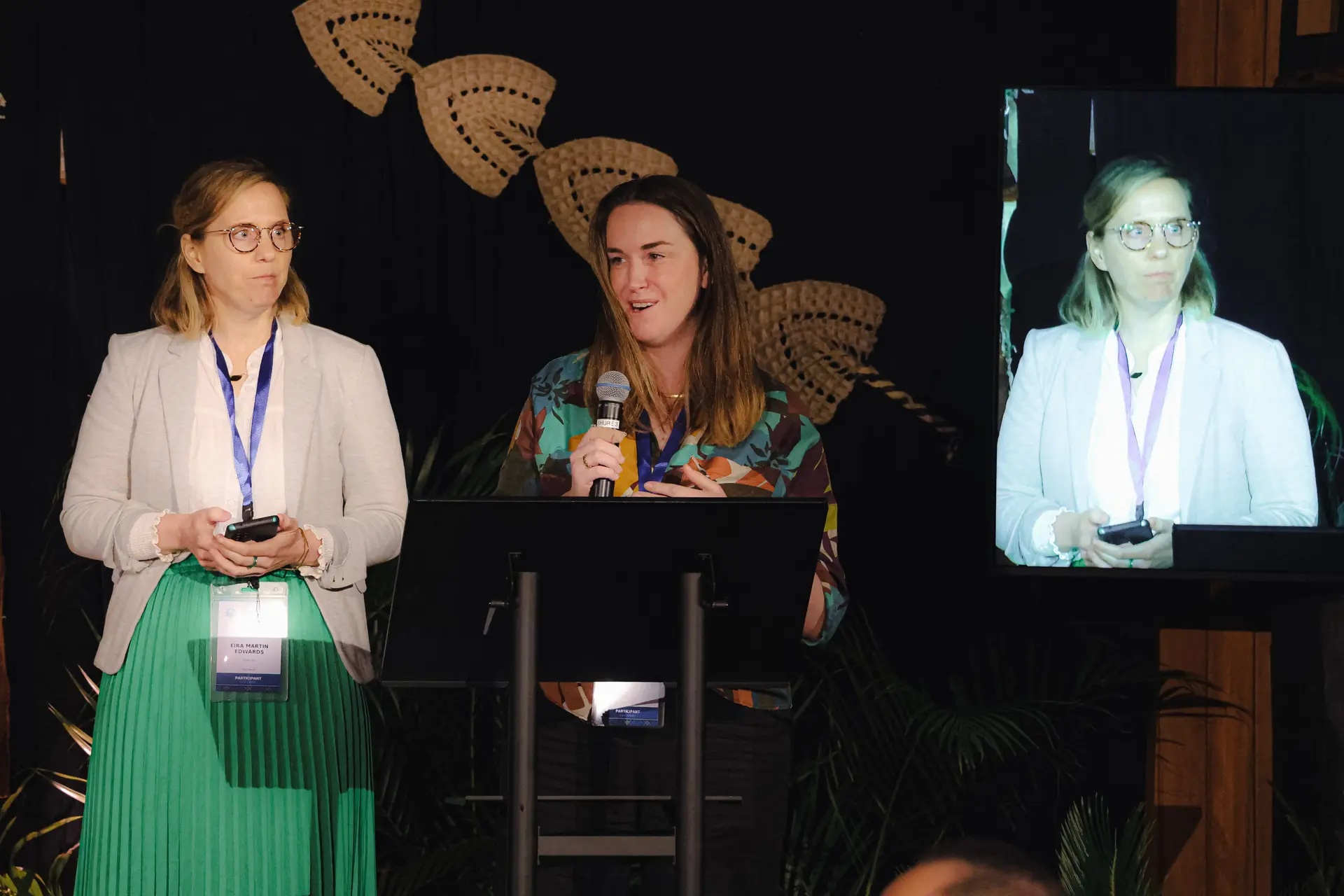
From Left: Other Labs team Eira Martin Edwards and founder Jenni Ryall at the PINA summit at Wasawasa resort, Savusavu in September 23, 2026
Photo: Talei Roko
Pacific media organisations are using artificial intelligence (AI) but urgently need strategic, policy and technical support for its safe adoption, according to new research.
The AI in Pacific Media study, produced by Other Labs with Google’s support, surveyed 49 respondents across 42 newsrooms in 11 countries, alongside interviews with eight regional experts.
Other Labs founder Jenni Ryall said the study revealed widespread AI adoption, making the key question for the region how to use the technology safely and effectively.
Related stories
“Every part of the news business is being rebuilt around this technology, and it is moving more rapidly than anything I’ve seen in two decades in the media,” Ms Ryall said.
“It is critical news organisations understand this technology, so they can write their own AI policy and decide how it can support their business safely. This decision belongs in this region and editorial integrity has to sit at the centre of it.”
The research was advised by Fiji Sun publisher and Fijian Media Association president Rosi Tamani-Doviverata, and former Pacific news leader and media expert Alexander Rheeney.
Most news organisations are currently experimenting with AI without a strategy, according to the research.
Thirty-six respondents use AI through personal or mixed accounts, leaving no audit trail or protection for confidential information.
Adoption has outpaced policy, with 26 respondents publishing AI-assisted work while 39 lack policies or rely on basic guidelines.
AI capability is limited
Organised AI programmes have not reached most of the region, with 22 respondents receiving no AI training and four having access to an ongoing programme.
Pacific languages remain poorly served by major AI tools, which 34 respondents rated as ineffective or only slightly effective.
Other Labs research director Eira Martens-Edwards emphasised the need for foundational research to inform programme design.
“Understanding how news organisations are responding to this technology, what they are already doing, and where they need support, is essential to designing programmes that create lasting impact,” Ms Martens-Edwards said.
The opportunities range from workflow improvements, which free journalists for original reporting, to innovative products, with guardrails that protect high-quality journalism and build trust.
Google News Partner manager Uma Patel said there was a strong need for programme-based learning in the region.
“Google is proud to meet that need with our recently launched News AI Lab programme, which supports hands-on understanding of the technology and will grow the capabilities of publishers over 18 months,” Ms Patel said.
Other Labs’ previous AI cohort with Google demonstrates this impact.
Island Times publisher Leilani Reklai said AI could support the sustainability of a small news organisation.
“The use of AI not only streamlines my work, greatly reduces my workload and increases my efficiency,” Ms Reklai said.
The survey findings shaped the newly launched News AI Lab, an 18-month programme supporting 19 Pacific and New Zealand news organisations with AI accounts, mentorship, safety training and development focused on workflow integration and business outcomes.