Breastfeeding is an investment in Fiji's future, says UNICEF
"When we invest in breastfeeding, we are investing in the future human capital of Fiji."
Wednesday 12 August 2026 | 16:00
UNICEF said evidence from the new global investment case developed by Nutrition International, the World Health Organization and UNICEF shows that every dollar invested in proven breastfeeding interventions can generate returns of up to US$59.
UNICEF has urged Fiji to treat breastfeeding as a national development priority, warning that greater investment in supporting mothers could help curb the country's growing burden of non-communicable diseases (NCDs) while improving children's health and future productivity.
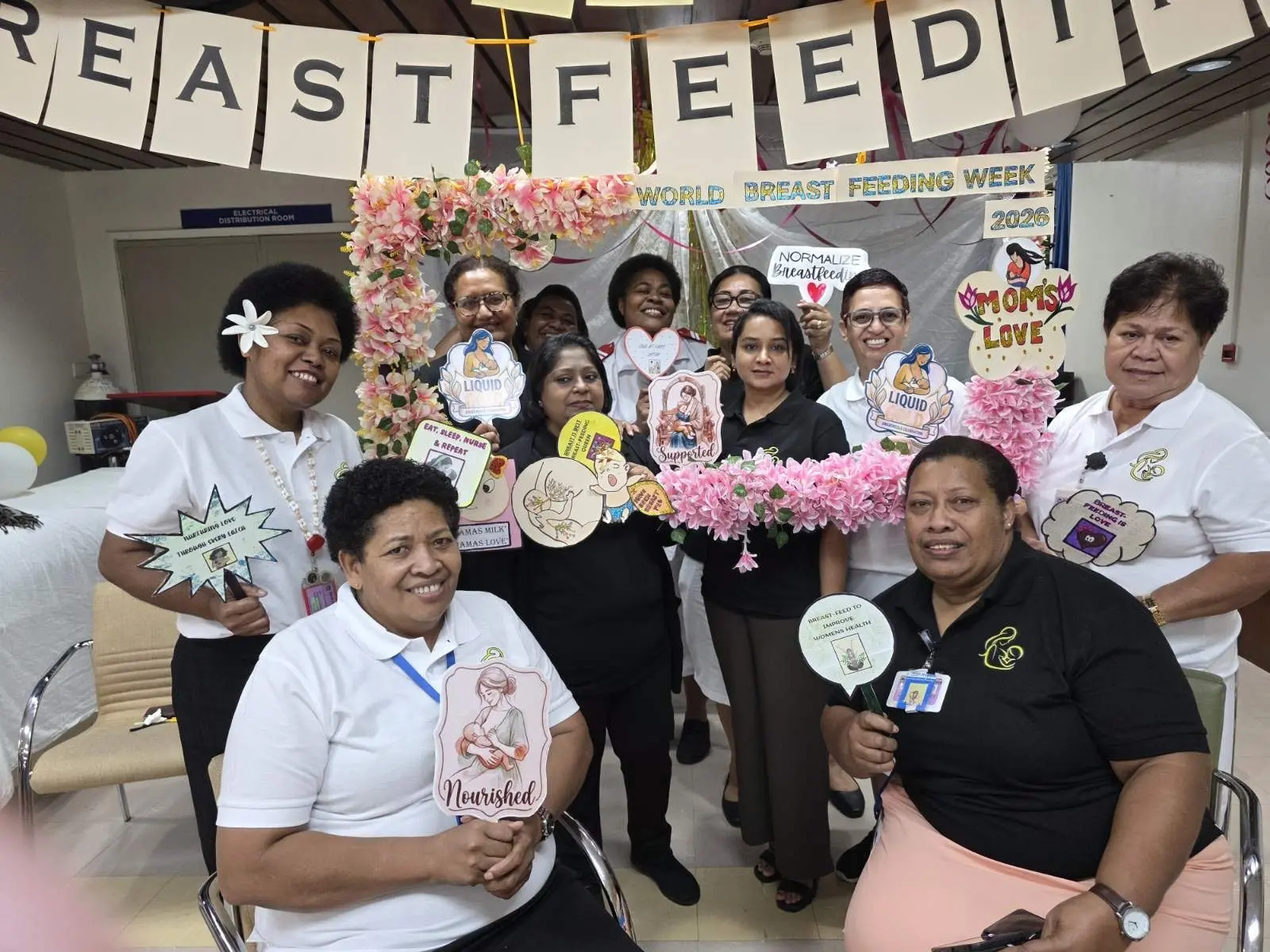
Speaking at the World Breastfeeding Week celebration, UNICEF Pacific Chief of Health and Nutrition Dr Yuki Suehiro said breastfeeding was one of the smartest investments a country could make in its future.
"Breastfeeding is not simply about feeding a baby," Dr Suehiro said.
Related stories
She said it was one of the most cost-effective interventions to improve child survival, learning, productivity and economic development, while also improving the health and wellbeing of mothers by reducing their risk of breast cancer, ovarian cancer and Type 2 diabetes.
Dr Suehiro cited a new global investment case developed by Nutrition International, the World Health Organization (WHO) and UNICEF, which found that every dollar invested in proven breastfeeding interventions could generate returns of up to US$59.
She said inadequate breastfeeding contributed to hundreds of thousands of avoidable child and maternal deaths every year, as well as significant losses in education, human capital and economic productivity.
"This is why breastfeeding is not only a health issue. It is an education issue, an economic issue, a women's health issue, and ultimately a national development issue.
"When we invest in breastfeeding, we are investing in the future human capital of Fiji."
Dr Suehiro said the message was particularly important for Fiji, where NCDs account for the majority of deaths and continue to place enormous pressure on families, the health system and the economy.
She said scientific evidence showed that nutrition during the first 1,000 days of life — from conception until a child's second birthday — influenced a person's risk of obesity, Type 2 diabetes, cardiovascular disease and other NCDs later in life.
"If we want to reduce the NCD burden of the future, we must start at the beginning of life," she said.
Dr Suehiro said breastfeeding should be viewed not only as a nutrition intervention, but also as an early childhood development measure and one of the earliest opportunities to prevent NCDs.
While acknowledging Fiji's progress in initiating breastfeeding, she said exclusive breastfeeding rates remained lower than desired, highlighting the need for stronger support for mothers beyond the maternity ward.
She said breastfeeding support must become increasingly individualised and evidence-based, particularly as Fiji faces a growing HIV epidemic and increasingly complex maternal and child health needs.
Some mothers, she said, required specialised counselling because of HIV, prematurity, maternal health conditions, newborn complications or breastfeeding difficulties, while others needed support when returning to work or when their babies became unwell.
"This is not about promoting breastfeeding through a one-size-fits-all approach.
"It is about ensuring that every mother receives the right information, the right counselling, and the right support for her individual circumstances."
Dr Suehiro acknowledged the work of the Ministry of Health and Medical Services, doctors, nurses, midwives, nutritionists, community health workers, civil society organisations, faith-based groups and development partners in supporting breastfeeding across Fiji.
She also paid tribute to mothers while stressing that successful breastfeeding required support from fathers, grandparents, families, workplaces and the wider community.
Dr Suehiro called for continued investment in the Baby-Friendly Hospital Initiative, saying proven measures such as breastfeeding counselling, community support, maternity protection and breastfeeding-friendly workplaces must reach every mother and child.
"The challenge before us is not discovering new solutions.
"The challenge is to bring proven solutions to every mother and every child."
Reaffirming UNICEF's commitment to Fiji and the Pacific, Dr Suehiro said the organisation would continue supporting breastfeeding promotion, strengthening Baby-Friendly Hospital Initiatives, building health worker capacity and improving maternal and child nutrition systems.
"Because breastfeeding is not only about feeding a child today.
"It is about building a healthier Fiji tomorrow.
"It is about stronger families, better learning, lower NCD burden, and greater human capital.
"Ultimately, it is about giving every child the opportunity to survive, thrive and reach their full potential."