'More than half of diabetics unaware they have disease'
Survey finds fewer than half of people with diabetes know they have the condition, while only a small proportion achieve recommended blood sugar control.
Thursday 30 July 2026 | 11:30

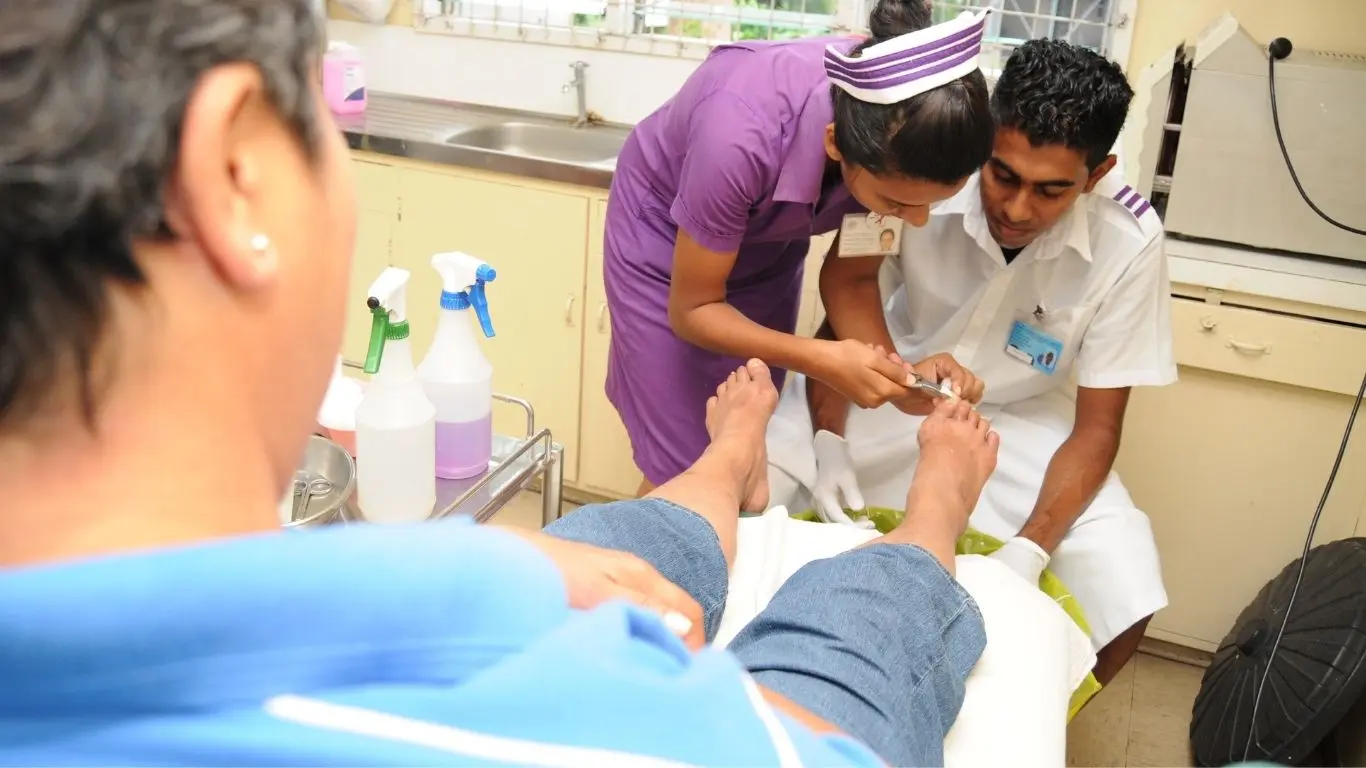
Student nurses carrying out foot care for a diabetic patient during a regular patient check up.
Photo: Ronald Kumar
Significant gaps in diabetes diagnosis and treatment have been uncovered in the latest Fiji NCD STEPS Survey, with fewer than half of people living with diabetes aware they have the condition.
The 2025 survey found that only 46.5 per cent of people living with diabetes know they have the disease.
It also found that between 33 and 71 per cent receive medical treatment, while only 6.2 to 21.5 per cent achieve recommended blood glucose control levels.
Related stories
Diabetes Fiji executive director Kini Marawa said the findings highlighted the urgent need to strengthen prevention, screening and disease management programmes.
The survey also showed diabetes prevalence has increased to between 16.5 and 17 per cent, up from 14.6 per cent in 2011.
The organisation warned that diabetes is responsible for 68.5 per cent of end-stage kidney failure cases and 27 per cent of sight-threatening diabetic retinopathy.
Across Fiji, an amputation is performed about every 8.5 hours because of diabetes-related complications.
Mr Marawa said non-communicable diseases account for 80 per cent of all deaths in Fiji, with between 30 and 40 per cent occurring prematurely among adults aged 35 to 55.
"Healthcare must be the primary priority, not an afterthought," he said.
"Without health, all national development stands on fragile ground."
Young people increasingly affected
Mr Marawa said diabetes was increasingly affecting younger Fijians.
He said recent diagnoses included a child aged one year and seven months with Type 1 diabetes, an 11-year-old diagnosed with Type 2 diabetes and a 12-year-old who had already suffered a stroke.
The survey also found that 98.5 per cent of adults aged 18 to 69 have at least one non-communicable disease (NCD) risk factor, while nearly half have three or more.
Mr Marawa questioned why public health continued to receive insufficient attention despite NCDs remaining Fiji's leading cause of death.
"Why is public health continually treated as a secondary priority when 80 per cent of our mortality is driven by NCDs? Healthcare must be the primary priority, not an afterthought," he said.
He said Fiji needed a healthier population to achieve its long-term development goals.
"We must first secure a healthy, resilient population before we can successfully drive economic growth. Without health, all national development stands on fragile ground."