Court allows phone data in alleged bribery case
The magistrate ruled that the data was lawfully obtained after finding the former telecommunications employee had consented to its examination.
Wednesday 14 October 2026 | 16:30
Updated 14 October 2026 | 19:14 FJT

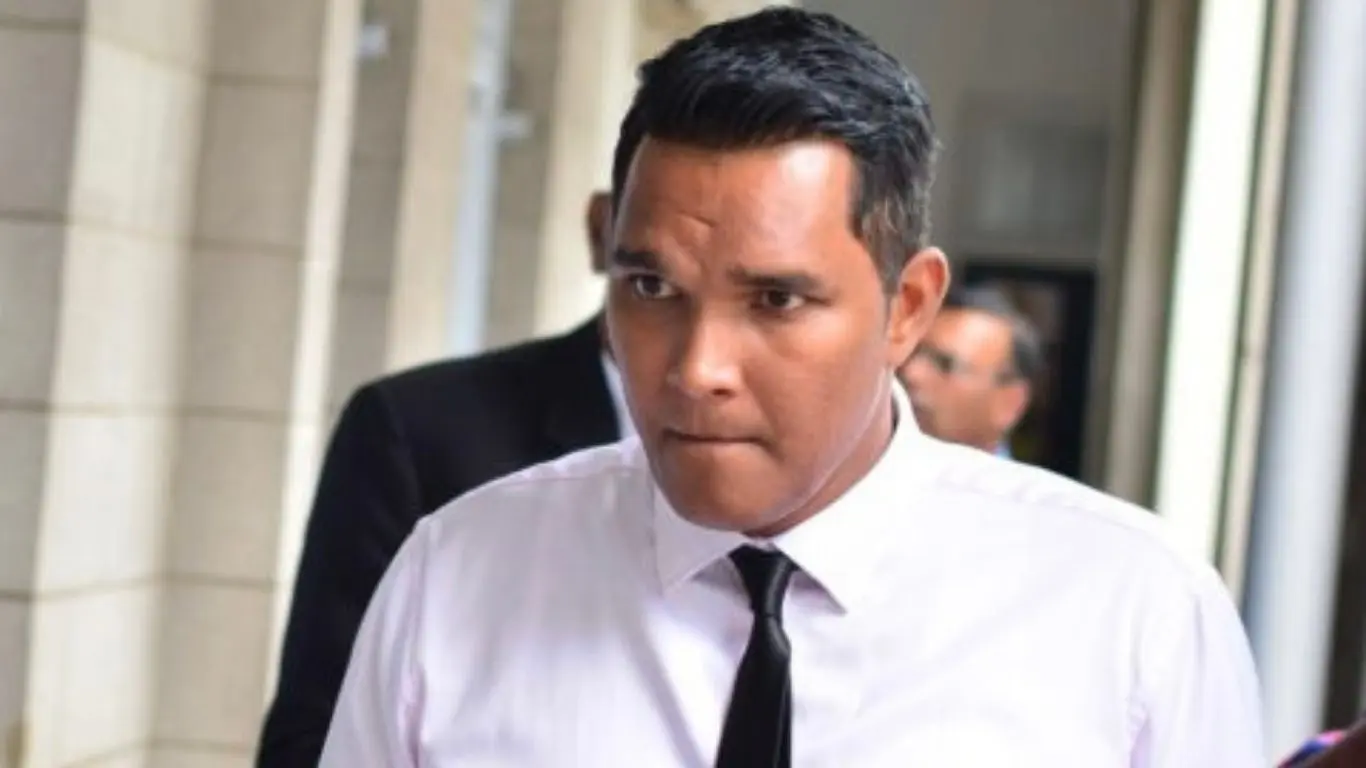
Accused Rajneel Rakesh Kumar outside the Suva Magistrate Court.
Photo: Rariqi Turner
Data extracted from a former telecommunications officer’s mobile telephone can be used as evidence in his alleged bribery case after the Suva Magistrate Court rejected a defence challenge to its admissibility.
In a ruling, Resident Magistrate Shageeth Somaratne found that the telephone data belonging to Rajneel Rakesh Kumar had been lawfully obtained, as Kumar had voluntarily given informed consent for his telephone to be examined.
Kumar faces two counts of bribery and one count of obtaining a financial advantage in a case brought by the Fiji Independent Commission Against Corruption (FICAC).
Related stories
It is alleged that between July 1 and December 15, 2018, Kumar solicited an advantage of $7000 and accepted $4000 in separate incidents in Suva and Nadi.
The defence challenged the use of the telephone data, arguing that the mobile telephone had been seized unlawfully and its contents extracted without a court order or search warrant.
However, after considering the evidence and submissions from both parties, the court found that Kumar had expressly and voluntarily consented to the examination of his telephone and the extraction of its data.
Magistrate Somaratne ruled that the data had been lawfully obtained and could be presented as evidence in the proceedings.
The ruling dismissed the defence objection, allowing the extracted telephone data to be used in the case.