Court denies damages despite finding COI report caused harm
However, Justice Tuiqereqere ruled that damages were not available as a remedy in the judicial review proceedings.
Monday 05 October 2026 | 17:30

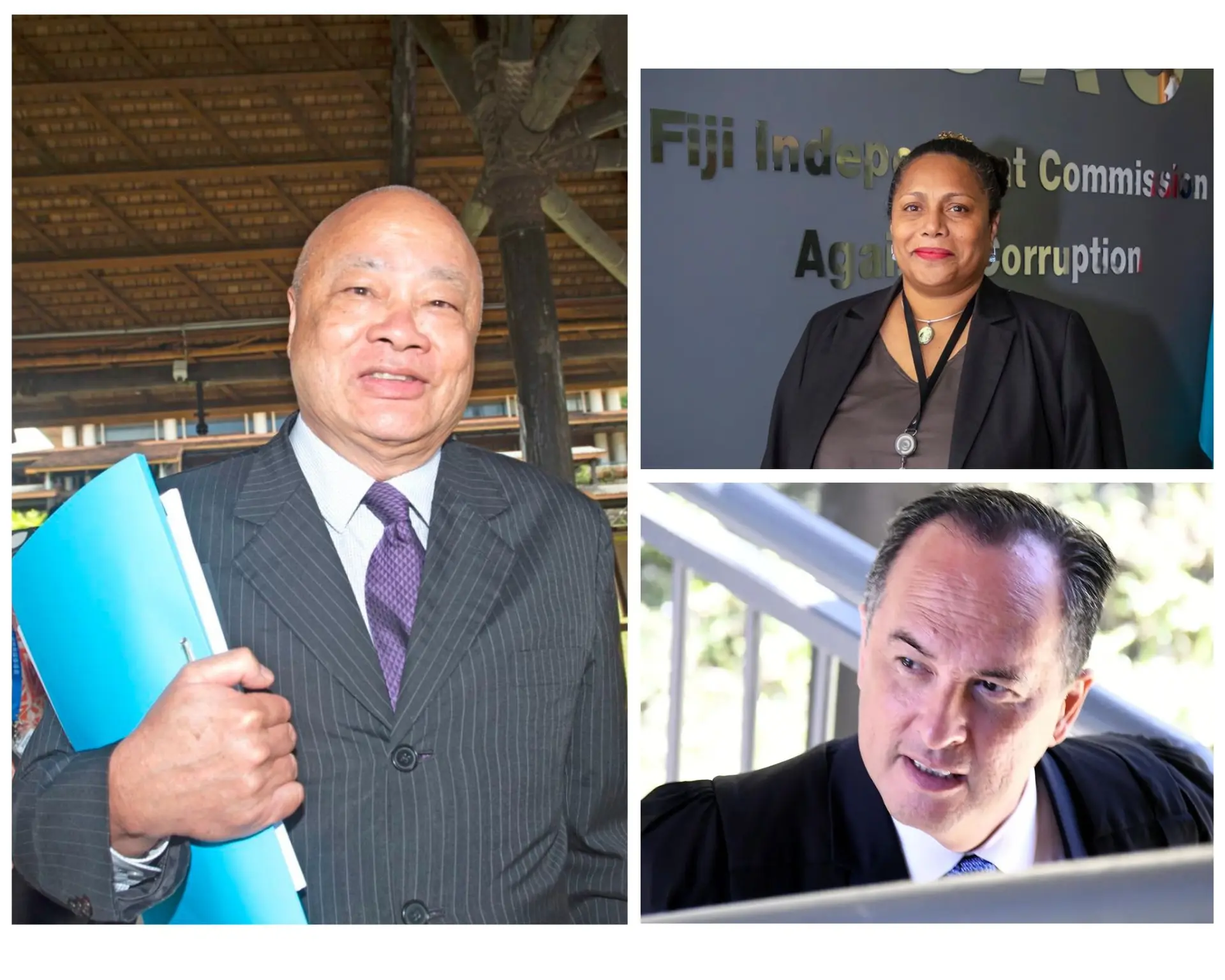
Left: Former Attorney-General Graham Leung, top: former FICAC Commissioner Barbara Malimali, bottom: Fiji Law Society (FLS) president Wylie Clarke.
Photos: Ronald Kumar; Supplied
The High Court has refused to award damages to former Fiji Independent Commission Against Corruption (FICAC) Commissioner Barbara Malimali and three co-applicants, despite accepting that the publication of a Commission of Inquiry report caused them substantial harm.
Justice Dane Tuiqereqere delivered the ruling today when the parties appeared for the determination of costs.
Ms Malimali, former Fiji Law Society presidents William Wylie Clarke and Laurel Vaurasi, and former Attorney-General Graham Leung will instead receive 60 per cent of their actual legal costs.
Related stories
The ruling follows Justice Tuiqereqere’s August 14 decision, in which he found the applicants had been denied natural justice and that adverse findings against them by the Commission of Inquiry were irrational.
The court also found that the conduct of Commissioner of Inquiry Justice David Ashton-Lewis created a reasonable apprehension of bias and declared the report ultra vires, null and void.
In today's ruling, the court accepted evidence that publication of the report caused substantial harm to the applicants, including damage to their reputations, careers, family relationships, community standing and relationships with places of worship.
Some applicants also lost employment opportunities and experienced online abuse following publication of the report.
However, Justice Tuiqereqere ruled that damages were not available as a remedy in the judicial review proceedings.
The applicants had argued that damages could be awarded under Fiji’s constitutional and judicial review framework, relying on overseas authorities including a Privy Council decision from Trinidad and Tobago and two Belize cases.
Justice Tuiqereqere found those authorities did not provide a sufficient basis for awarding damages in the Fiji proceedings.
He noted that, apart from the Belize cases, there was little support in common law jurisdictions for awarding damages in judicial review proceedings arising from Commission of Inquiry findings.
Previous cases involving successful challenges to inquiry reports had resulted in findings being quashed, but not damages being awarded.
The court also considered sections 11 and 18 of the Commission of Inquiry Act, which provide protections for Commissioners and restrictions on the use of inquiry evidence in other proceedings.
The court noted that constitutional remedies may potentially be available through separate proceedings, but that issue was not before it and was not determined.
The applicants were awarded 60 per cent of their actual legal costs: Ms Malimali, $13,615; Mr Clarke and Ms Vaurasi, $207,426; and Mr Leung, $139,944.
The court ordered the Commission of Inquiry, the President, the Prime Minister and the Attorney-General to be jointly and severally liable for the costs.
Payment must be made within one month.