Bamboo could become Fiji’s next green industry
Wednesday 26 August 2026 | 17:00

Vanua Levu positioned as potential hub for growing, processing and manufacturing as new livelihoods emerge
Bamboo could become a new green industry for Fiji, creating rural livelihoods while providing a climate-smart material for construction, tourism and community infrastructure.
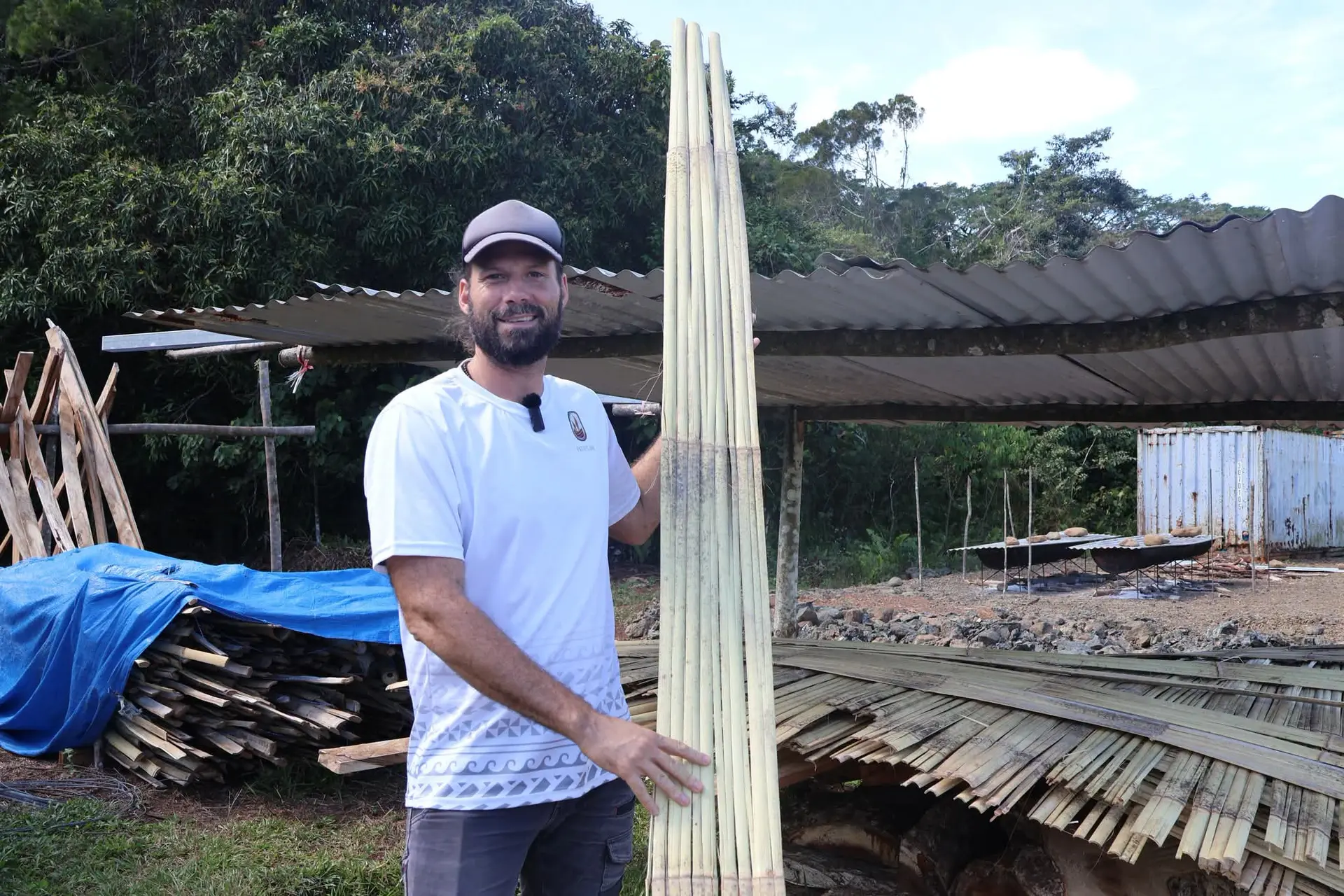
Pacific Ark founder and chief executive officer Arno Roös said Fiji had an opportunity to build a complete bamboo value chain, with Vanua Levu positioned to become an important growing, treatment, processing and manufacturing hub.
Mr Roös said bamboo already grew throughout Fiji but the country currently captured little of its potential value.
Related stories
“The opportunity is to build the entire value chain around it, from propagation and sustainable management through to harvesting, treatment, processing, construction, furniture and other value-added products,” Mr Roös said.
He said the industry could create income and employment opportunities for rural communities at several levels.
“Landowners and farmers can participate in growing and managing bamboo, while treatment, transport, processing, carpentry and construction create additional skilled jobs and small business opportunities,” he said.
He said it was important that as much of the value as possible remained in Fiji and within the communities where the bamboo was grown.
“Construction is one of the areas I am particularly excited about. Properly selected, treated and engineered bamboo can provide a locally grown material for housing, tourism, community buildings and other applications, while reducing our reliance on some imported timber and construction materials,” he said.
Mr Roös said developing a commercial industry would require investment in treatment and processing, skills, reliable supply, engineering data, standards, demonstration projects and markets.
“But having bamboo growing is only the starting point. For this to become a real industry, Fiji needs proper treatment and processing capacity, trained people, reliable supply, engineering data, standards, demonstration projects and ultimately markets for growers and manufacturers,” he said.
He said the work being undertaken by the Global Green Growth Institute (GGGI), Government, Fiji National University (FNU), Base Bahay and other partners was helping establish the technical foundation for the sector.
“We are starting to build the technical foundation needed for bamboo to move from an underutilised resource into a recognised construction material and commercial industry,” he said.
Through Pacific Ark and Bamboo Fiji, Mr Roös said they were also investing in treatment and processing capability in Vanua Levu and developing construction and value-added applications in Dreketi.
“For me, the next step is proving what can work commercially and then creating pathways for communities, growers and local businesses to participate,” Mr Roös said.
He said bamboo could become part of a broader rural economy if developed properly.
“It can become part of a regenerative rural economy for Fiji,” he said.
bamboo
Bamboo projects take root in Savusavu
The Global Green Growth Institute (GGGI) said bamboo was showing potential as a sustainable building material, a source of livelihoods and a practical option for climate-resilient communities.
The GGGI team recently travelled to Savusavu as part of the Fiji Bamboo to Adapt and Mitigate Climate Change project to explore how bamboo was being grown, treated and used in local communities.
One of the sites visited was Gaia Earth Estate in Valelawa, Dreketi, a 250-acre land regeneration and farming initiative with an active bamboo plantation and on-site treatment facility.
GGGI said the estate was also developing a bamboo-built wellness eco-resort, demonstrating potential applications in Fiji’s construction and tourism sectors.
Mr Roös has been working with GGGI’s Fiji Bamboo Project, bringing his civil engineering expertise and practical experience in bamboo construction to support development of the sector.
“This project has really brought everyone together and kickstarted the collaboration of bringing bamboo into the industry,” Mr Roös said.
The team also visited a Bamboo Agroforestry Farm in Urata, where bamboo was being cultivated as part of an agroforestry system supporting land restoration, sustainable agriculture and future livelihood opportunities.
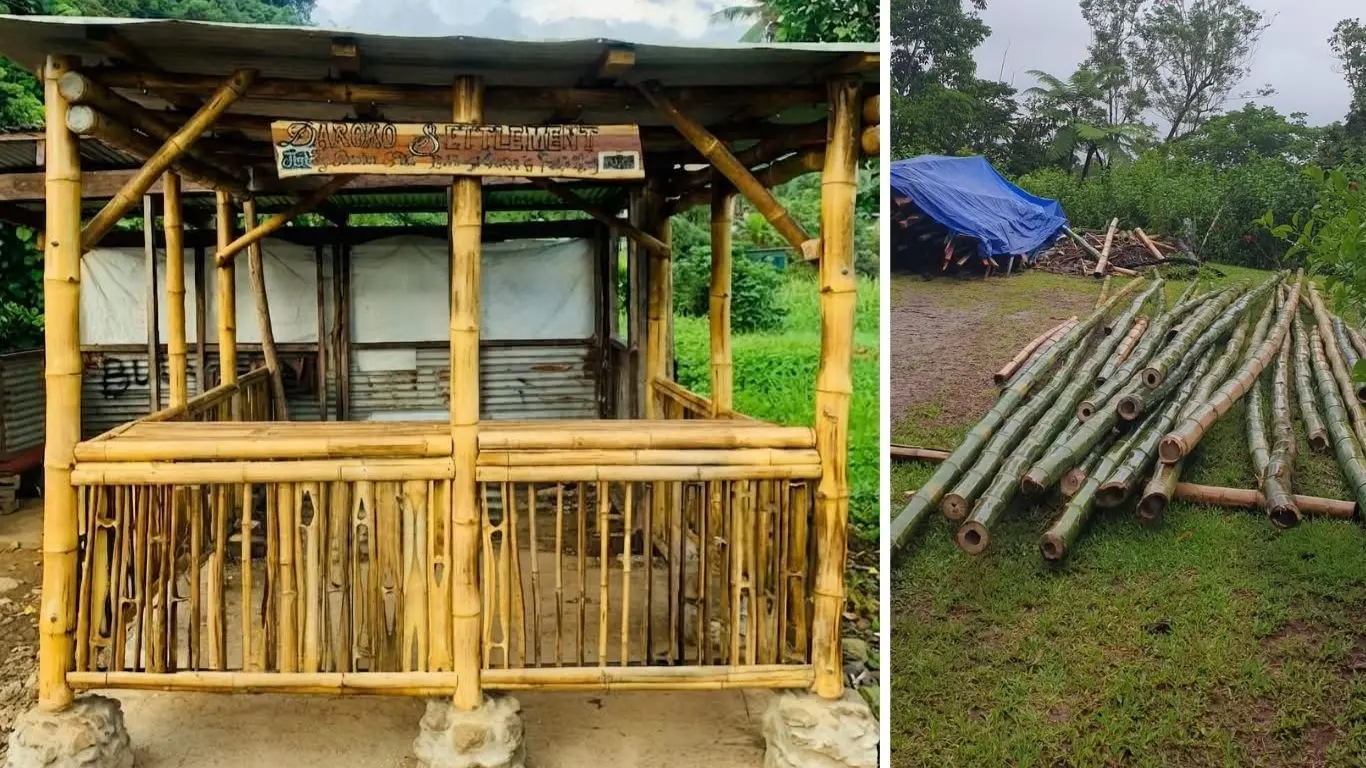
At Daroko Settlement, the team saw a bamboo-built market stall demonstrating how locally sourced materials could be used for community infrastructure.
At Urata Primary School Kindergarten, the team saw a bamboo playground and outdoor facility built using locally sourced bamboo and minimal purchased materials.
For Mr Roös, the playground demonstrated what communities could achieve using resources available locally.
“We can utilise our local resources from the land, and then we can build it. And look at this beautiful playground that we built here, and that the kids can use,” Mr Roös said.
He said concerns about bamboo’s durability could be addressed through proper treatment, design and engineering.
“Bamboo can last 50 years plus if you treat it, design with it, and engineer with it correctly,” Mr Roös said.
GGGI said the examples in Savusavu showed how bamboo could be used in agroforestry, community infrastructure, construction and tourism.
Through the Fiji Bamboo to Adapt and Mitigate Climate Change project, GGGI and its partners are supporting local knowledge, innovation and collaboration to develop bamboo’s potential as part of Fiji’s transition towards a low-emissions, climate-resilient future.
The project is supported by the New Zealand Ministry of Foreign Affairs and Trade (MFAT) and the Irish Foreign Ministry under the LECRD Phase 2 Pacific regional programme.
PUBLIC SERVICE BROADCAST: This content is produced with support from the Public Service Broadcast grant. Connecting Fijians with transparent, timely, and trusted information.