Marou women lead climate resilience project after decades of coastal flooding
Erosion forced families to live with decades of flooding
Monday 31 August 2026 | 15:00
Updated 31 August 2026 | 16:28 FJT
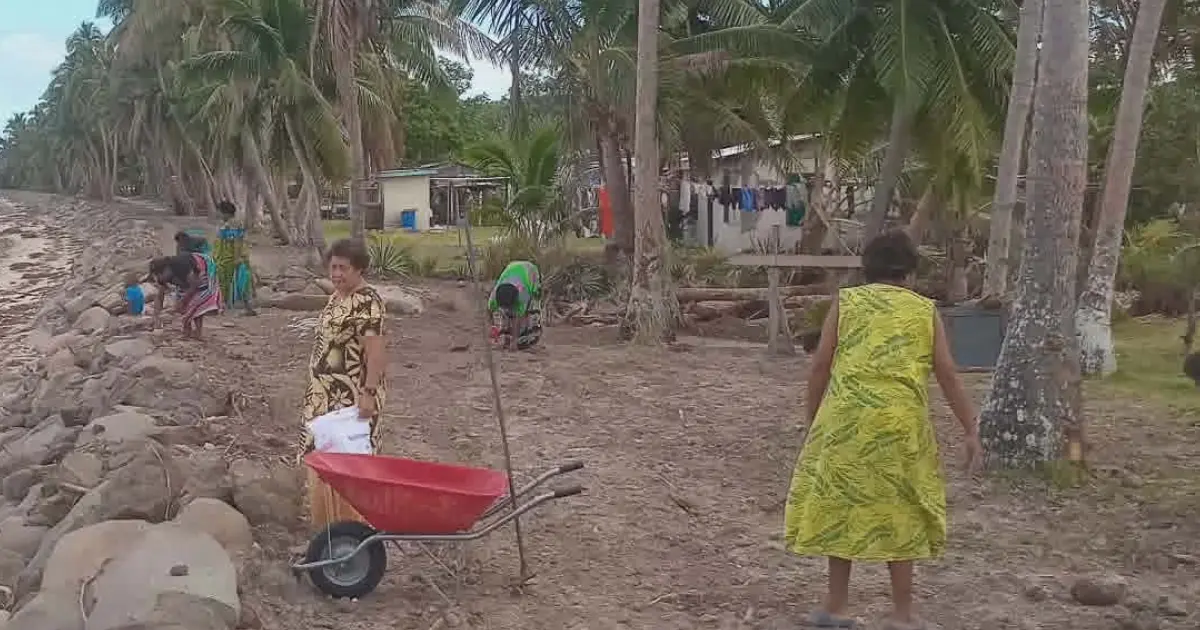
Women of Marou help clear rocks and debris along the rehabilitation site, when the coastal protection works began early this year.
Photos :Supplied
For more than 30 years, coastal erosion and flooding have disrupted life in Marou Village, Yasawa, forcing families to live with the growing threat of the sea.
Now, women in the village are helping lead the response to climate change following the completion of a nature-based seawall and improved drainage system.
The project has reclaimed part of the eroding coastline and strengthened protection for homes, land and livelihoods.
Related stories
For 49-year-old villager Asilika Momoyalewa, the change has been significant.
She said heavy rain often combined with seawater to flood the village, forcing women to clean their homes, protect their belongings and continue caring for their families despite the disruption.
The erosion was also so severe that some village graveyards had to be relocated further inland as the shoreline disappeared.
But Marou has now gone four months without flooding, even during periods of heavy rain.
The seawall project was spearheaded by the Soqosoqo Vakamarama iTaukei ni Yasana ko Ba (SSViT Ba), in partnership with the Ministry of Agriculture and Waterways, and supported by Women’s Fund Fiji and the UNDP GEF Small Grants Programme Fiji.
SSViT Ba coordinator Leilani Tora said the project demonstrated what communities could achieve when women, Government and development partners worked together.
“This is what ownership looks like communities coming together to protect their homes, livelihoods and future generations,” Ms Tora said.
She said women and youth across Yasana o Ba were driving community-based solutions to climate change, flooding and agricultural challenges.
“The women themselves identified issues affecting them, and we work with partners and donors to address them,” she said.
Ms Tora said the Marou project was the organisation’s second coastal protection initiative, including the Yavusania riverbank project in Nadi.
She said the Marou seawall was more than infrastructure, it was a community-led response to the growing impacts of climate change.
“Because when the coastline changes, women feel the impact in their homes first. When women lead the response, they help build safer and more resilient communities,” she said.