Yavusania fights to hold on to its land
Located in Sikituru, Nadi, heavy rain can quickly turn the village into an island, cutting residents off from the outside world and forcing them to move livestock to safety.
Tuesday 29 September 2026 | 08:00

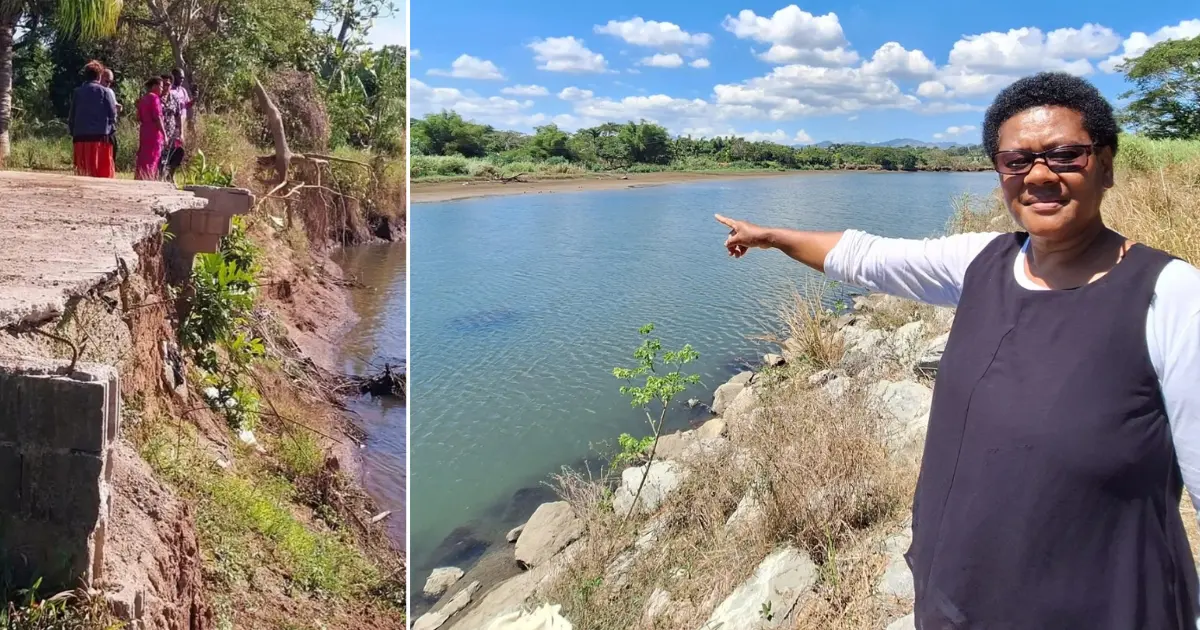
Yavusania Village women’s group representative Loraini Nailevu points to the riverbank where sugarcane and vegetation farms once stood before soil erosion claimed the land in Yavusania, Nadi. (Inset) Remains of the foundation of a house that collapsed following soil erosion along the riverbank at Yavusania Village in Nadi.
Photo: Katherine Naidu.
Yavusania villagers have learnt to live with floods, but they are now fighting to hold on to their land, homes and livelihoods as riverbank erosion continues to eat away at the village.
Located in Sikituru, Nadi, heavy rain can quickly turn the village into an island, cutting residents off from the outside world and forcing them to move livestock to safety.
Village spokesperson Isaia Nailevu, 59, said the community had become accustomed to preparing for floods.
Related stories
“This is the first village in Nadi that is flooded. When you hear that there’s heavy rain from the Qeleloa side, then surely Yavusania is underwater,” Mr Nailevu said.
“For us, we are used to flooding; when water comes in, we know what to do. We have plenty of livestock in the village, and it all gets affected. We move our livestock to safety beforehand when flooding crosses our path.”
But while villagers have learnt to cope with floodwaters, they are struggling against the erosion of the riverbank.
Mr Nailevu said riverbank erosion had already claimed four houses and was eating into land once used for homes, sugarcane and other vegetation.
The village’s location makes it particularly vulnerable.
“There are rivers upstream from Dratabu, Nawaka and Togomasi that join to form the Nadi River. When the waterways come together, they form a big U-turn around the village. When the river floods, the water spills into the village, leaving us like an island with no way out,” he said.
Memories of 2012
The community has already experienced the devastation flooding can cause.
Mr Nailevu recalled the 2012 flood, when water entered homes and destroyed belongings.
“Back in 2012 we had a major flood, and our houses were flooded, and it affected us badly. Not only Yavusania but Nadi at large were affected. Everything in the house got washed away, including the TV and settee and whatever valuables we had.”
The changing river has also affected traditional food sources.
Mr Nailevu said freshwater mussels that were once harvested near the village could no longer be found because the water had become salty.
“No, we can no longer dive for freshwater mussels here since the water is salty. For mussels we have to dive around the Nadi bridge,” he said.
Women lead fight against erosion
With the threat growing, village women have taken the lead in protecting the riverbank.
They spearheaded a riverbank reclamation project with support from the Soqosoqo Vakamarama ni Yasana o Ba and Women’s Fund Fiji under the Climate Justice and Humanitarian Action thematic area in 2024.
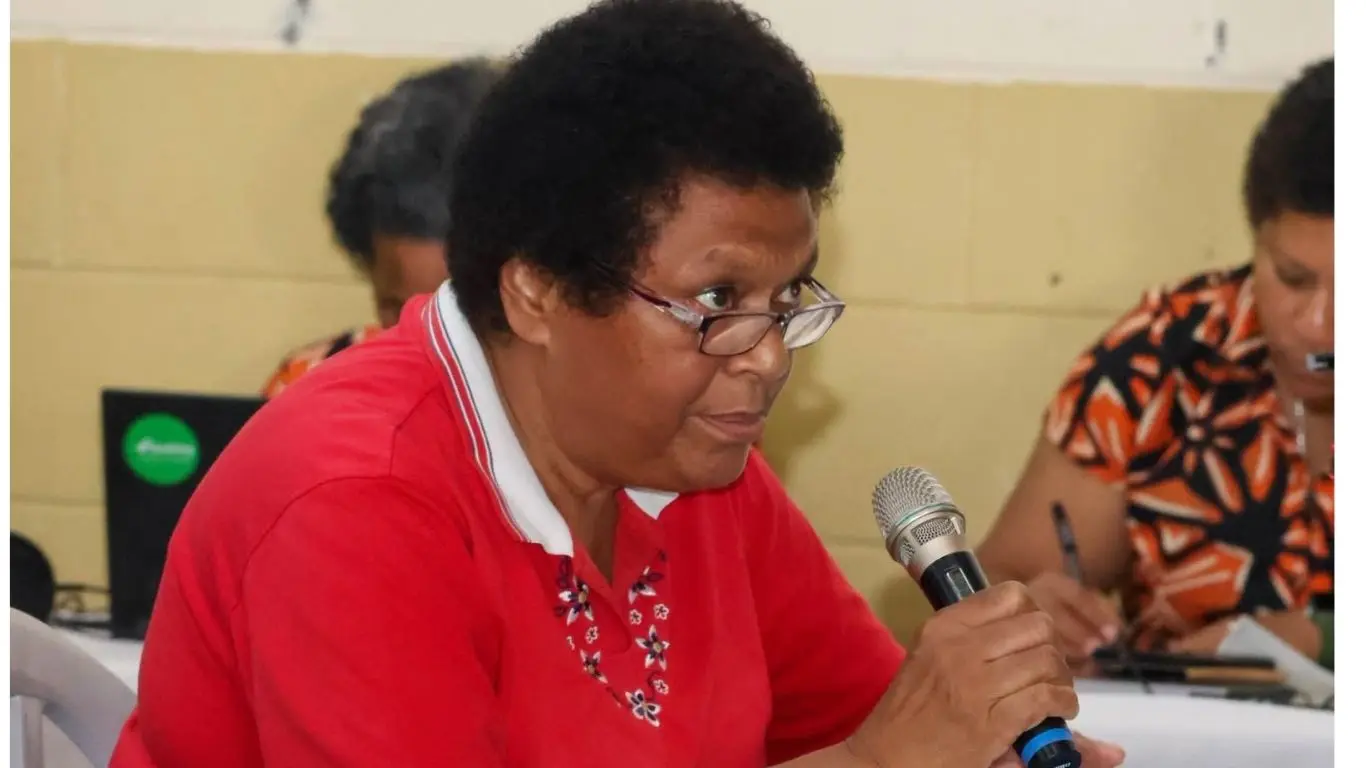
Village women’s group representative Loraini Nailevu, 50, said the landscape had changed significantly.
“Four houses were there, and the land was all filled with sugarcane. That sugarcane was on the riverbank. Straight from there was the river; now it has bent because of the small island, just five or six years ago,” Mrs Nailevu said.
The project involved placing large boulders along the riverbank to slow erosion, at an estimated cost of about $150,000.
“We placed big rocks on the riverside to stop soil erosion. The rocks were bought from Lomolomo and were placed here,” she said.
However, Mrs Nailevu said the protection was only temporary.
“This is temporary for 10 years; then we do not know what will happen. About 30 people from an NGO have visited this site recently.”
The community is now seeking protection for another 200 metres of riverbank.
“Our plea is for another 200 metres in the front. We are banking on the door,” she said.
For Yavusania, preparing for floods has become part of everyday life. But as the river continues to eat away at the village, the bigger fight is to protect the land beneath their homes and livelihoods.