Government urged to make disaster preparedness disability-inclusive
Disabled People’s Federation calls for accessible transport, warnings and evacuation centres
Thursday 27 August 2026 | 19:00
Updated 28 August 2026 | 14:22 FJT

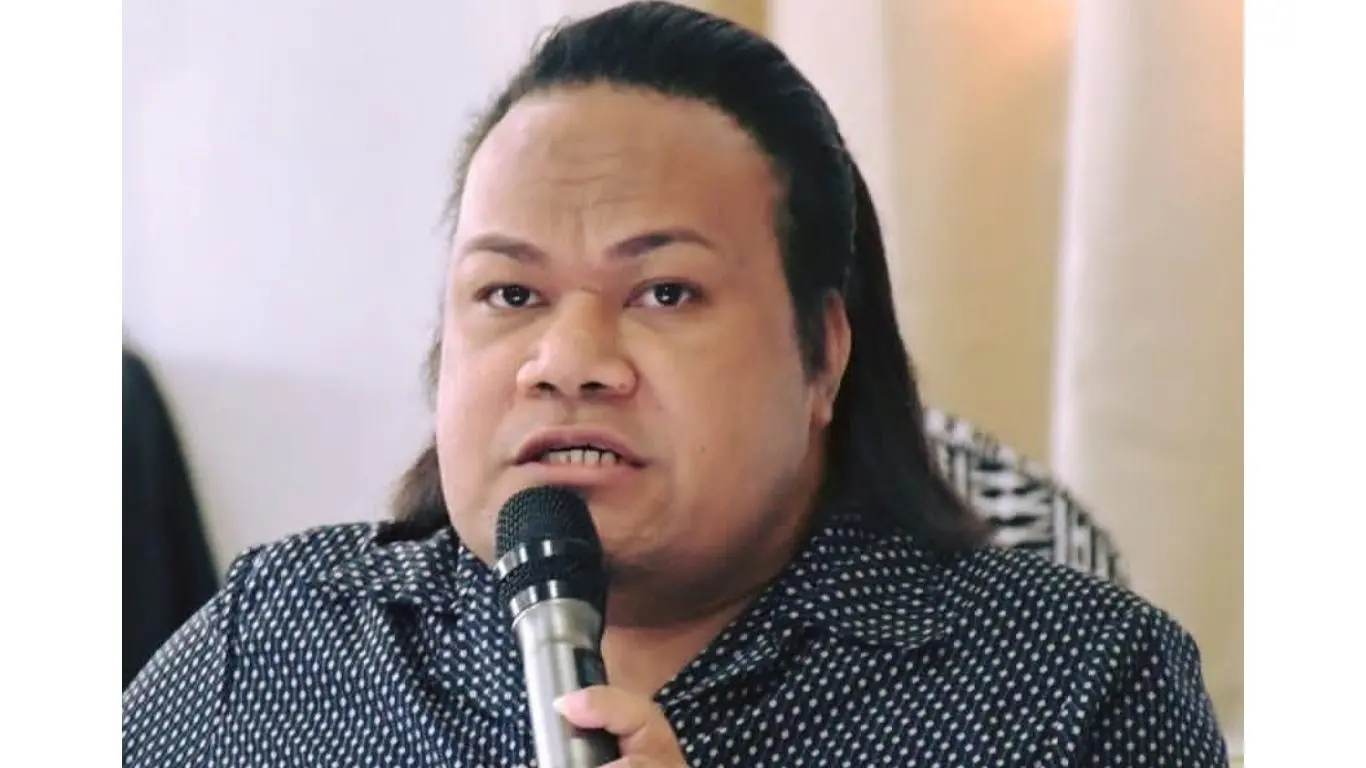
Fiji Disabled People's Federation Program Coordinator Jay Nasilasila
Fiji must turn disability-inclusive disaster policies into practical action so persons with disabilities can evacuate safely.
Fiji Disabled People's Federation programme coordinator Jay Nasilasila said Fiji had made progress in recognising disability inclusion in disaster risk reduction, but the gap was often between policy commitments and what happened on the ground.
Mr Nasilasila said persons with disabilities were often overlooked in community disaster planning, evacuation procedures, early warning systems, evacuation-centre management and disaster assessments.
Related stories
“For example, authorities may know that persons with disabilities live within a community, but may not have information about the specific support they require to evacuate safely,” Mr Nasilasila said.
He said preparedness must consider the different requirements of persons with disabilities.
“A Deaf person may need warnings in sign language or accessible visual formats. A blind person may need accessible information and orientation support,” he said.
“A person with an intellectual disability may require information in Easy Read or plain language. A wheelchair user may receive the warning but still be unable to evacuate if accessible transportation is unavailable.”
“Receiving an early warning does not automatically mean a person is able to take early action.”
He said Organisations of Persons with Disabilities (OPDs) and persons with disabilities themselves must be meaningfully involved in designing, testing, implementing and reviewing disaster preparedness plans.
“They must not simply be consulted after decisions have already been made,” he said. One of the biggest challenges is physical accessibility.
Some evacuation centres may have steps, narrow entrances, steep or unsafe ramps, inaccessible toilets and bathrooms, or internal spaces that are difficult for wheelchair users and people with limited mobility to navigate safely. Mr Nasilasila said accessibility went beyond infrastructure.
“We need accessible emergency information, appropriate signage, lighting, communication support, sign language interpretation where required, accessible water, sanitation and hygiene (WASH) facilities, privacy and protection, and arrangements for people who require Personal Assistants, caregivers or other support,” he said.
He said there must also be consideration for assistive devices.
“A person should not have to leave behind their wheelchair, walking frame, white cane or other essential assistive device simply because evacuation transportation or the evacuation centre cannot accommodate it,” he said.
“We need to move from asking, ‘Is this building an evacuation centre?’ to ‘Can everyone actually evacuate to it, enter it, use its facilities and remain there safely and with dignity?’”
For persons with disabilities in rural, remote and maritime communities, existing barriers can become more serious during climate-related emergencies.
Distance from services, limited accessible transportation, poor road conditions, maritime transport, communication challenges and limited access to assistive technology can all affect preparedness, evacuation, response and recovery.
“When roads, jetties or communication networks are disrupted, persons with disabilities who already face difficulties accessing services can become even more isolated,” Mr Nasilasila said.
Climate change also affects livelihoods, food and water security and household income.
For persons with disabilities and their families who may already experience economic exclusion, repeated disasters can deepen those inequalities.
“This is why localisation is critical,” he said.
“Rural and maritime communities must have the capacity, resources and information to prepare before a disaster occurs. Persons with disabilities living in those communities must be part of community disaster committees and local decision-making.”
Mr Nasilasila said Fiji already had important commitments relating to disability rights and disaster risk reduction.
“The priority now is ensuring that disability inclusion is translated into clear standards, responsibilities, budgets and accountability at every level of Government,” he said.
Disability inclusion should be systematically embedded across national, divisional, provincial, district and community disaster planning.
This should include mandatory accessibility standards for evacuation centres, accessible early warning and public information, disability-inclusive evacuation procedures, appropriate collection and use of disability-disaggregated data, reasonable accommodation, accessible transportation and meaningful participation of OPDs.
“Importantly, policy without resources will not deliver inclusion,” Mr Nasilasila said.
“If Government agencies and local authorities are expected to implement disability-inclusive disaster management, adequate resources must be allocated to make it happen.”
He said the relationship between local authorities, first responders and OPDs must be established before a cyclone warning was issued, not during an emergency.
“Local authorities, first responders and OPDs should work together throughout the disaster management cycle – preparedness, response, recovery and resilience-building,” he said.
This means involving OPDs in community disaster planning, evacuation-centre accessibility audits, simulations and drills, early-warning design, responder training and post-disaster assessments.
There should also be clear coordination arrangements so authorities know which OPDs to contact and OPDs know which Government focal points to engage when an emergency occurs.
“Persons with disabilities and OPDs bring lived experience and technical knowledge,” Mr Nasilasila said.
“We understand the barriers because we experience them, but we also bring solutions.”
“The principle of ‘Nothing About Us Without Us’ must therefore become operational practice within disaster management.”
The immediate priority is to ensure every community knows who may require additional support before the next disaster occurs and has an inclusive, practical evacuation and preparedness plan developed with persons with disabilities themselves.
“It is not enough to have names on a list,” Mr Nasilasila said.
“Agencies need to understand the barriers people may face and the support required to act on an early warning safely and with dignity, while ensuring personal information is handled appropriately.”
He said authorities should be able to answer key questions before an emergency.
“Who requires accessible transportation? Who needs communication support? Which evacuation centre is accessible? Who may need assistance evacuating? Can people bring their assistive devices? What happens if the usual caregiver or support person is unavailable?”
“These questions must be answered before an emergency, not while a cyclone is approaching.”
Ultimately, Mr Nasilasila said disability inclusion could not remain an optional addition to disaster preparedness.
“If an evacuation plan does not work for persons with disabilities, then it is not an inclusive evacuation plan,” he said.
“If an early warning cannot be understood or acted upon by everyone, then it is not fully effective.”
“Our goal should not simply be to say ‘no one left behind’.”
“We must build disaster systems that make leaving no one behind possible in practice.”