Constitution must secure future of indigenous Fijians, says Low
The former Lautoka mayor also backs the Great Council of Chiefs and calls for Fiji to remain a Christian state.
Monday 19 October 2026 | 18:30
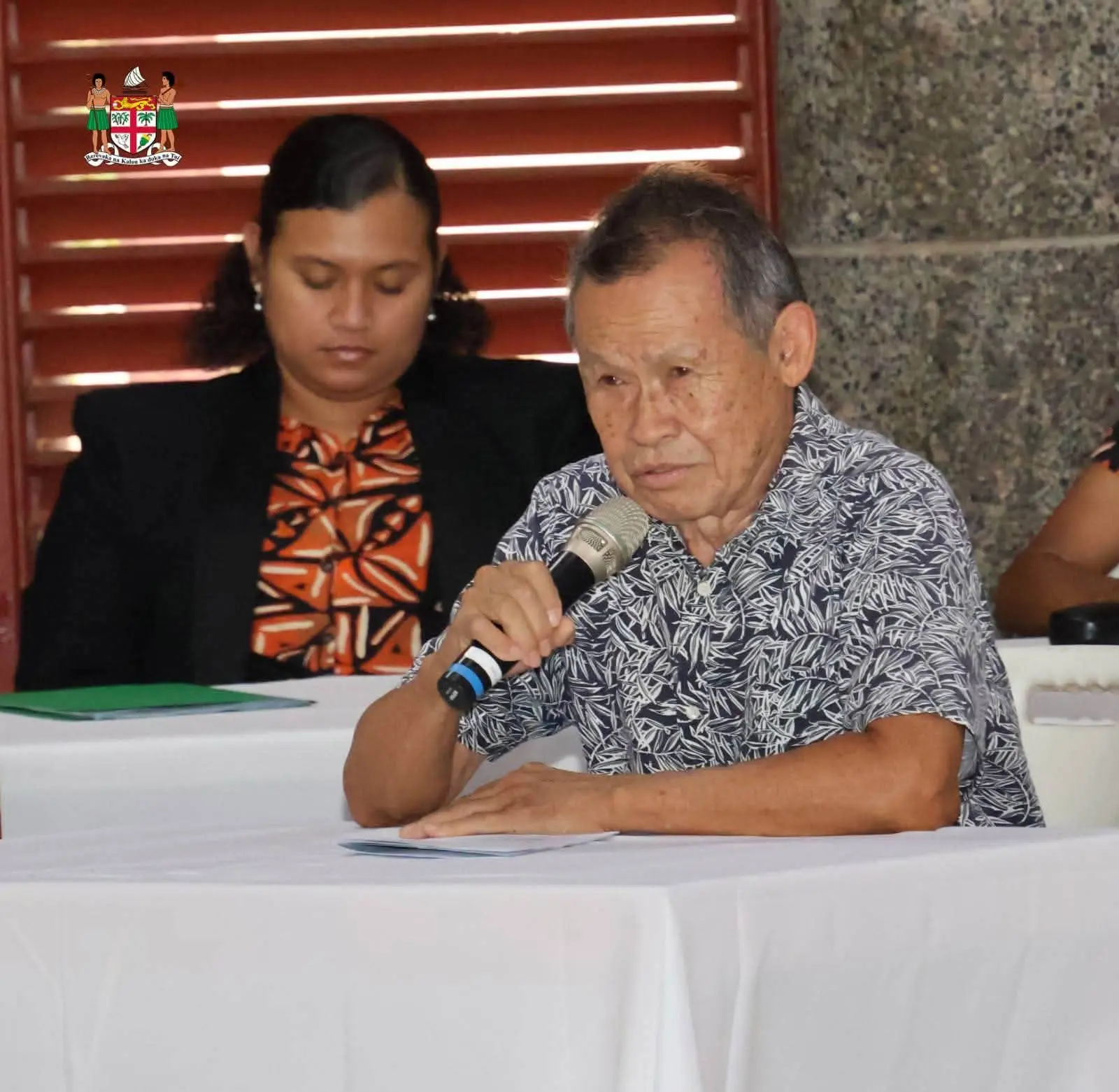
Former Lautoka City mayor Kenneth Low urges constitutional safeguards to protect indigenous Fijian culture and rights.
He told a public consultation on the Constitution Amendment Bill in Lautoka last Saturday that changing population dynamics could have long-term implications for indigenous identity.
Mr Low questioned the fairness of a system in which indigenous Fijian communities took generations to grow while immigrants could acquire Fijian identity within a comparatively short period.
Related stories
He urged the Government to ensure the Constitution provided stronger safeguards for indigenous Fijians, warning that population changes could affect the preservation of their culture and identity.
“Their numbers will build up with every plane load,” he said, referring to immigrants arriving in Fiji.
“But the Fijians, the natives, in order to increase their population will have to spend nine months and then forever after that 16 years to educate and bring them up.
“Whereas the other way, people land here, five years later, they all become Fijians. Is that fair?”
Mr Low cited England, Australia and New York as examples of places experiencing demographic changes, arguing that Fiji needed to consider the implications for its indigenous population.
“So, Sir, what I’m trying to say is that you make sure that the Constitution protects the native Fijian culture benefits as well as what’s rightfully yours,” he said.
His submission placed indigenous rights and national identity at the centre of the constitutional debate, with Low arguing that reform must establish a firm legal foundation for future generations.
A third-generation Sino-Fijian architect and builder, Mr Low previously served as a Fiji senator and Senate vice-president from 2005 to 2006. He also served as Lautoka mayor.
Although he initially favoured a complete overhaul of the Constitution, he said he ultimately supported the Government’s approach to amending it.
Low backs Christian state, Great Council of Chiefs
Mr Low also voiced strong support for the Great Council of Chiefs (GCC) and the recognition of Fiji’s Christian identity.
He acknowledged that Fiji was becoming increasingly religiously diverse, with Christians, Hindus, Muslims, Buddhists and other communities forming part of the country’s social fabric.
“I fully supported GCC and I fully support Fiji as a Christian state,” he said.
He stressed that recognising Christianity did not mean excluding people of other faiths.
“But at the same time, there is nothing wrong acknowledging that Fiji was, is and in present and future, a Christian state,” he said.
His position highlighted the challenge facing constitutional reform: recognising Fiji’s historical and cultural foundations while respecting the rights of its diverse communities.
Call for action on drugs, crime and corruption
Mr Low also raised concerns about drug activity and public disorder in Fiji’s urban areas, criticising what he viewed as inadequate police action.
He called for stronger action against corruption and criminal activity within the judiciary and public service, saying those entrusted with public responsibilities must be held accountable.
He also proposed raising the retirement age for judges, arguing that older and experienced members of the judiciary still had valuable knowledge to contribute.
His submission broadened the debate beyond constitutional wording, touching on law enforcement, judicial accountability and public confidence in state institutions.