Could Brazil’s ‘Water With Life’ idea help Fiji farmers?
The Trott Bailey family is using shallow irrigation channels, organic matter and solar-powered pumping to improve water use and soil health.
Tuesday 29 September 2026 | 15:00
Updated 30 September 2026 | 17:04 FJT

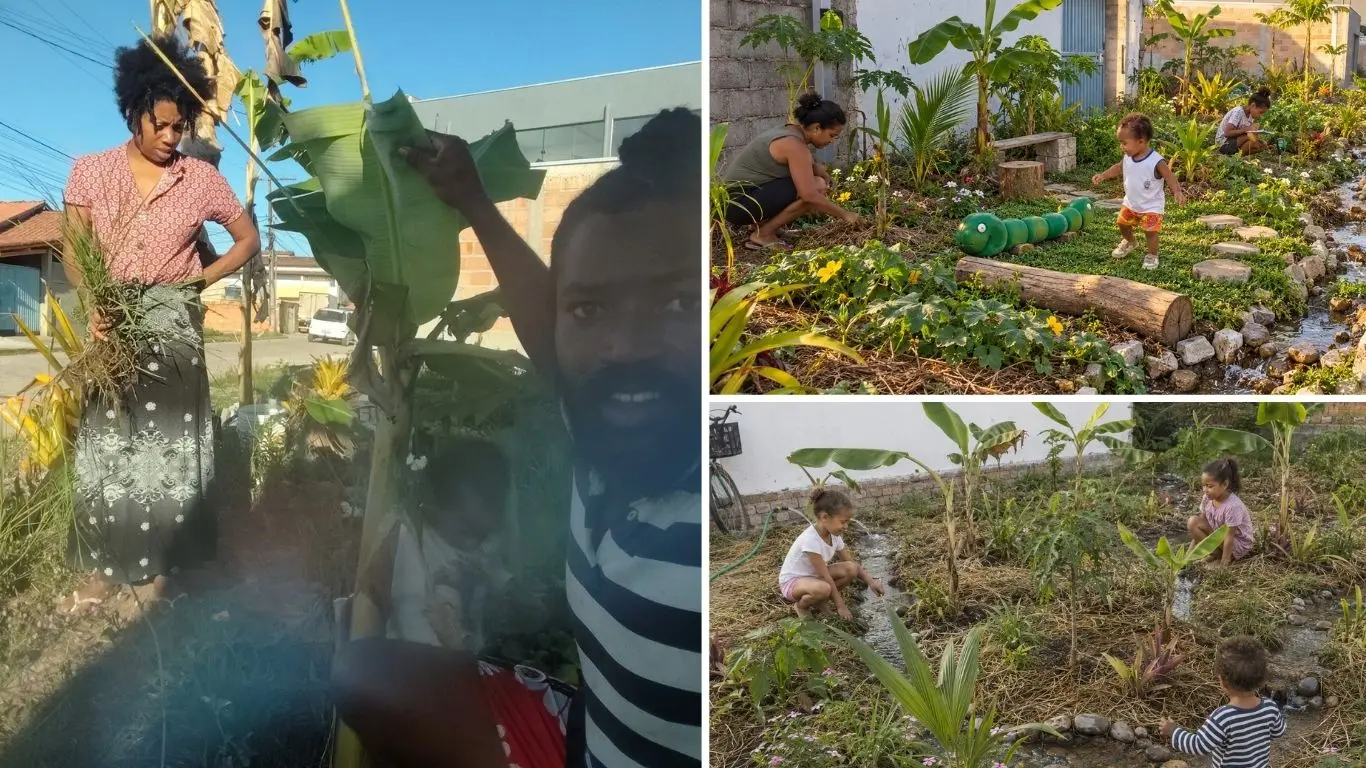
A family in Brazil is taking a different approach to one of farming’s biggest challenges — how to keep crops alive when water becomes scarce.
The Trott Bailey family of Prado, Bahia, was prompted to share its experience after reading a recent report in this newspaper about Minister for Agriculture, Waterways and Sugar Industry Tomasi Tunabuna urging Fiji farmers to prepare for prolonged dry conditions by storing water and protecting their livestock and crops.
For the family, the answer begins with treating water as more than something simply pumped through pipes to crops.
Related stories
Its “Water With Life” concept uses open, shallow water channels through orchards to simultaneously irrigate plants, cool the soil, support habitat and encourage water to seep into the ground.
The family believes irrigation water can do more than reach a plant’s roots.
As water moves through an orchard, it can wet the soil, support vegetation, attract insects and birds, and contribute to a cooler microclimate.
The approach is particularly relevant to their farm in Prado, where the family says the soil is highly sandy and has limited capacity to retain water.
Their goal is therefore not only to store water in tanks, but to build soil that can hold more water over time.
Leaves, mulch, roots and decomposing plant material are used to increase organic matter and create what the family describes as “living islands” beneath established trees.
From sandy ground to living soil
The family says it has observed richer, darker soil beneath mature trees, where years of fallen leaves, roots and organic material have accumulated.
That observation has shaped its approach to farming.
Instead of clearing vegetation and organic material away, the family is using it to improve the growing environment.
Its philosophy is simple: use life to create the conditions for more life.
Solar pump to power experimental irrigation
At their Prado site, the family says groundwater is available at about five metres.
They are exploring the use of a small solar-powered pump to lift water during daylight hours and distribute it through shallow orchard channels.
The experimental system uses low-cost materials, including stones, gravel and organic matter, to test where water should flow, slow down and seep into the soil.
The family stresses that the inexpensive prototype is not intended as a permanent irrigation system.
Instead, it is being used to determine the most effective water pathways before investing in longer-lasting materials such as stone, clay, shaped earth or durable liners.
Protecting the groundwater
The family also recognises the risks of returning surface water directly to a borehole.
Its proposal keeps the wellhead protected while directing used irrigation water to a separate “water-return garden”, where stones, roots and soil can slow and distribute the flow.
The system is not presented as a substitute for proper water treatment, particularly for drinking water.
Rather, it is designed to help the landscape absorb and retain water while protecting the groundwater source.
A lesson for dry conditions
The Trott Bailey family says its experiment is ultimately about changing the way farmers think about water.
Instead of asking only how to get water from a source to a crop, it is asking how much life the water can support along the way — and how that process can improve the soil for the next dry period.
Its philosophy can be summed up simply: Pump water. Give it to life. Build better soil. Let the soil hold more water.
For a country preparing its farmers for prolonged dry conditions, the Brazilian experiment offers another perspective on water conservation — one that puts soil health, vegetation, habitat and irrigation into the same conversation.