Coups drove talent out of Fiji, says academic
He said the loss of skilled workers continued after later political upheavals, turning Fiji's public service into a "training ground" for migration.
Wednesday 22 July 2026 | 14:00

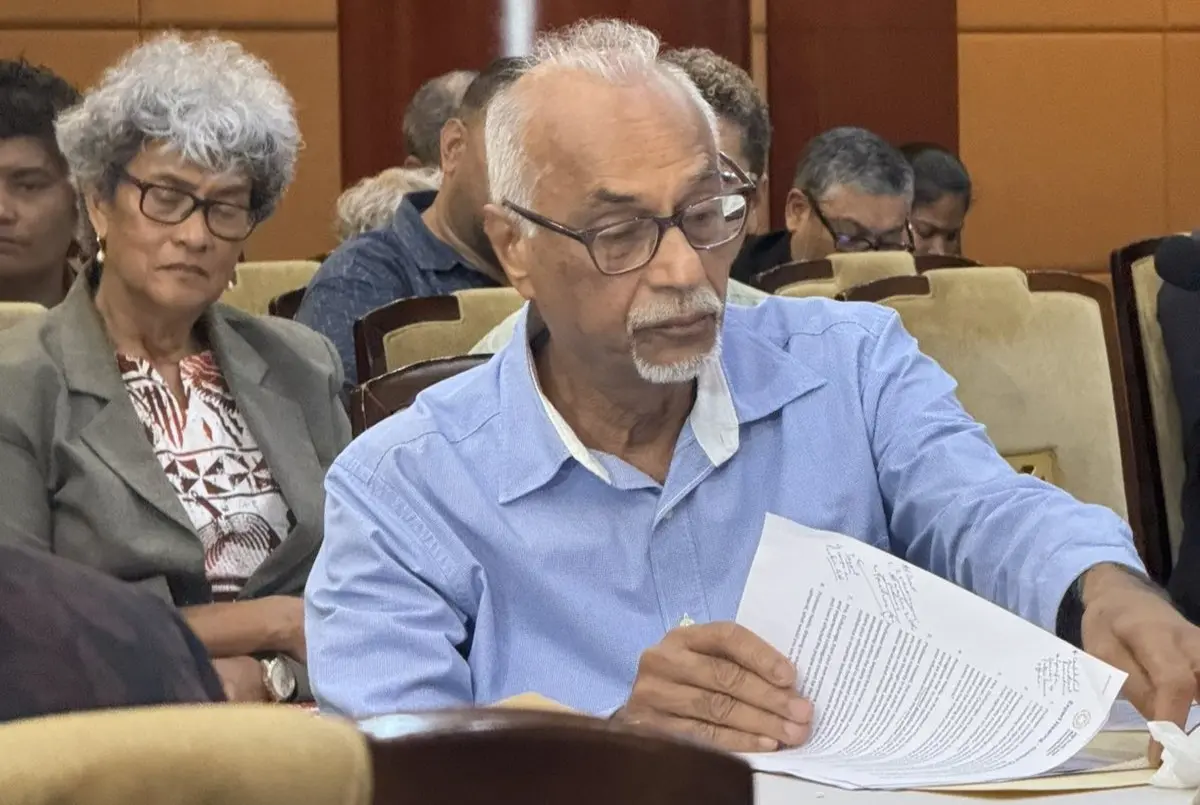
The teachers, doctors, engineers and accountants who left Fiji after the 1987 and 2006 coups left more than empty offices—they left a public service that is still struggling to recover, Professor Vijay Naidu says.
Speaking at the Fiji Truth and Reconciliation Commission's Expert Roundtable Discussion yesterday, Professor Naidu said the political upheavals triggered a brain drain that continued to weaken government services decades later.
"The brain drain wasn't just about people leaving Fiji," he said.
Related stories
"It was a brain drain on Fiji itself. It weakened the country."
Professor Naidu said Government Gazette records from 1987 to 1989 showed an unusually high number of resignations from the public service, particularly among teachers and health workers, following the first coups.
"When you look at those Government Gazettes, particularly in 1987, 1988 and 1989, you see the number of teachers and medical staff who resigned from the service," he said.
He said the loss of skilled workers continued after later political upheavals, turning Fiji's public service into a "training ground" for migration.
"People gained three to five years' experience in ministries before migrating to Australia and New Zealand," he said.
Professor Naidu said international agencies, including the World Bank, found that many government infrastructure projects struggled not because of a lack of funding but because ministries no longer had enough experienced professionals to implement them.
He said ministries lost engineers, accountants and technical experts, while the Office of the Auditor-General also experienced high staff turnover, delaying government audits and weakening financial accountability.
The health sector was among the hardest hit.
Professor Naidu said the Auditor-General's 2008 report recorded 330 vacant positions in the Ministry of Health, with 71 per cent of those vacancies involving essential medical staff, including doctors, nurses and dental officers.
He said the shortage of skilled professionals reduced the quality of public services and increased the cost of medical malpractice claims against the State.
"The brain drain had an impact on public goods, on health, education, financial services and the delivery of government services," he said.
Professor Naidu said the consequences extended beyond the loss of skilled workers overseas.
He said Fiji also lost valuable institutional memory as experienced public servants retired or migrated, while a climate of fear created after the coups discouraged independent policy advice within government.
"The ability of the public service to provide impartial policy options was weakened," he said.
He said while much research had focused on the political leaders and constitutional issues surrounding the coups, little attention had been paid to the long-term damage inflicted on Fiji's public service.
Professor Naidu said the Fiji Truth and Reconciliation Commission's inquiry was the first major effort in two decades to examine how the coups affected the country's public institutions and service delivery.
"This is the first time in 20 years that this question has been asked," he said.