Dry spell drives up vegetable prices at Labasa Market
Market vendors say their incomes have also been affected as farmers and middlemen increase prices to cover rising costs.
Saturday 07 November 2026 | 06:00

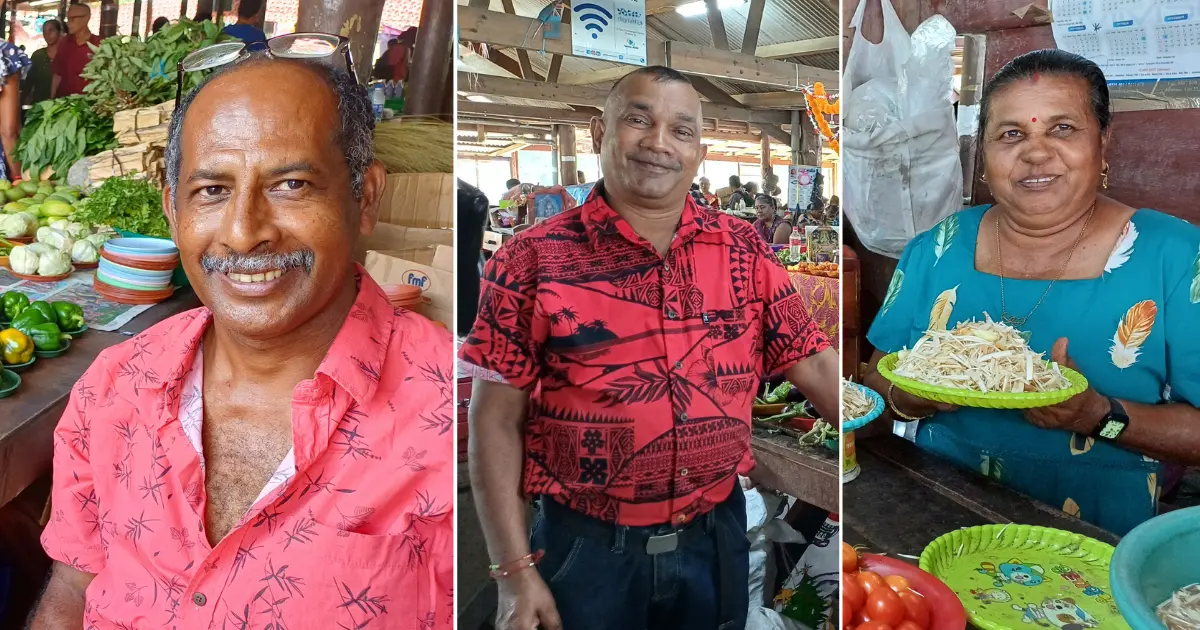
From left: Rupeni Vesikula, Salend Kumar and Suman Chandra at Labasa Municipal Market on November 6, 2026.
Photos: Shratika Naidu
The prolonged effects of El Niño have affected the quantity and quality of vegetables, fruits and root crops supplied to the Labasa Municipal Market.
Market vendors say their incomes have also been affected as farmers and middlemen increase prices to cover rising costs.
Farmers sell their produce at higher prices to middlemen, who then add a further mark-up to cover expenses such as transportation and delivery before supplying vendors.
Related stories
Vendors, in turn, have little choice but to increase their prices to maintain their businesses and meet household expenses, including preparations for Diwali and the long weekend.
Rupeni Vesikula, who operates a vegetable farm at Korotari in Labasa, said he worked as a farmer from Monday to Thursday before preparing sacks and bundles of vegetables to sell at his Labasa market stall on Saturdays.
“Selling my own farm produce has enabled me to escape from the mercies of the middlemen,” Mr Vesikula said.
“I sell vegetables at the same price like any other vendors at the market and I am to meet the daily household expenses.”
However, the father of one said water disruptions were his biggest challenge.
“El Nino has made it impossible for me to water my farm and carry out household chores,” he said.
“The Water Authority of Fiji only allows us to have water supply only certain hours in the night.”
Mr Vesikula said he and his wife had to sacrifice their sleeping hours to fill drums with water.
Another vendor, Salend Kumar, of Nagigi, Labasa, said his household had been without water for many weeks.
“Despite the ongoing challenges, I have to come to the market by 6am to set up the table and hoping restaurant owners would come to buy the vegetables,” Mr Kumar said.
“Everyone involving in the vegetable business are affected and we need to understand all those involved in the food chain.”
He said the country had not experienced a drought of this nature for about a decade.
Suman Chandra, a market vendor of Labasa said the month of Diwali preparations was usually a period when vendors looked forward to making a profit, as many people followed vegetarian diets and required more vegetables to prepare meals.
“This time it is one of those moments where we feel a natural disaster has struck forcing people not to buy vegetables and survive whatever little food is available to eat,” Ms Chandra said.
“We can’t always depend on Government for assistance but the least they could do is to learn from this situation and invest more on water tanks and boreholes instead of distributing freebies to start business.”
She said access to water was essential for everyone, including people living in villages and settlements across Fiji.
Labasa Market Vendors and Farmers Association president Waisea Makulau said some vendors stayed at the market until nightfall in an effort to sell all their vegetables.
“If we are seriously working towards reducing Non-Communicable Diseases (NCDs) then we need to address the issue of water crisis where people can eat and drink properly,” Mr Makulau said.
“If water is available then vegetables will grow nicely and supply will be steady and customers will be able to afford to buy and eat.”