El Niño impacts could linger in Fiji
Dr Simon McGree of the Australian Bureau of Meteorology highlighted the risk while presenting an El Niño-Southern Oscillation update at the 8th Pacific Meteorological Council meeting in Nuku’alofa, Tonga.
Monday 14 September 2026 | 07:00
Updated 14 September 2026 | 11:18 FJT

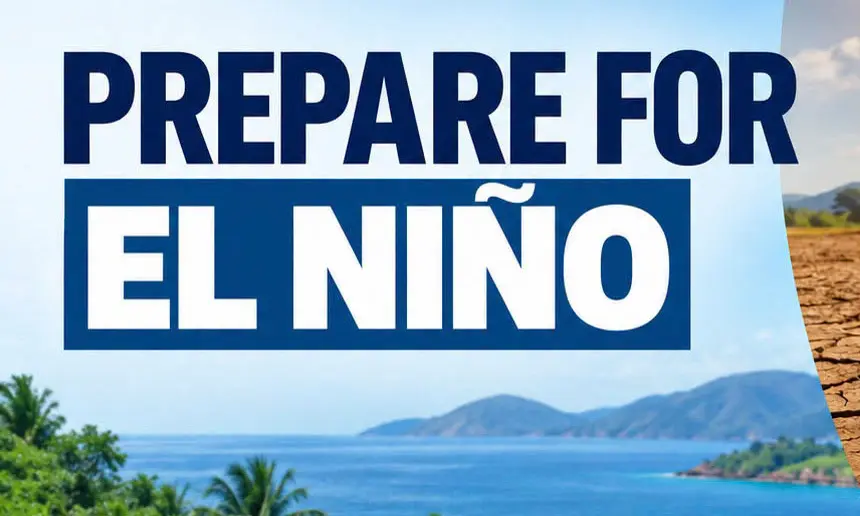
Fiji could face delayed and prolonged impacts from the current strong El Niño, with suppressed rainfall potentially continuing for months after the event itself begins to weaken.
Dr Simon McGree of the Australian Bureau of Meteorology highlighted the risk while presenting an El Niño-Southern Oscillation (ENSO) update at the 8th Pacific Meteorological Council meeting in Nuku’alofa, Tonga.
He said oceanic and atmospheric indicators were consistent with a strong El Niño, which was declared in June.
Related stories
“In terms of the El Nino status, both oceanic and atmospheric industries are consistent with a strong El Nino, and this El Nino was declared in June earlier this year.
“Forecasts show the El Nino continue to strengthen, and it is predicted to peak towards the end of this year or in early 2027.”
Dr McGree said the event was already tracking among the stronger El Niño events of recent decades.
The paper presented to the meeting said most models indicated the event was likely to reach levels above the warmest observed since reliable records began in 1950.
It is expected to persist into March to May 2027.
Rainfall risk
For Fiji, one of the major concerns is below-normal rainfall and the possibility that the effects could continue after El Niño itself weakens.
The paper said rainfall impacts from El Niño have historically been delayed in Fiji, Tonga and the Federated States of Micronesia because of their location away from the equatorial Pacific.
There can be a lag of one or more months between the onset of El Niño conditions and the emergence of impacts in these countries.
Dr McGree said rainfall forecasts showed a clear contrast across the Pacific.
“The forecasts show significantly below normal rainfall predicted for the western Pacific, northwest Pacific, and southwest Pacific, and significantly above normal rainfall predicted for the central and eastern equatorial Pacific over both three-month period.”
According to the paper, areas with a strong likelihood of below-normal rainfall could face an increased risk of drought, reduced freshwater availability, agricultural impacts and increased pressure on water resources.
$314m impact
Dr McGree also pointed to the 1997–98 El Niño to demonstrate how serious the impacts could become for Fiji and, importantly, how late some of those impacts could occur.
“Here we're looking at an example of past impacts. In this case, I've chosen to provide you with World Bank estimates of damage and recovery costs associated with the 1997-98 El Nino. It is very likely that the most severe impacts are yet to occur. On the right, we have damage and recovery costs in the order of 314 million Fijian dollars. And it's worth noting that these impacts were largely in the second year of the El Nino, in the dry season, after the El Nino event had come to an end.”
He said most models indicated the current event would persist into March to May 2027.
“And this brings me to my next point. And that is, most models have the 26-27 event persisting into the March to May period, 2027. It is likely, based on past experience, that suppressed rainfall will continue for several months after that for some countries in the central and south Pacific.”
The paper similarly warns that impacts can persist for one or more months after El Niño conditions begin to weaken or conclude.
Ocean impacts
El Niño is also expected to affect ocean temperatures and sea levels across the Pacific.
Dr McGree said forecasts showed above-normal sea surface temperatures across the central and eastern equatorial Pacific and below-normal temperatures in parts of the western and southwest Pacific.
“The reddish colours are associated with above normal temperatures forecast for the central and eastern equatorial Pacific, and the blue associated with below normal temperatures for the western and southwest Pacific.”
He said significantly warmer waters in parts of the region could have consequences for marine ecosystems.
“Those significant above normal temperatures are very likely going to be associated with marine heat waves and coral bleaching in that part of the Pacific.”
The paper also warns that changes in ocean temperatures can influence the distribution and availability of important fisheries resources, including tuna, with potential implications for fishing activities and livelihoods.