Fiji develops standards to support clean energy transition
Deputy Prime Minister Manoa Kamikamica says international standards must be adapted to Fiji’s local conditions and social and economic needs.
Wednesday 14 October 2026 | 16:30

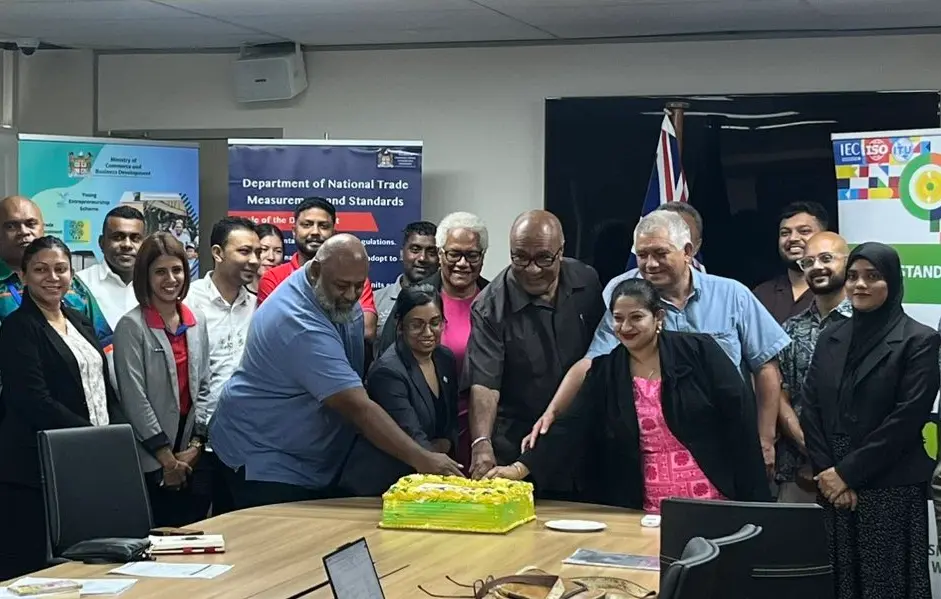
Deputy Prime Minister and Minister for Industries, Commerce and Business Development Manoa Kamikamica with various stakeholders during the celebration of the World Standards Day.
Photo: Talei Matairakula
Fiji is developing standards to improve safety and support the transition to affordable and clean energy.
The Government is working towards meeting its commitments under United Nations Sustainable Development Goal 7 (SDG 7), which focuses on affordable and clean energy.
Deputy Prime Minister and Minister for Industries, Commerce and Business Development Manoa Kamikamica said the standards were being developed in consultation with stakeholders through the Department of National Trade Measurement and Standards (DNTMS).
Related stories
“Standards are one of the practical tools that turn ambition into something that people can rely on,” he said during World Standards Day yesterday.
He said standards could help ensure household electrical appliances were safe and renewable energy systems performed as promised.
Mr Kamikamica said access to affordable, reliable and sustainable energy remained a national priority as Fiji faced the challenges of climate change and sought to reduce its reliance on imported fossil fuels.
“International standards play a critical role in making this vision a reality by ensuring that energy systems are safe, reliable, efficient, and operable.
“For Fiji, SDG 7 is a national priority as we understand both the opportunities and the challenges in securing sustainable energy access while addressing climate change and strengthening resilience.”
The ministry is also developing a national standardisation strategy to align international and national standards with Fiji’s social and economic needs.
Mr Kamikamica said international standards needed to be adapted to local conditions to ensure they met Fiji’s requirements.
“Ultimately, if our standards are good, they need to be the right fit for Fiji.”
He said standards were also becoming increasingly important as Fiji adopted new technologies, including artificial intelligence, which raised questions about transparency, accountability, security and public trust.
Fiji is among six Pacific island countries participating in a project on the responsible adoption of artificial intelligence.
The project is led by Standards Australia in partnership with the Commonwealth Scientific and Industrial Research Organisation and Ethical AI Consulting, with funding from the Australian Government.