Urban iTaukei 'losing touch' with traditional roots
The iTaukei Affairs Board says many urban residents are unaware of their ancestral villages, mataqali, tokatoka or VKB registration status.
Monday 02 November 2026 | 13:30
Updated 02 November 2026 | 14:41 FJT
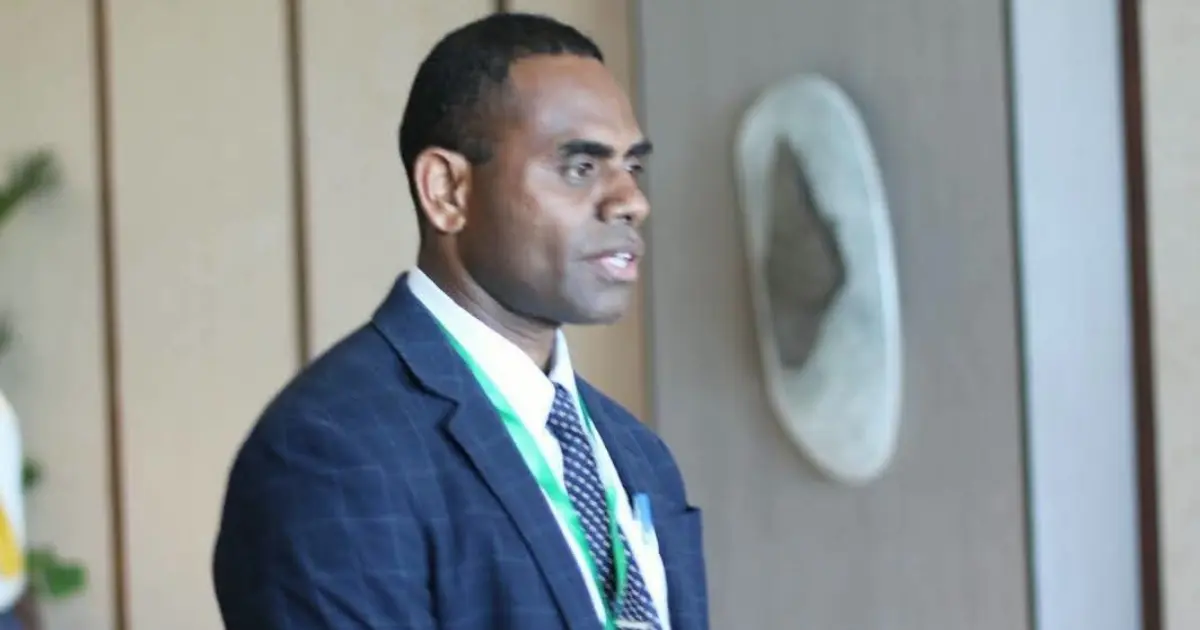
Senior administration officer of the iTaukei Affairs Board's Urban Service Unit (USU), losefo Vereivalu, at Sofitel Fiji Resort and Spa in Nadi.
Photo: Supplied
Some iTaukei living in urban settlements have lost touch with their traditional identities, with many unaware of their ancestral villages, mataqali, tokatoka or registration status in the Vola ni Kawa Bula (VKB).
iTaukei Affairs Board Urban Service Unit (USU) senior administration officer Losefa Vereivalu raised the concern during the Ba Provincial Council meeting at Sofitel Fiji Resort and Spa in Nadi last week.
Mr Vereivalu said some had moved away from their villages as children, while others had lived in urban settlements for generations without knowing their ancestral connections.
Related stories
This was particularly concerning for those facing possible displacement and being advised to return to their villages without knowing where their ancestral homes were.
"Many of them do not know their tokatoka or mataqali," he said.
The USU is profiling iTaukei communities to establish their traditional links and help them reconnect with their heritage.
The exercise has started in Suva and Lami, with plans to extend it to the Western and Northern divisions.
Mr Vereivalu urged the Ba Provincial Council and traditional leaders to help identify iTaukei living in settlements, establish their ancestral connections and clarify their VKB registration status.
The programme covers formal and informal settlements through community visits, training and awareness sessions.
Figures presented at the meeting showed that 477,500 people, or 55 per cent of Fiji's population, lived in urban areas. Of these, 296,050 were iTaukei, making up 62 per cent of the urban population.
Re-established in 2024, the USU operates under the iTaukei Affairs Board to address the social, economic, cultural and governance challenges facing urban iTaukei communities.
It also works with Government agencies, local authorities and civil society groups on issues including housing, health, education, policing, land and social welfare.
Mr Vereivalu said demand for the unit's services was growing as more iTaukei moved to urban areas and fewer remained in villages.