'No community should be too remote for weather warnings'
Dr Latu said warnings needed to reach beyond major population centres to people living in outer islands and remote communities.
Thursday 10 September 2026 | 14:00

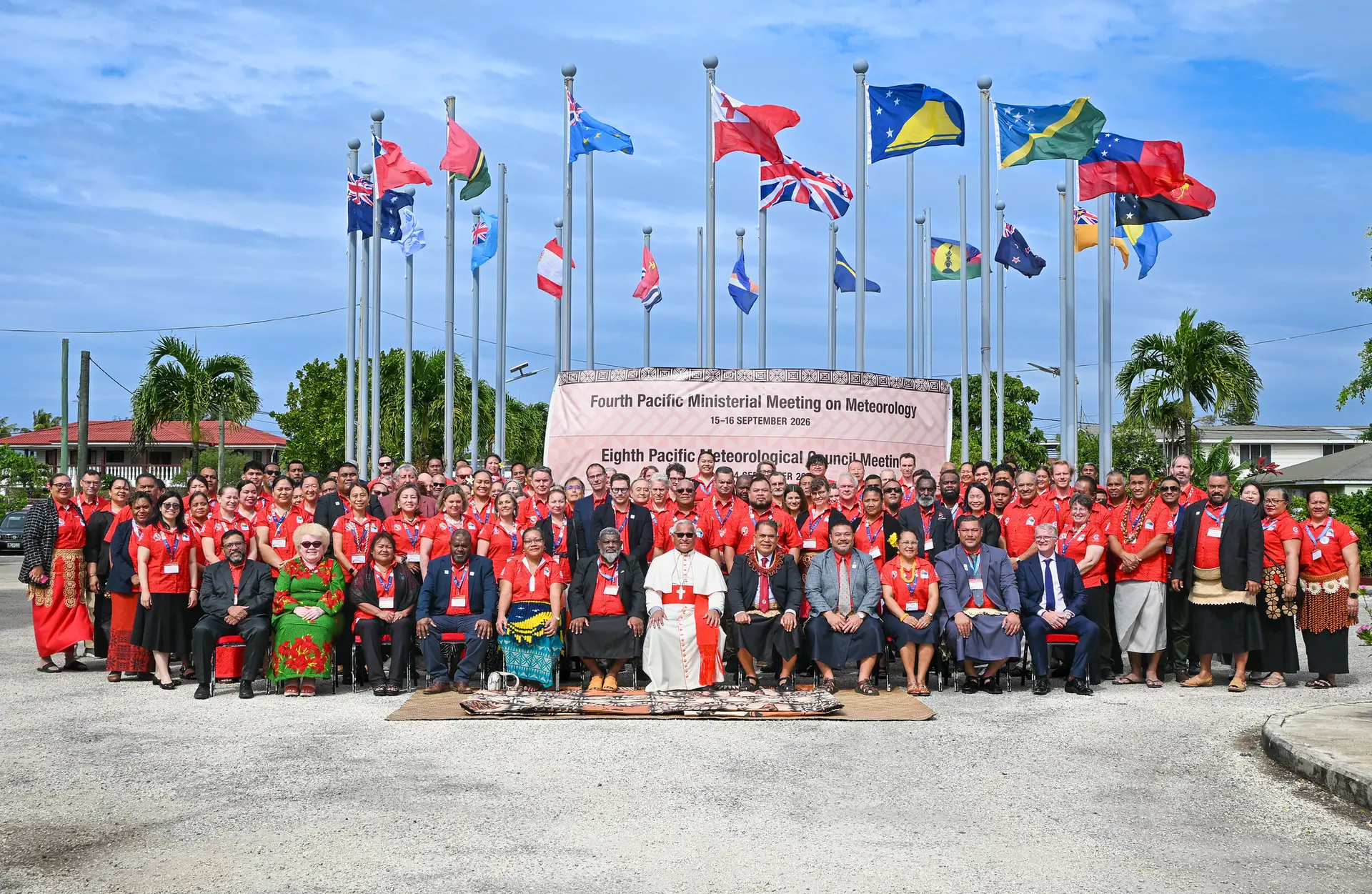
Participants of the 8th Pacific Meteorological Council meeting in Nuku'alofa, Tonga on September 10, 2026.
Photo: Pacific Community
No community should be too remote to receive a weather warning.
That is the challenge laid before Pacific meteorological directors as they gather in Nuku’alofa, Tonga, for the Eighth Pacific Meteorological Council meeting, which opened this morning.
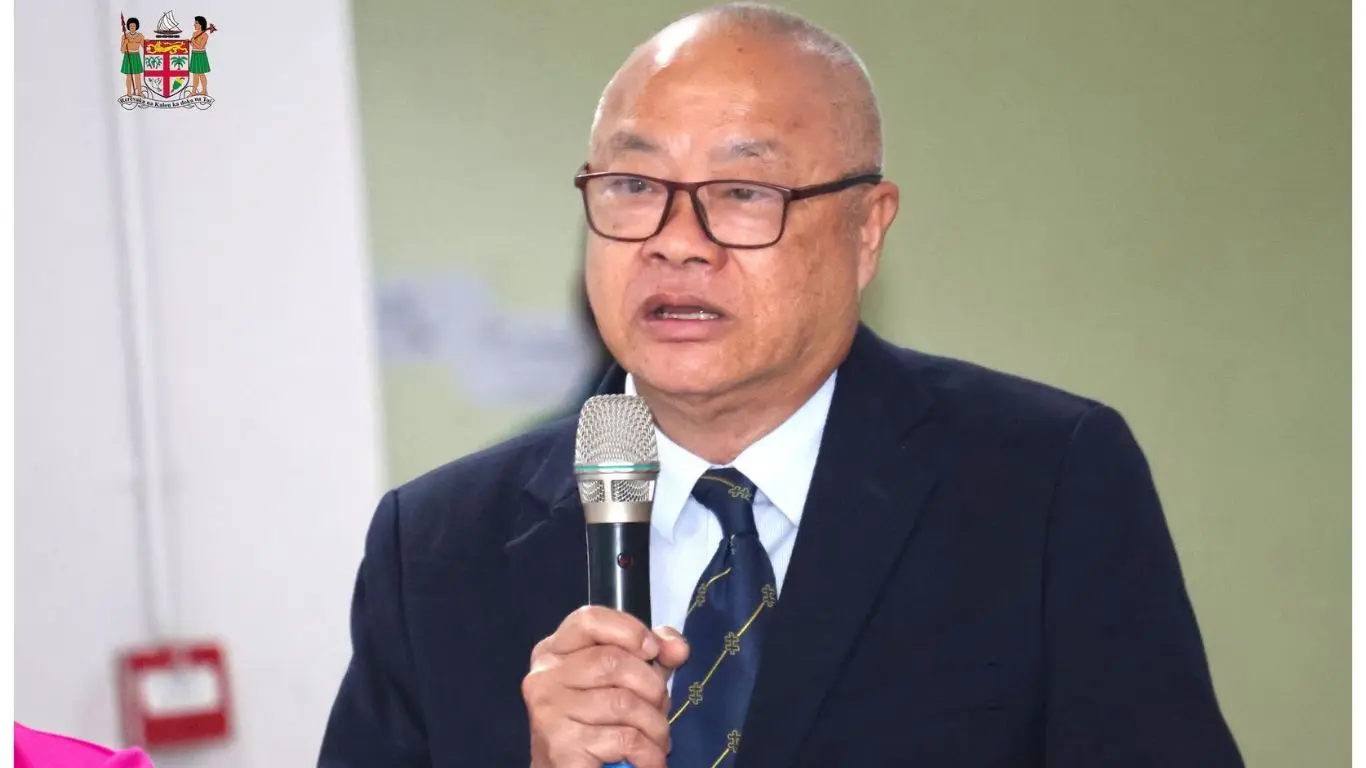
Tonga’s Deputy Prime Minister Dr Viliami Uasike Latu, while opening the meet said this was where the true value of Pacific weather and climate services must be measured, not simply by sophisticated technology, but by whether ordinary people receive information early enough to act.
Related stories
Dr Latu said warnings needed to reach beyond major population centres to people living in outer islands and remote communities.
“This is why Early Warnings for All must mean exactly that: warnings for all—including people in our outer islands, persons with disabilities, women, children, older persons and those living in our most remote communities.”
“No Pacific Island should be considered too small, and no community too remote, to receive an effective warning.”
For ordinary people, that could mean having enough information to decide whether it was safe to fish, whether crops should be planted, whether children should be sent home from school or whether a family should evacuate.
Timely warnings
For a farmer deciding whether to plant, a fisherman preparing to head to sea, a school responsible for sending children home or a family facing evacuation, Dr Latu said getting a weather warning in time can make all the difference.
Dr Latu put communities at the heart of the region’s push to strengthen early-warning systems.
“A forecast has little value if it does not reach the farmer deciding whether to plant, the fisherman preparing to go to sea, the airline determining whether it is safe to fly, the school deciding whether children should return home, or the family deciding whether it is time to evacuate.”
His message comes as Pacific communities face destructive tropical cyclones, droughts, floods and other hazards that can threaten livelihoods, food security, education and lives.
Dr Latu said having advanced forecasting technology was not enough if warnings failed to reach those who needed them.
“The true measure of a meteorological service is therefore not simply the sophistication of its technology.
“It is whether the right information reaches the right person, in a form they understand, early enough for them to act.”
Warnings for everyone
Dr Latu said weather had always influenced the everyday decisions of Pacific people.
Long before satellites, radars and modern forecasting systems, Pacific ancestors observed the natural environment to determine when to sail, plant, harvest, fish and seek shelter.
“They read the stars and the movement of the ocean. They understood winds, clouds, currents, seasons, birds and the behaviour of the sea.”
“For Tonga, this relationship with the natural environment is deeply embedded in our history, language and culture. Weather was therefore never merely a subject of scientific curiosity for Pacific peoples. It determined when we sailed, when we planted, when we harvested, when we fished and when we sought shelter.”
While technology had transformed weather forecasting, its basic purpose remained centred on people.
“Modern meteorology has transformed the tools available to us, but its fundamental purpose remains unchanged: to understand our environment so that our people can make better decisions and live safely within it.”
People remain the priority
Dr Latu said satellites would improve, forecasting systems would become more powerful and artificial intelligence would increasingly support scientists.
But technology alone would not make the Pacific weather-ready.
“The most important investment we can make remains an investment in our people—our meteorologists, hydrologists, technicians, observers, forecasters, disaster managers, communicators and the communities who ultimately turn warnings into action.”
He challenged delegates to judge their decisions by whether they ultimately made Pacific communities safer.
Dr Latu said the goal was for every community to understand the risks it faced, receive warnings in time and know how to respond.
“Our responsibility today is to combine that inheritance with the best of modern science and technology—to ensure that every Pacific community can understand the risks before it, receive warning in time, and act before a hazard becomes a tragedy.”