Pacific yachting strategy targets tourism growth in remote communities
MDF Fiji country director Kelera Cavuilati said yachting tourism had historically received less attention than tourism involving visitors arriving by air, despite its ability to reach remote destinations.
Saturday 19 September 2026 | 06:00

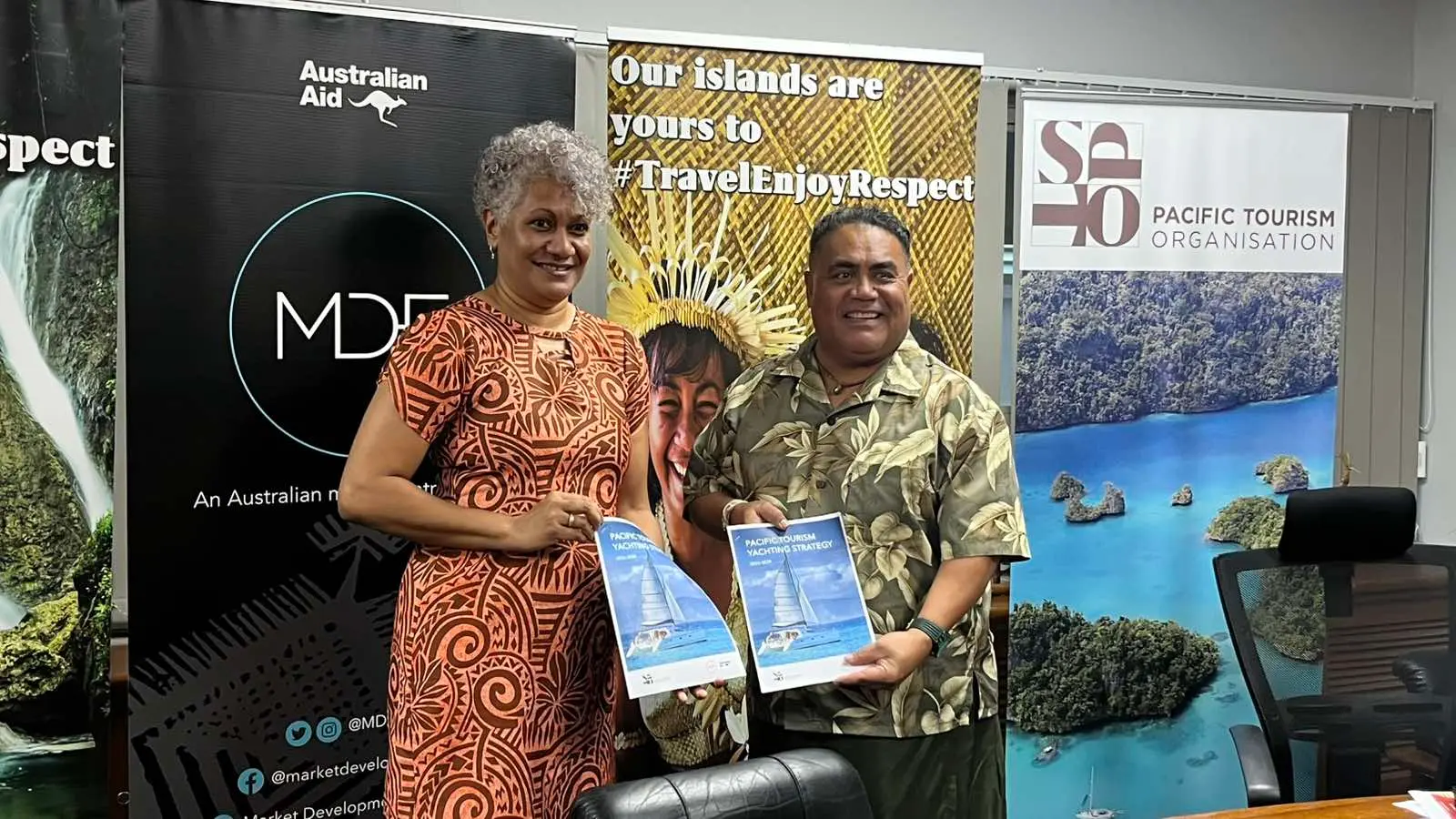
Market Development Facility Fiji country director Kelera Cavuilati (left) and South Pacific Tourism Organisation chief executive officer Christopher Cocker during the launch of the Pacific Tourism Yachting Strategy 2026-2030 on Friday.
PHOTO: Joseph Balolo.
A new Pacific yachting strategy aims to bring more tourism spending to remote island communities by attracting high-value visitors and creating opportunities for local businesses.
The Pacific Tourism Organisation (SPTO) has launched the Pacific Tourism Yachting Strategy 2026–2030, setting out a coordinated regional approach to position the Pacific as a world-class and sustainable yachting destination.
SPTO chief executive officer Christopher Cocker said the strategy was supported by growing evidence of yachting tourism’s economic contribution to Pacific communities and its potential to attract high-value, low-impact visitors.
Related stories
He said tourism receipts in the Pacific had increased from about US$2.9 billion in 2019 to US$3.9 billion in 2025, a 36 per cent increase, despite visitor numbers remaining around pre-COVID levels.
Mr Cocker said studies supported by the Market Development Facility (MDF) had demonstrated the economic value of yachting tourism, including direct spending in local communities.
He said yachts provided direct links between visitors and remote communities, with yacht travellers purchasing fresh produce and other goods and services from local businesses.
The strategy is aligned with the SPTO Strategic Plan 2025–2029 and the Blue Pacific 2050 Strategy, while promoting sustainable marine resource management, environmental protection and community benefits.
MDF Fiji country director Kelera Cavuilati said yachting tourism had historically received less attention than tourism involving visitors arriving by air, despite its ability to reach remote destinations.
She said an MDF study conducted in Fiji in 2018 estimated that yachting contributed about $59 million to the economy, with superyachts offering even greater economic potential.
Ms Cavuilati said similar studies in other Pacific countries had also demonstrated significant economic contributions.
The strategy calls for greater regional collaboration among governments, ports, marinas, tourism operators and development partners, as well as investment in infrastructure and innovation.
Mr Cocker said the strategy would serve as a living document that could adapt to changing tourism and market trends while strengthening regional connectivity, sustainable growth and ocean stewardship.
Five strategic pillars
The Pacific Tourism Yachting Strategy is built around five strategic pillars:
- Marketing, development and promotion – positioning the Pacific as a premier yachting destination.
- Policy, regulation and infrastructure – strengthening governance frameworks and visitor facilities.
- Private sector and SME development – enabling local enterprises to benefit from yachting-related opportunities.
- Sustainability and community benefits – ensuring tourism growth protects cultural heritage and marine environments.
- Regional coordination and partnerships – fostering collaboration across governments, industry and communities.