Religion and state must remain separate: Chaudhry
Mr Chaudhry said his opposition to the proposal did not mean he rejected Christian values.
Monday 26 October 2026 | 07:00

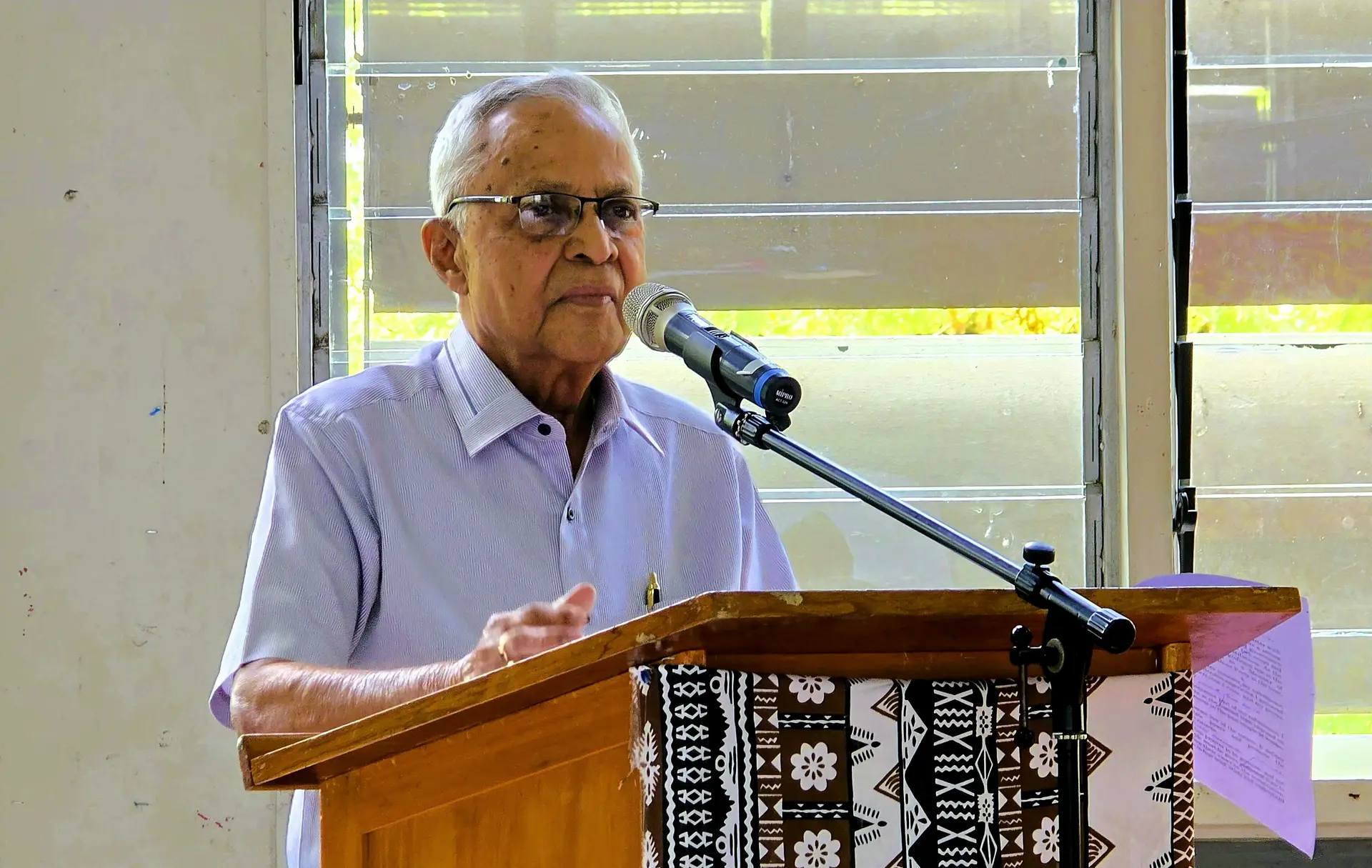
Fiji Labour Party (FLP) leader Mahendra Chaudhry has pointed to his own interfaith marriage as an example of why Fiji should remain a secular state rather than be declared a Christian nation.
The former prime minister, who is Hindu, said he and his Christian wife had maintained a harmonious marriage despite following different religions.
Speaking during public consultations on the Constitution (Amendment) Bill 2026 in Labasa on Saturday, Mr Chaudhry said religious differences had never been a problem in their relationship.
Related stories
"I am a Hindu and my wife is a Christian, we have no problems, she practises her religion and I do mine," Mr Chaudhry said.
The 84-year-old politician shared his personal experience while addressing members of the Standing Committee on Justice, Law and Human Rights.
He argued that Fiji's multicultural society was better served by a secular Constitution that protected the freedom of every citizen to practise their religion.
Mr Chaudhry opposed the proposal to declare Fiji a Christian nation, warning that giving one religion a dominant constitutional position could create divisions among communities.
Religion and state
Mr Chaudhry said his opposition to the proposal did not mean he rejected Christian values.
Having spent about 50 years in politics and public service, he said he had never had problems with Christianity or its teachings.
"I think Christian values are good values, but, I believe religion and running of a State must be kept apart," he clarified.
He maintained that religious freedom should remain protected under the Constitution, without one faith being placed above another.
Mr Chaudhry warned that declaring Fiji a Christian nation could create religious controversy and undermine harmony among the country's multicultural communities.
Reflecting on his years in public life, he reaffirmed his commitment to Fiji despite the challenges he had experienced.
"I have lived through good and bad times, and I have stayed back and I am still around because I love my nation despite all past struggles".
Khaiyum backs secularism
Former Attorney-General Aiyaz Sayed-Khaiyum also expressed support for Fiji's secular status.
He argued that people of different religious backgrounds should be free to practise their faith without the state favouring one religion.
Mr Sayed-Khaiyum referred to the biblical commandment against adultery to illustrate the distinction between religious teachings and laws enforced by the state.
He said legal enforcement was carried out through institutions such as the police and courts under legislation including the Crimes Act.
"Everyone in Fiji should have the liberty to practise their own faith," he added.
Both speakers argued for preserving religious freedom and the separation of religion from the functions of the state as Fiji considers constitutional changes.