Set wage framework before minimum wage review: FCEF
FCEF chief executive officer Edward Bernard said Fiji did not have a minimum wage council to facilitate tripartite discussions or an established wage policy and criteria to guide wage-setting decisions.
Friday 18 September 2026 | 11:30

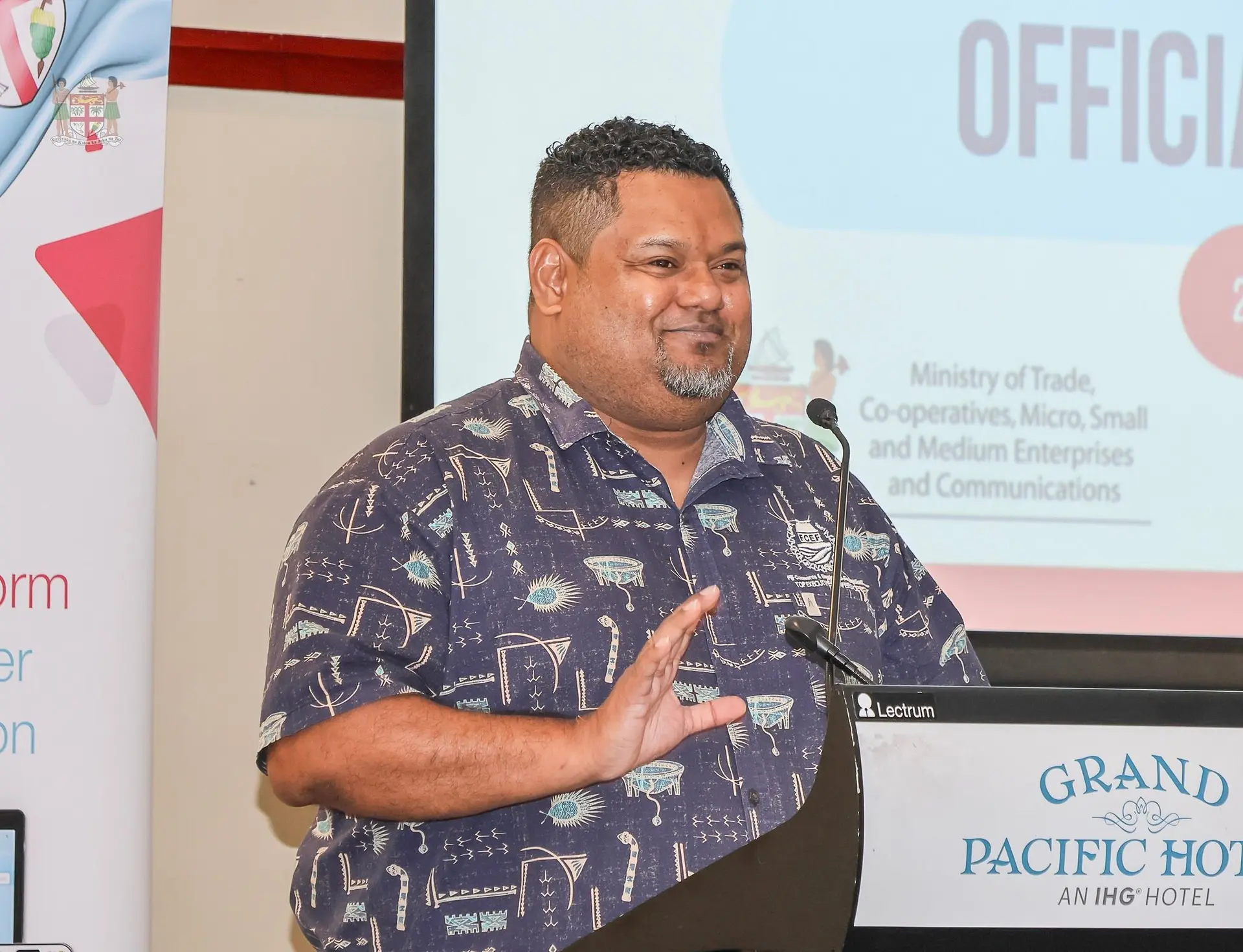
Fiji Commerce and Employers Federation (FCEF) chief executive officer Edward Bernard.
Fiji Government
The Fiji Commerce and Employers Federation (FCEF) says Government should establish a transparent and evidence-based wage-setting framework before proceeding with its comprehensive review of Fiji’s national minimum wage and 10 minimum sectoral wages.
FCEF chief executive officer Edward Bernard said Fiji did not have a minimum wage council to facilitate tripartite discussions or an established wage policy and criteria to guide wage-setting decisions.
“We do not have a minimum wage council to allow for tripartite discussions and nor do we have a wage policy or criteria to ensure transparent and evidenced based wage setting in Fiji”, said Mr Edward Bernard, the CEO of FCEF.
Related stories
FCEF made the call following Cabinet’s recent approval of a comprehensive review of the national minimum wage and minimum sectoral wages.
The Federation said Section 264(W) of the Employment Relations Act required the Minister to establish a criterion and alleged that the Ministry was already in breach of the labour law.
Mr Bernard said the national minimum wage was last increased one year and five months ago by 11.1 per cent, from $4.50 to $5 an hour.
He claimed the increase was made without set criteria, outside tripartite discussions and without disclosure of the data and evidence collected.
FCEF said the final report went from the consultants to the Ministry before a unilateral decision was made.
However, Mr Bernard welcomed Government’s plans to consider wage trends, labour market and economic conditions and productivity levels in the latest review.
“However, we are encouraged by Government plans to include wages trends, labour market and economic conditions and productivity levels as part of the announced wage reviews. These, including the huge in-bound remittance and Government’s social protection benefits that workers and households are benefiting from, are also equally important to include in the study”, highlighted Mr Bernard.
FCEF said it participated with the Fiji Trades Union Congress and the Ministry in an International Labour Organization (ILO)-organised wages workshop in June.
According to FCEF, the ILO presented information showing Fiji’s mean and median wages were comparatively higher than those in 16 countries outside the Pacific, including Indonesia, India, Vietnam, Thailand and Mexico.
FCEF said Fiji was in a similar situation when it came to the gender pay gap.
Mr Bernard said FCEF had also written to Permanent Secretary for Employment, Productivity and Workplace Relations Maritino Nemani in July outlining its concerns.
It also encouraged the Ministry to begin the technical and legal work necessary for Fiji to ratify ILO Convention No. 131 on minimum wage setting.