The Need to Address Shift From Military to Civilian Life
“It's one of the most fantastic programmes to support men and women facing issues and finding themselves in trouble."
Thursday 11 April 2024 | 23:37
Even as one of the world’s superpowers, the United States of America (USA) lacks resources to successfully transition veterans and military personnels into civilian life.
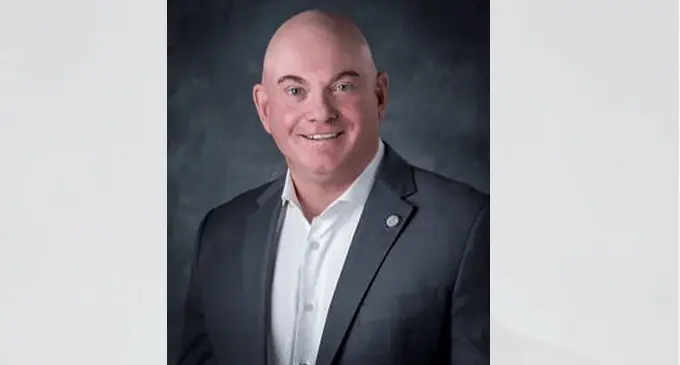
Nevada Veterans Alliance and District 3 Representative Byron Brooks highlighted this while speaking to 20 journalists from around the world.
The journalists participated in the Foreign Press Center’s “Democracy is More than Election Day” reporting tour in the USA.
Related stories
Mr Brooks said more than 200,000 veterans live in Nevada.
“In the United States, military service is well respected; however, re-adjusting back into American society after serving overseas presents some challenges," Mr Brooks said.
“They receive a lot of education in terms of what they should be doing in the military, but as they transition out, there's a shortfall in understanding how to transfer the skillset learned in military service to the civilian private sector.”
Nevada is ranked 14th in the nation regarding veteran population.
“The largest population of veterans in Nevada are those who served in Vietnam. There is roughly 67,000 of them. There is a high number of older generations, and concerns arising within the veteran community as many of them are leading efforts in our community and will eventually leave us."
He said Veteran Affairs not only holds a unique place in the USA as a separate Cabinet, but as an unbreakable society of brothers and sisters who share related experiences.
The United States Department of Veterans Affairs is a Cabinet-level executive branch department charged with providing lifelong healthcare services to eligible military veterans at the 170 VA medical centers and outpatient clinics located throughout the country.
“It's within the confines of these related experiences that veterans gather and mobilise to support one another through various means, demonstrating support with or without federal state funding or regulations,” he said.
“In other words, veterans create independent organisations to aid other veterans in the community, State, and sometimes from a national perspective. The issues veterans face range from healthcare to mental health, education, jobs, and homelessness.
“There are various areas where resources and aid could be used more effectively, while other initiatives are successful based on how veterans mobilise and take action within their communities."
He emphasised that the success of veteran treatment in court often relies on the support within the courtroom, including judges, bailiffs, and mentors who are veterans themselves.
“Veterans Treatment Courts seek to treat veterans suffering from substance abuse and/or mental health disorders while ensuring public safety, combining rigorous treatment and personal accountability to break the cycle of drug use and criminal behavior,” Mr Brooks said.
“It's one of the most fantastic programmes to support men and women facing issues and finding themselves in trouble."
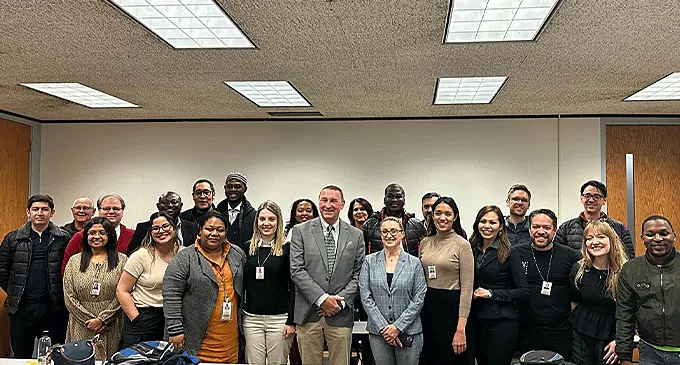
Journalists from around the World in Ohio.
Fiji case
The ‘Servicemen’s AfterCare Fund’ for veterans was established under an act of Parliament in 1944 for the aid and care of Fiji’s Armed Forces, who served during World War II (1939 – 1945).
From 1992, the veterans of the Malayan Campaign (1951 – 1956) were included and those who served during “Operation Grapple” in Malden and Christmas Island (1957- 1959) joined the Fund in 1999.
In 2007, the Cabinet approved the inclusion of members of the Armed Forces who served on peacekeeping duties. The scope of the Fund also covered widows, wives, children and other dependants.
A Committee of Management is appointed by the Minister of Finance, to administer and use the Funds for the following purposes as stipulated under the Section 4 of the Fiji Servicemen’s AfterCare Fund Cap 84:
4 (a) The aid and care (not being welfare work among persons still in the armed forces) of persons who shall have served at any time during the service in or with the Fiji Naval or Military Forces, or in any Allied Merchant Service or any Nursing Service attached to any of the Allied Forces and who, immediately before joining or leaving Fiji or their place of residence, as the case may be, to join the said Force or Services, were either residents in Fiji or being resident elsewhere, were domiciled in Fiji, and
(b) for the aid and care of the wives, widows, children and other dependents of such persons, whether or not such persons are still serving with such Forces or Services.
Meanwhile, 'Returned Soldiers and Ex-Servicemens' Association of Fiji' advocates for benefits, treatment and the welfare of ex-servicemen of the Fijian disciplined services and leading the nation in commemorative services since 1947.
Feedback: wati.talebula@fijisun.com.fj