U.S donates four boats to help Fiji combat drug trafficking, illegal fishing
Four RHIBs and upgraded naval ramp to strengthen patrols, emergency response and maritime enforcement
Thursday 13 August 2026 | 12:30

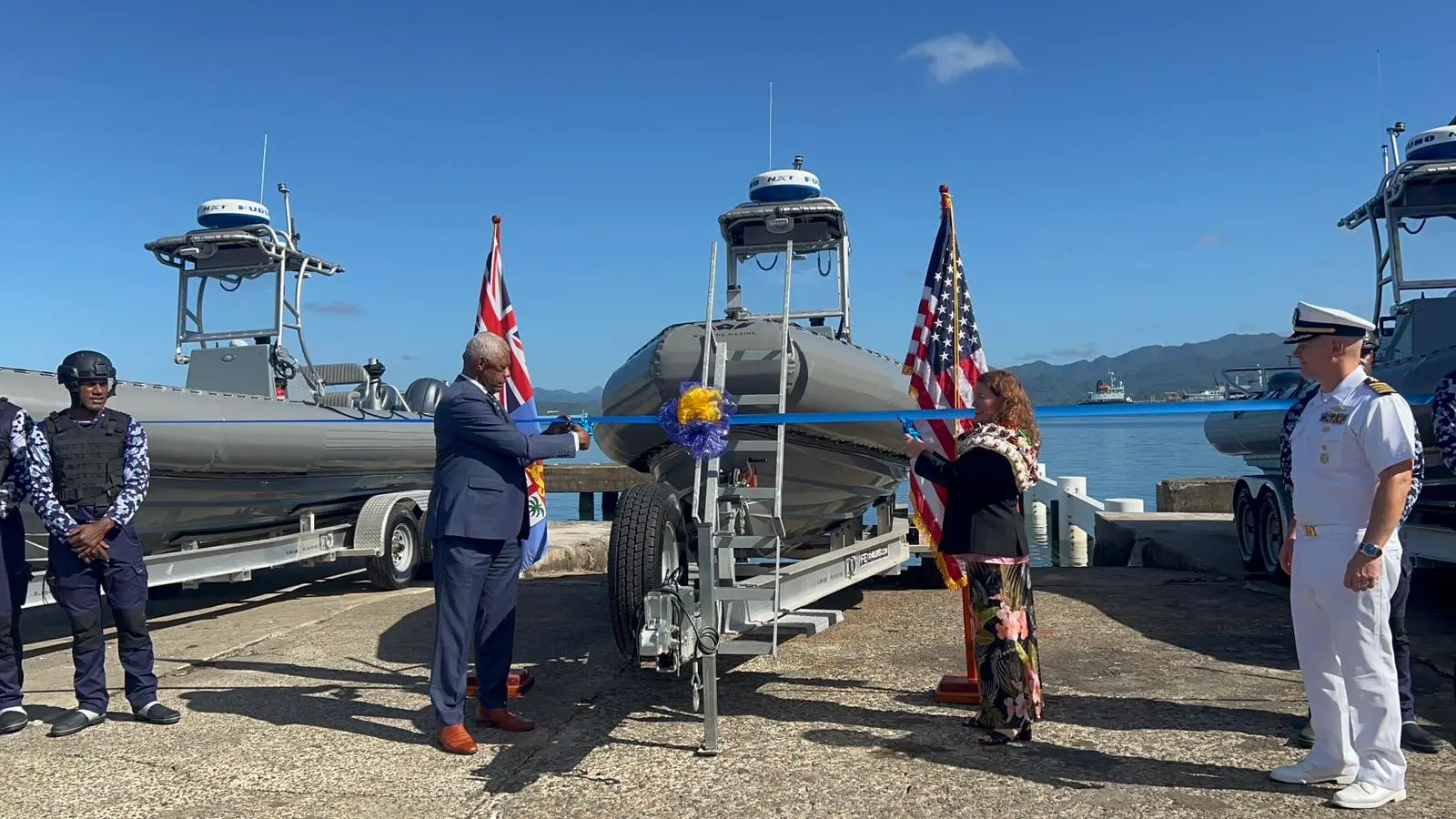
Defence Minister Pio Tikoduadua inspects one of four Rigid Hull Inflatable Boats (RHIBs) handed over by the United States government to the RFNF Naval Division during a ceremony at Stanley Brown Naval Base in Walu Bay.
Photo: Rariqi Turner
Fiji is strengthening its fight against transnational crime and illegal activities at sea following the handover of four new patrol boats by the United States of America (U.S.A).
The delivery of four Rigid Hull Inflatable Boats and to the Republic of Fiji Military Forces Naval Division comes amid growing concerns about drug trafficking, illegal fishing and other maritime security threats affecting Fiji and the wider Pacific region.
The Fiji Navy also completed a ramp extension project at Stanley Brown Naval Base under the U.S Official Defence Assistance Programme.
Related stories
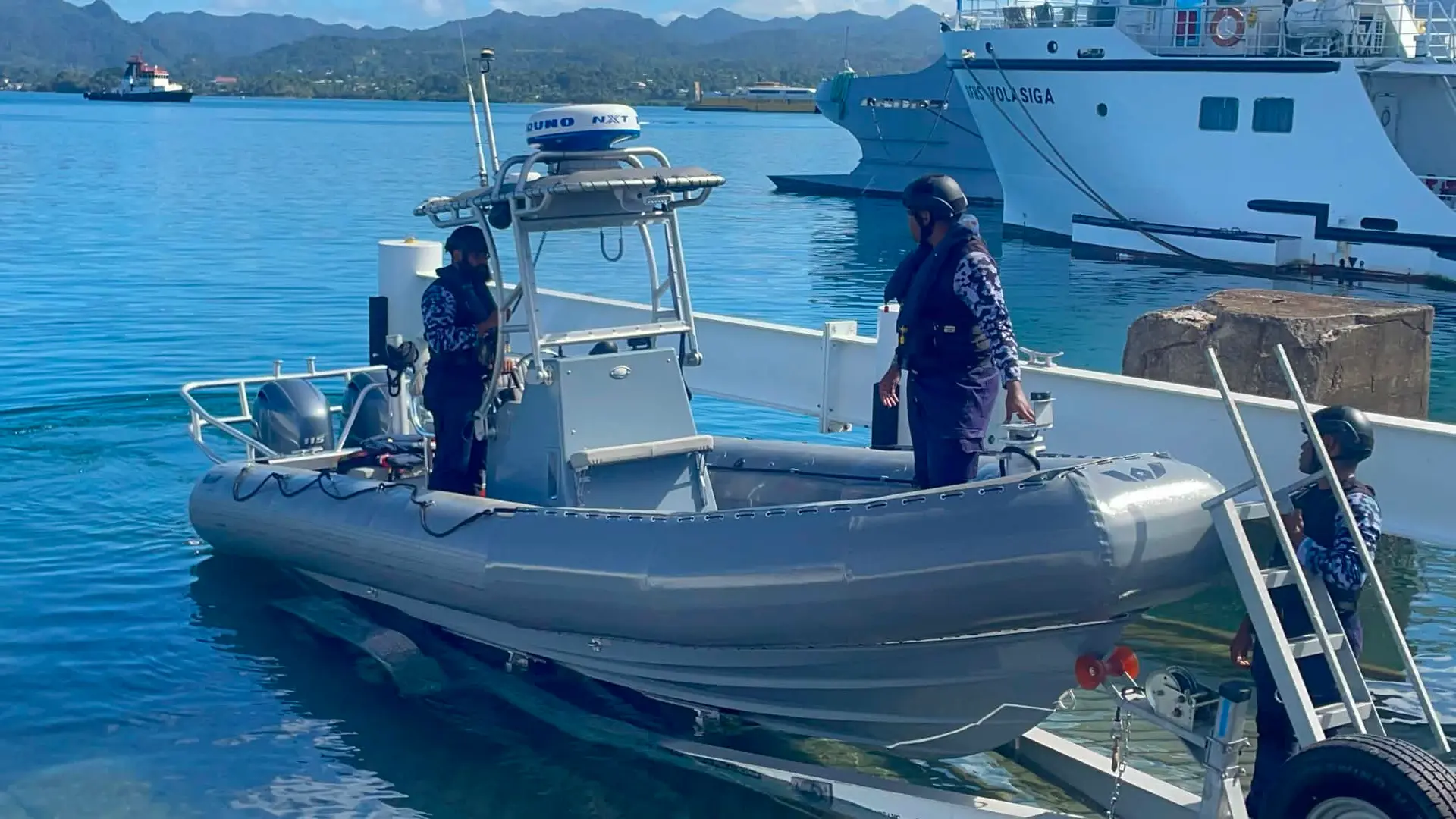
One of the four Rigid Hull Inflatable boats being tested put at sea after the official handover ceremony.
Photo: Rariqi Turner
The handover marks another step in the growing defence partnership between Fiji and the United States, with both sides stressing the need for stronger maritime security in the Pacific.
Defence Minister Pio Tikoduadua said the new boats would give the Naval Division greater flexibility to operate closer to shore, move personnel quickly and respond to situations where larger vessels could not.
“Capability matters,” Mr Tikoduadua said, stressing that Fiji’s security was closely tied to the ocean.
He said Fiji was an ocean state whose trade, fisheries, communities and daily movement depended heavily on the sea.
The Minister said the boats could be used during emergencies, natural disasters, illegal activities and other situations requiring a rapid response.
Mr Tikoduadua said the security challenges facing Fiji and the wider Pacific were changing, pointing to transnational organised crime, drug trafficking, illegal fishing, illicit goods, natural disasters and climate-related emergencies.
“No single country can deal with them alone,” he said.
U.S Chargé d’Affaires to Fiji Christina Cavallo said the boats were part of a wider effort to strengthen maritime security and help Fiji respond to common threats in the Pacific.
She said the vessels would support drug interdiction, fisheries enforcement, search and rescue, evacuation efforts and other maritime operations.
“The new ramp would allow the boats to be launched, recovered and maintained quickly when needed,” Ms Cavallo said.
She also highlighted recent joint maritime operations, including a June patrol in which a Fiji-led interagency team conducted 32 boardings at sea.
In July, Operation Leandro Matua involved more than 85 personnel, two Guardian-class patrol boats, a small boat squadron and two surveillance aircraft, with more than 98 vessels boarded and inspected.
Ms Cavallo said the United States would provide six small boats to Fiji in total, describing the latest handover as part of a broader commitment to Fiji’s maritime security.
For Mr Tikoduadua, however, the real test of the assistance would not be the ceremony or the value of the equipment.
“May these boats help keep our waters secure,” he said, “and above all, may the sailors who take them to sea always return safely home."