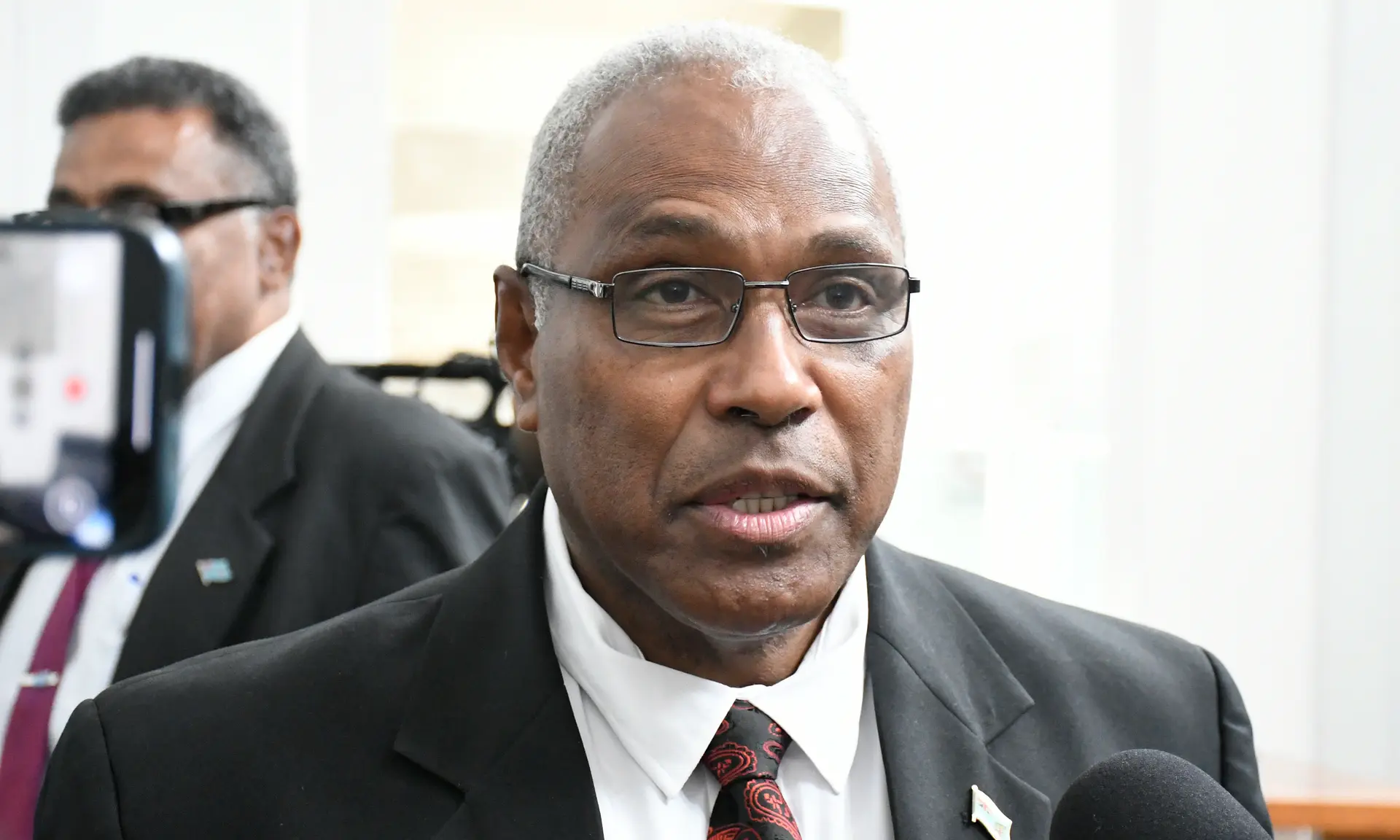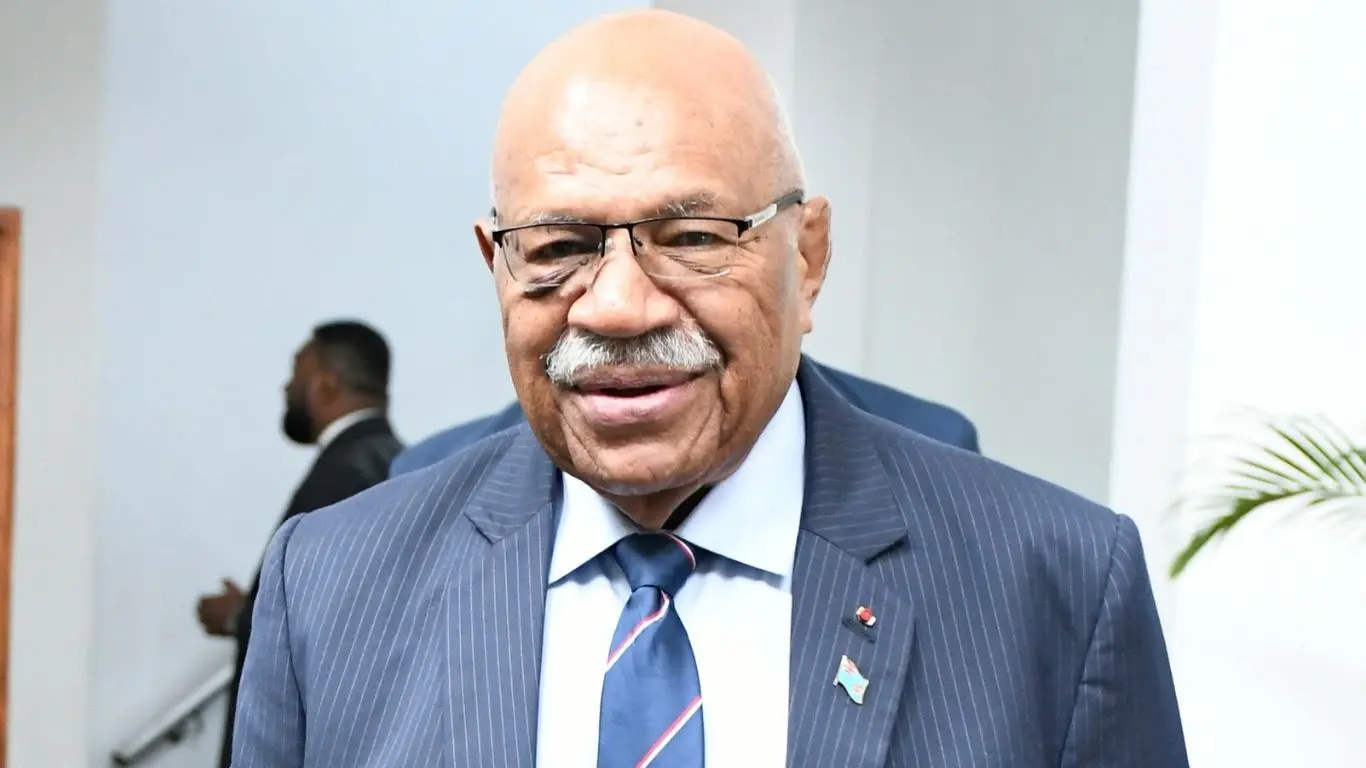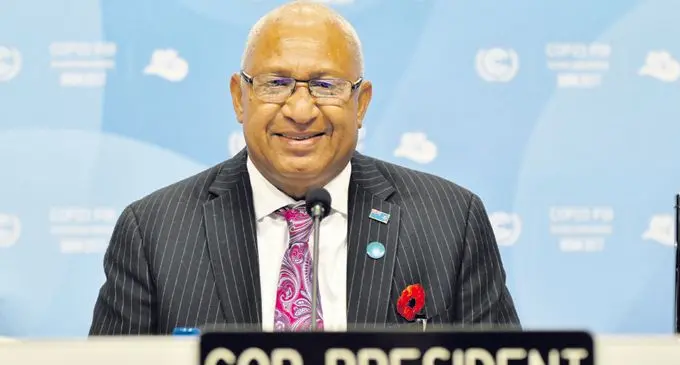
Prime Minister Voreqe Bainimarama will be the first person to stand up and oppose any move to take away the fundamental rights of the iTaukei. Photo: DEPTFO News
If we closely look at what’s happened in the last four years it’s increasingly becoming clear that while democracy and human rights are important, good governance holds the key to strong democratic institutions and protection of human rights.
There has been so much talk by some politicians with Opposition SODELPA MP Niko Nawaikula playing a prominent role in disseminating his own interpretation of the law on group rights and its implication on iTaukei customary rights and ownership rights. His views are in a disc that has been circulated widely to appeal to the base instincts of the iTaukei.
Mr Nawaikula talks about 17 decrees that relate to the Great Council of Chiefs, the iTaukei Land Trust Board, the use of the word Fijian as a common name, the Ministry of iTaukei Affairs and the iTaukei Affairs Board.
Related stories
It leads him to his conclusion that the iTaukei have been stripped of their rights and resources and have little or no say in their affairs.
If what he said is measured against the reality on the ground, his interpretation is shallow and lacks substance. The lawyer is interpreting the law obviously to suit his own political agenda. That is, he is trying to create a perception that the iTaukei are losing their rights and say over their land and resources with the aim of winning iTaukei voters.
What he has not mentioned is that the changes brought in by the decrees were designed to improve services through good governance. Some of the main features of good governance are accountability, transparency, rule of law and responsiveness.
Mr Nawaikula will not talk about the number of years that the iTaukei Affairs Ministry failed to produce an annual report.
That was why Colonel Apakuki Kurisiga, now retired, was brought in by Prime Minister Voreqe Bainimarama to clean up the mess. He conducted an audit and discovered a lot of anomalies in the administration and financial management. He became deputy Secretary of iTaukei Affairs before his retirement.
The iTaukei Ministry has since lifted its game and now fully complies with good governance principles and best practices.
It must be remembered that the ministry, like other Government ministries, is funded by taxpayers money and so there is responsibility there for it to account for the way it spends the funds.
From the ministry to the provincial administration office and the provincial council, the standards have been raised to improve performance and service delivery.
There is nothing sinister about them, as has been suggested. What is new is that Government has changed the way it does things so that the people it serves get the best service.
On the TLTB, the concern by Mr Nawaikula is based on his personal perception with no basis. Can he give examples of cases where the board has made decisions that are detrimental to the interests and welfare of the landowning units? He tries to cast aspersions on Mr Bainimarama’s integrity as chairman of the TLTB board.
Mr Nawaikula needs to know that Mr Bainimarama is passionate not only about protecting iTaukei rights and interests, he wants to provide the iTaukei economic empowerment. The PM will be the first person to stand up and oppose any move to take away the fundamental rights of the iTaukei.
The landowners have not lost their rights also. Their right to approve a lease application still exists. No one can lease iTaukei land if the landowners decline to sign the documents. It’s as simple as that. No centimetre of land has been lost or taken through devious means in the last four years.
Mr Nawaikula is wasting his time talking about the Great Council of Chiefs. People have moved on and they don’t seem to miss the GCC one bit because it was a creation of the British colonialists who wanted to control the iTaukei through the GCC.
The only ones who are missing it are Mr Nawaikula and his minority group. The GCC became a hotbed for politics. It was used by some politicians to gain political endorsement.
When changes are put in place to complete the process of good governance, our democratic institutions become stronger and lead to genuine democracy and long term peace and harmony.
It is a philosophy that is rapidly gaining support internationally – that good governance is a pre-requisite to genuine democracy – not a by-product.
Democracy for the sake of democracy cannot be sustained without good governance. In 1997 they thought they had the best Constitution. It provided for a multi-party government that the architects bragged would bring genuine democracy to the country.
In 2000, Fiji Labour Party leader Mahendra Chaudhry, the first Indo-Fijian to be elected as Prime Minister, was overthrown in the George Speight coup. The country was gripped by racial tension and acrimony.
The environment continued even when SDL leader Laisenia Qarase became Prime Minister in 2006. There were allegations of rampant corruption and bad governance.
So when Mr Baininamara took over he recognised that the solution to all these problems was the 2013 Constitution that gives everyone equal citizenry and a common identity and removes voting in elections on racial lines.
More importantly, he realised that for this to work it must be based on good governance.
Feedback: nemani.delaibatiki@fijisun.com.fj