Regional solidarity key to ending violence against women
Advocates at a regional meeting in Nadi stress cooperation, funding and support for organisations tackling violence across the Pacific.
Tuesday 27 October 2026 | 14:00
Updated 27 October 2026 | 15:12 FJT

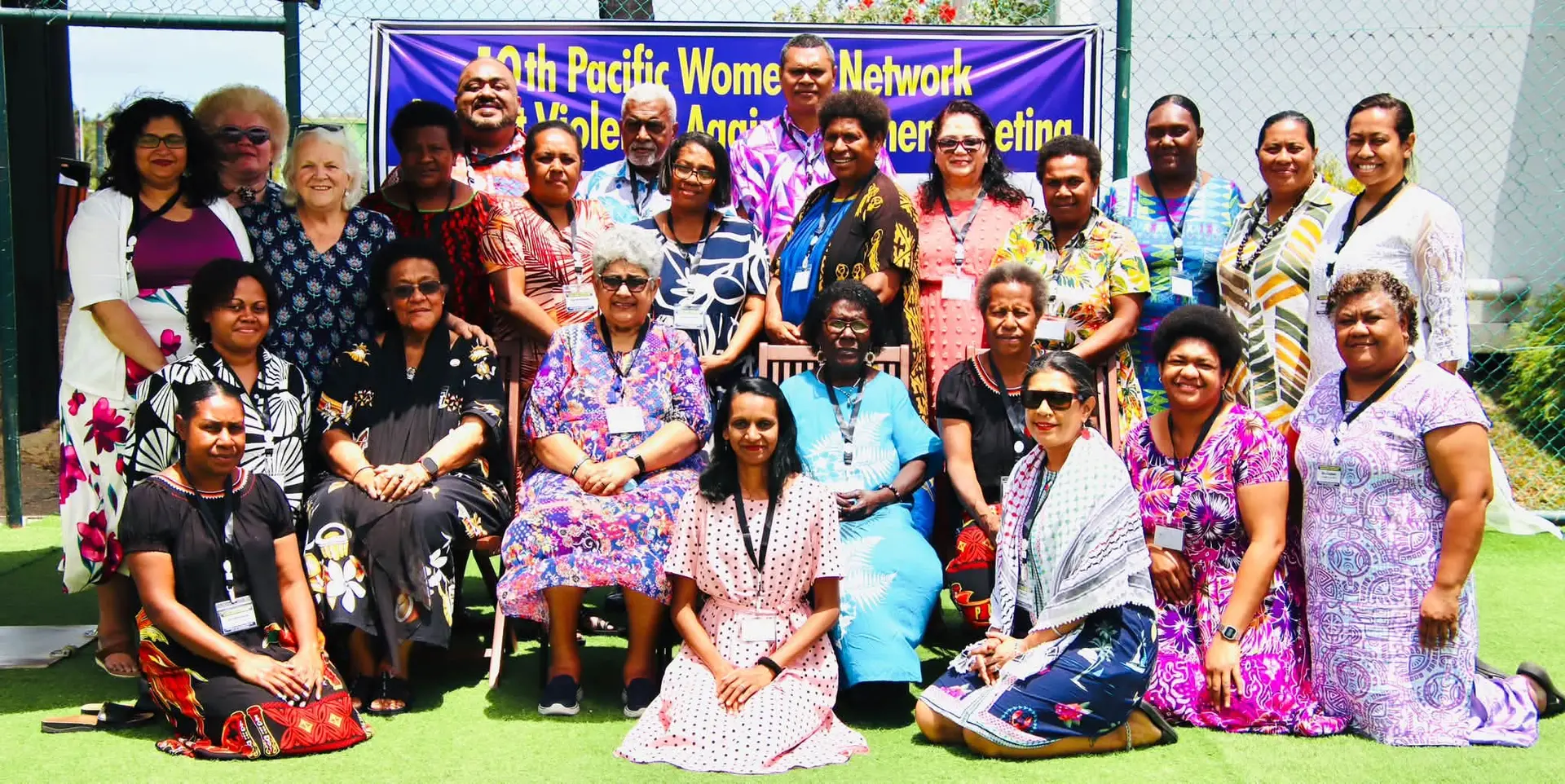
Fiji Women’s Crisis Centre (FWCC) coordinator Shamima Ali with participants.
Photo: Supplied.
Trust, solidarity, and equality are critical to ending violence against women and girls across the Pacific, says Fiji Women’s Crisis Centre (FWCC) coordinator Shamima Ali.
Speaking at the FWCC and Pacific Women’s Network Against Violence Against Women (PWNAVAW) 10th Regional meeting at Tanoa International Hotel in Nadi yesterday, Ms Ali said regional cooperation was vital in supporting women facing violence, particularly those in remote communities.
“Talk about regional solidarity, this is what it is about,” she said.
Related stories
Ms Ali said the network advocated for funding and support for organisations working in difficult environments, including the highlands of Papua New Guinea, where women faced serious risks.
“The network provides a haven for them, a place of shelter, someone that will listen, that will support, that will act immediately,” she said.
Established in 1992, PWNAVAW was formed to unite organisations tackling rape, domestic violence, child sexual abuse, and sexual harassment across the Pacific.
Its first meeting brought together representatives from 13 countries and territories, including West Papua, Tahiti, and Kanaky.
Ms Ali said the network had continued to grow through shared experiences, training, and advocacy, with regional meetings now held every two years.
The Nadi gathering is the first face-to-face regional meeting since the COVID-19 pandemic.
The network also provides training in gender-based violence, human rights, and advocacy, drawing on expertise from Fiji and other Pacific countries.
She added that male advocates are also meeting to discuss ways to strengthen their role in preventing violence, including engaging with other men in their communities.
Meanwhile, Pacific Disability Forum chief executive officer Sainimili Tawake said the meeting strengthened relationships and collaboration among organisations working across the region.
She said women with disabilities faced additional discrimination and different forms of violence because of both their gender and disability.
Ms Tawake said the discussions would help participants take new knowledge back to their organisations and communities, strengthening efforts to address violence and discrimination.
She said the lessons were relevant beyond Fiji, with organisations needing to work together to support vulnerable women and persons with disabilities throughout the Pacific.