Tuvalu’s ‘darkest years’ brought to screen in powerful Pacific documentary
The documentary will now have its Fiji premiere in September, before being taken to international film festivals.
Saturday 05 September 2026 | 17:00
Updated 06 September 2026 | 18:29 FJT

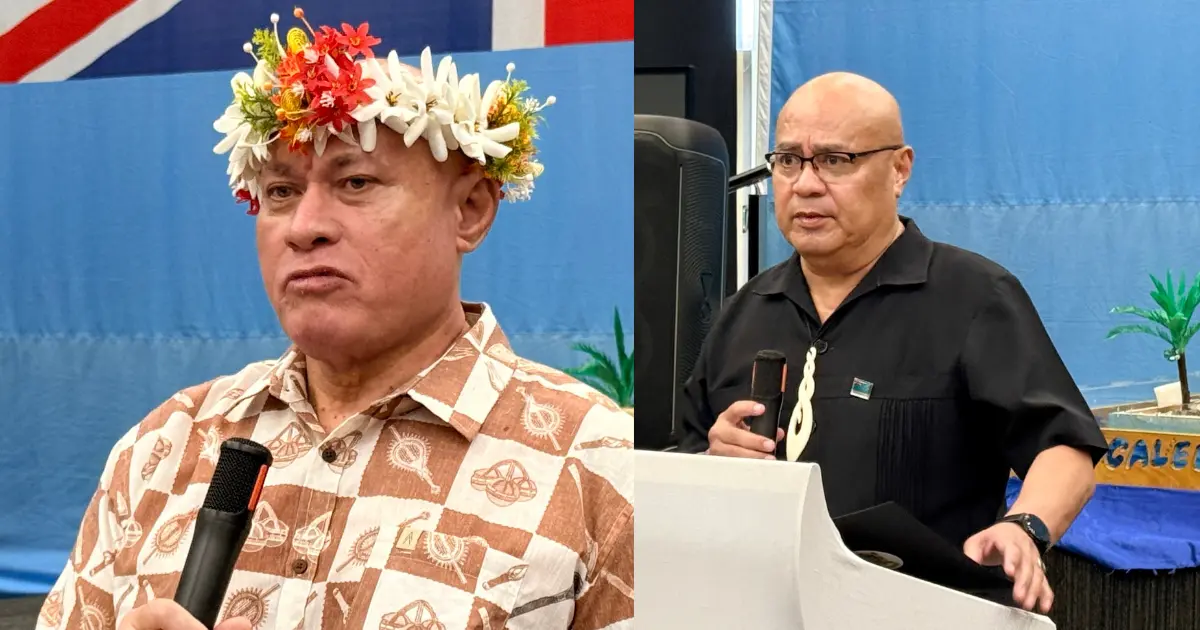
From Left: Mr Seve Paeniu- Head of Coporate Services UniFiji and Prime Minister of Tuvalu Hon. Feleti P. Teo
Photo:Mereleki Nai
A dark chapter in Tuvalu’s history — when about 80 per cent of Nukulaelae’s population was taken by slave vessels — is being brought to a Fijian audience through a documentary produced by the University of Fiji.
The Stolen Laevans of Tuvalu: The Peruvian Slavery Nightmare, co-produced by the University of Fiji and the Kaupule of Nukulaelae, had its world premiere in Tuvalu last week as part of the Fakaapo – Tuvalu Arts Festival.
The documentary will have its Fiji premiere in September before being taken to international film festivals.
Related stories
It revisits the blackbirding of Nukulaelae in 1863, when about 80 per cent of the island’s population was taken by slave vessels and forced to work in the guano mines and plantations of Peru.
For the University of Fiji, the documentary is an effort to preserve a significant chapter of Pacific history and ensure the experiences of those who suffered during the blackbirding era are not forgotten.
University of Fiji Vice-Chancellor Professor Shaista Shameem said the project demonstrated the university’s commitment to preserving Pacific history and bringing important regional stories to wider audiences.
“The film was made as part of our Journalism and Media Studies Documentary course. The two lecturers teaching the course decided to take a story they had been told about the slave trade in Tuvalu, undertake further research with the help of their students, and develop it into a film for a wider audience internationally,” Professor Shameem said.
She said the world premiere in Tuvalu was only the beginning, with the Fiji premiere scheduled for September before the documentary heads to international film festivals.
Beyond recounting the tragedy suffered by the people of Nukulaelae, the documentary explores the resilience of the generations that followed.
It also draws a connection between the historical displacement of Tuvaluans and the challenges facing the country today, including climate change, rising sea levels and the potential displacement of an entire small-island culture.
Tuvalu Prime Minister Feleti P. Teo described the documentary as a powerful reminder of the injustices suffered by the people of Nukulaelae.
“The film is a powerful reminder of the injustices and inequities that our people were subjected to in those darkest and unforgettable years,” he said.
Prime Minister Teo congratulated Nukulaelae and the University of Fiji for producing the documentary and suggested that some form of reparation or compensation could be considered.
“My Government stands ready and willing to support the efforts to promote the key messages delivered by the film,” he said.
The significance of the story was evident during its Tuvalu premiere, where the documentary drew a large audience and left some viewers visibly shaken and in tears as they confronted what had happened to their ancestors.
University of Fiji Head of Corporate Services Seve Paeniu said the documentary had resonated deeply with Tuvaluans.
“This powerful film resonates really well with Tuvaluans, and our Laevan ancestors will never be forgotten,” Paeniu said.
The project is also part of a Memorandum of Understanding partnership between the University of Fiji and the Government of Tuvalu, promoting cultural exchanges and cooperation through educational, cultural and community events.
Through its collaboration with the Kaupule of Nukulaelae, the University of Fiji hopes to preserve an important chapter of Tuvaluan and Pacific history while raising awareness of the blackbirding trade, the resilience of the Nukulaelae people and ongoing discussions around restorative justice.
The Fiji premiere in September will bring the story to a Fijian audience before the documentary moves onto the international stage.