Bau performs centuries-old customs at duki ceremony for late President
It marks the lifting of the qoliqoli tabu (ban on fishing grounds) and involves women entering the fishing grounds with traditional nets to catch fish.
Thursday 23 July 2026 | 18:00

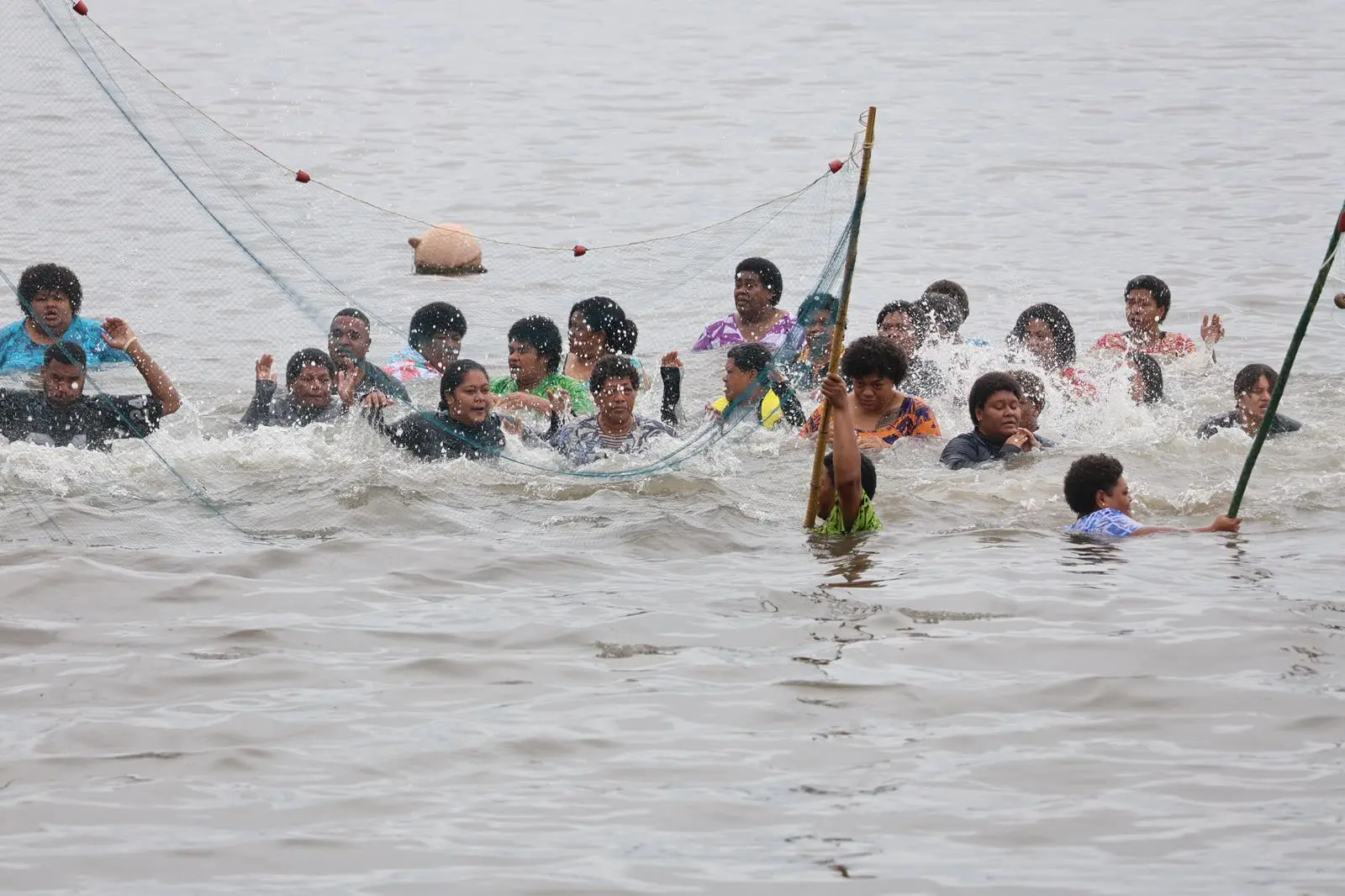
Women and men of Bau perform the Duki to mark the conclusion of the 100-day mourning for the late Ratu Epeli Nailatikau on July 22, 2026.
Photo: Asenaca Ratu
The vanua of Bau has reaffirmed its commitment to preserving its sacred customs and traditions through the rare duki ceremony, marking the end of the 100-night mourning period for the late President and former Speaker of Parliament, Ratu Epeli Nailatikau.
The duki is a traditional ceremony observed 100 nights after the death of a chief. It marks the lifting of the qoliqoli tabu (ban on fishing grounds) and involves women entering the fishing grounds with traditional nets to catch fish.
This morning, women of Bau Island formed a circle in the water, rhythmically splashing to guide fish towards the waiting nets.
Related stories
In keeping with custom, no one was permitted to leave until the duki ceremony had been completed.
Mataqali Tuikaba representative Apenisa Seniloli said the significance of the duki lay in its ability to unite the people of Bau while safeguarding traditions passed down through generations.
"The spirit of today's ceremony is bringing the island together in oneness," he said.
Mr Seniloli said the ceremony was rarely performed, noting that the last duki was held in 2016 following the passing of the Turaga na Roko Tui Bau, the late Ratu Joni Madraiwiwi.
He acknowledged that some customs had faded over time but said community leaders were determined to preserve the traditional process rather than alter it.
"There has been a lot of recommendation for changes, but there is one process that has been passed on from generation to generation, and we will not try to change it."
Mr Seniloli said documenting the ceremony had become a priority to ensure future generations understood and continued Bau's cultural heritage.
He said researchers and cultural documentarians had been invited to record the proceedings, building on documentation undertaken during previous traditional ceremonies.
"We are trying to preserve our traditions and culture. If something was not covered before, it can be covered now."
Mr Seniloli said the strong turnout of people from the Western Division, Suva and overseas reflected the enduring cultural significance of the duki and the lifting of the fishing taboo for the people of Bau.
He said it was hoped younger generations would continue to uphold the customs and protocols that define the identity of the vanua of Bau.