Masi-making helps mother put five children through school
Today, two of her children are prison officers, one is completing teacher training, one is in Form Five and another is at home with her.
Thursday 03 September 2026 | 08:30

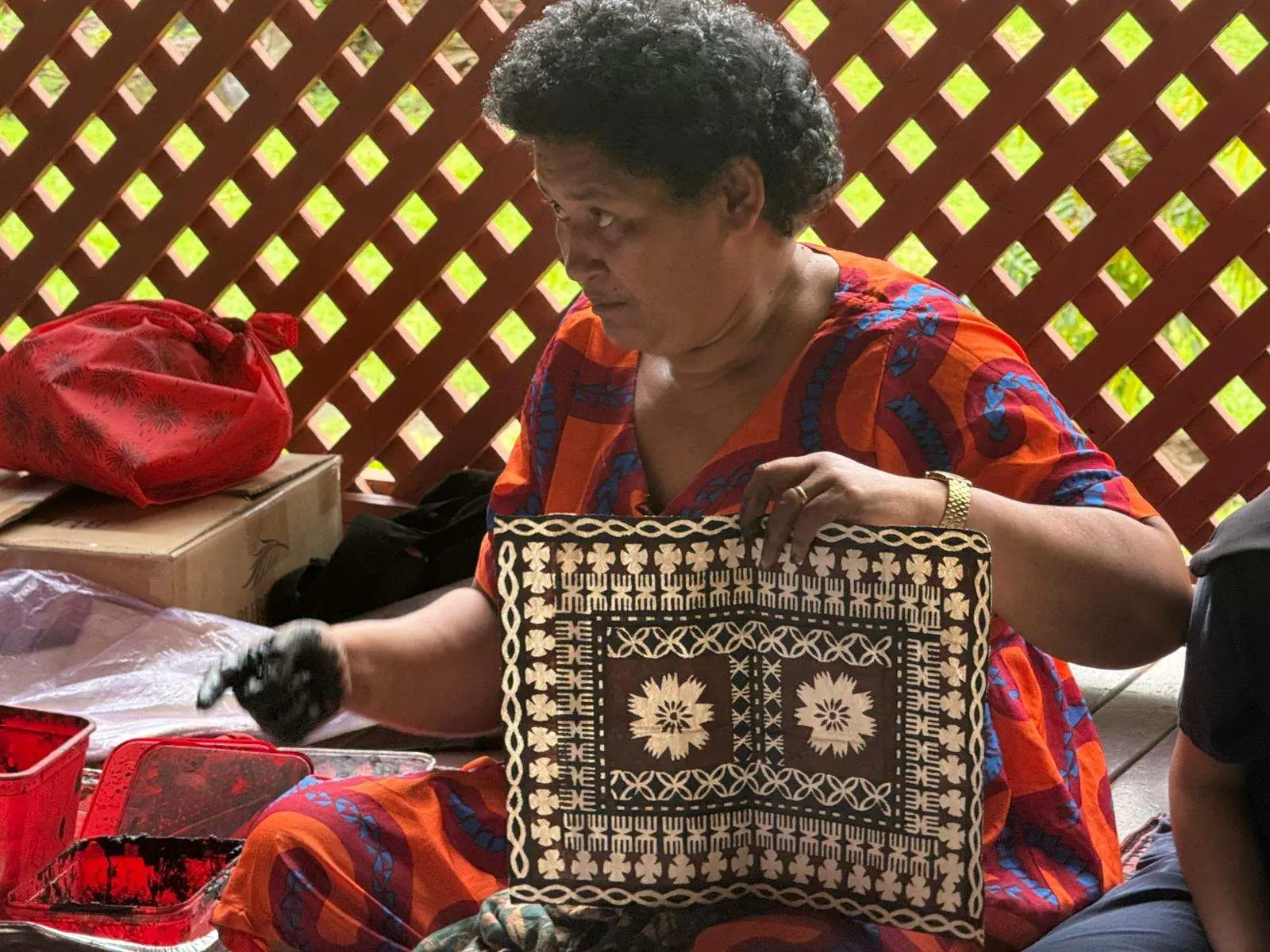
Ms Kebaitoga said masi-making could provide a good income for those willing to develop their designs and find markets for their work.
Lavenia Waqanivanua.
For Laijipa Sukulu Kebaitoga, every piece of masi she printed and sold helped put food on the table and her five children through school.
The traditional skill she learned from her mother as a young girl in Korotolu, Moce, became the livelihood she relied on to raise her family.
“I raised them entirely on this work. Selling masi paid for their school supplies and tuition,” she said.
Related stories
Today, two of her children are prison officers, one is completing teacher training, one is in Form Five and another is at home with her.
Yesterday, Ms Kebaitoga was at the Fiji Museum teaching 20 children how to print masi during a Masi Printing and Liku Weaving Workshop organised by the Fiji Museum in collaboration with the Veiqia Project.
For Ms Kebaitoga, it was a chance to pass on the same knowledge that has sustained her for much of her life.
She left school after Class Eight, but by then she had already learned masi-making by watching her mother.
Growing up in Korotolu, the sound of tukituki — mallets beating against bark — could be heard from dawn until afternoon.
Masi-making was part of everyday village life, stopping only when the community gathered for traditional occasions such as weddings, funerals and other communal events.
As she grew older, that childhood skill became Ms Kebaitoga’s main source of income.
“Because of this work, I never worry about money. Whenever I need money, I print my masi and post it on Facebook or take it to the flea market to sell.”
She also receives orders for weddings, funerals, birthdays and decorations.
Ms Kebaitoga said masi-making could provide a good income for those willing to develop their designs and find markets for their work.
She said a person could make $100 in a day or between $200 and $300 in a week, depending on the work and sales.
At the workshop, Ms Kebaitoga used prepared barkcloth to demonstrate the printing process, explaining to the children that masi-making begins with the paper mulberry tree.
The bark is cut, stripped, soaked, beaten and dried before it is ready for printing.
She also demonstrated the traditional knowledge behind producing dyes.
Mangrove bark, known as dogo, is pounded and boiled to make dye.
Red clay, which she said is sourced from Komo Village in Lau, is also used, with people from Korotolu travelling by boat to obtain it.
For black dye, soot is collected by burning kerosene in a small tin and trapping the smoke beneath a basin.
While some people may consider masi-making dirty work, Ms Kebaitoga said she had experienced firsthand the value of the craft through what it had provided for her children.
She wants young people to understand that formal education and Government employment are not the only paths to earning a living, and encouraged children to identify their talents and make use of the skills they have.
But passing on masi-making is about more than earning an income. For Ms Kebaitoga, it is also about ensuring the next generation does not lose an important part of its culture.
“It is incredibly important to teach this craft to our children so that we, the iTaukei, do not lose our unique identity.”
The two-day workshop allowed her to pass on knowledge inherited from her mother — the same knowledge that helped her raise and educate five children.