$3.5m programme to transform lives of children with disabilities
Health Ministry partners with Australia-backed initiative to reach vulnerable children
Wednesday 16 September 2026 | 17:30

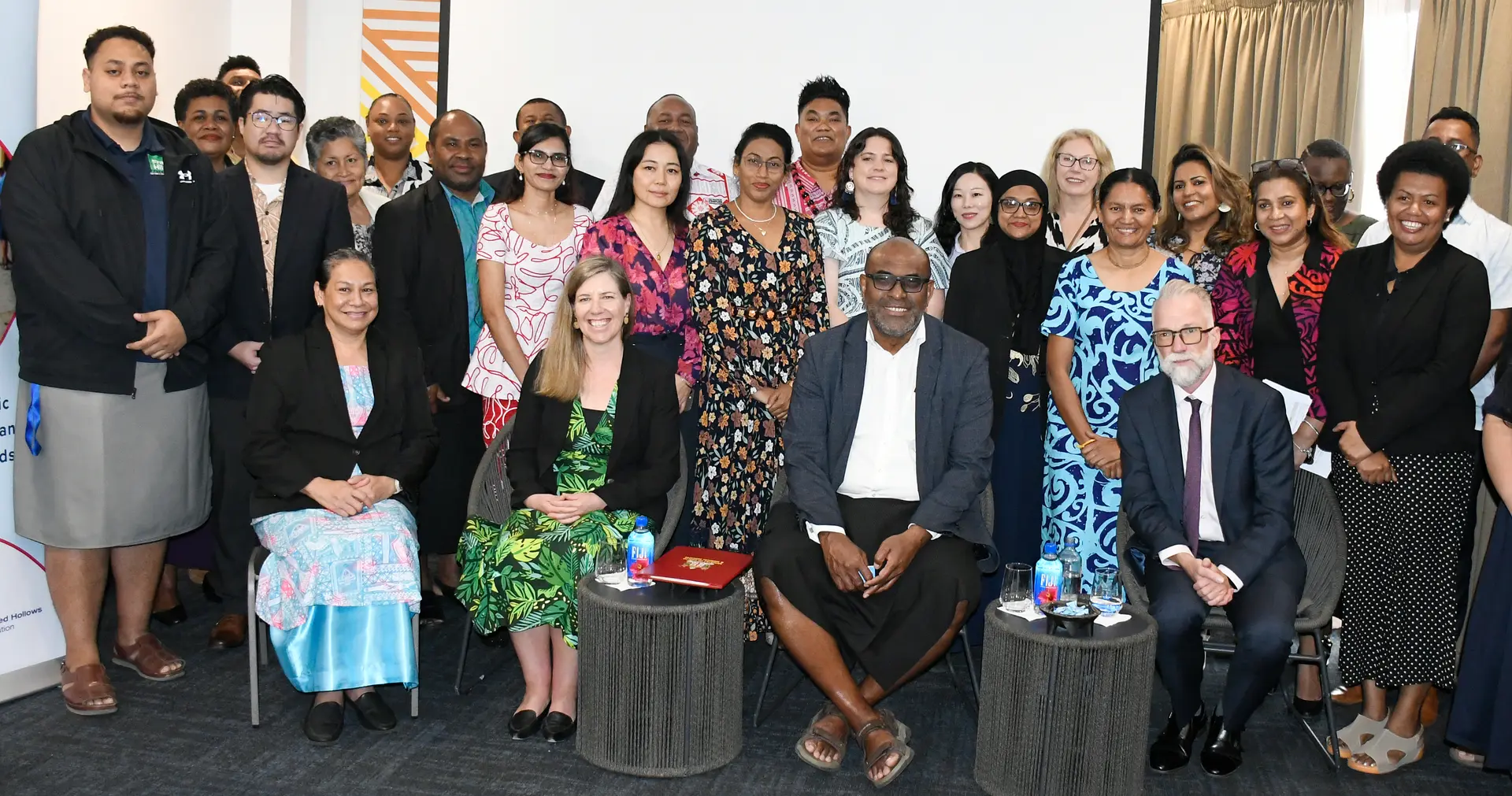
Minister for Health Dr Ratu Atonio Lalabalavu with ATscale Chief Executive Officer Pascal Bijleveld and guests during the launch of the Access to Assistive Technology and Related Rehabilitation Services for School-Aged Children in Fiji programme in Suva on September 16, 2026.
Photo: Ronald Kumar
A $3.5 million programme will target children who struggle to see, hear or move, bringing screening, referrals and assistive products closer to communities.
The three-year investment through the Strengthening Pacific Assistive Technology and Rehabilitation for Kids (SPARK) programme will focus on children aged five to 18, including those who are out of school.
The need is significant.
Related stories
Pacific data shows that while 2 to 6 per cent of children are estimated to need assistive products, only about 0.2 per cent of that need is currently being met.
Cost, distance, transport, limited services and uncertainty over where to seek help remain major barriers.
ATscale chief executive officer Pascal Bijleveld said simple items such as glasses, hearing aids or mobility aids could change a child’s life.
“For children, unlike me to have lifelong consequences, affecting your health, education, participation, independence, and future opportunities,” he said.
“A pair of eyeglasses, hearing aid, or mobility rights, can transform a child's life.”
The Fiji programme, funded through Australia’s partnership with ATscale, will be led by the Ministry of Health and Medical Services and implemented by the Fred Hollows Foundation-WHO Consortium.
It will begin in the Central Division through school and community-linked screening and referral services.
Project Heaven will support vision and hearing screening, while the Frank Hilton Organization will support mobility services, specialist-school engagement and outreach.
Mr Bijleveld said the programme would not be about simply handing out devices.
“It will strengthen screening and referral services for vision, hearing and mobility, while also providing eyeglasses, hearing aids and mobility aids and strengthening national systems,” he said.
Health Minister Atonio Lalabalavu said the programme would reach children in mainstream and special schools, other school settings and communities.
He said the support would go beyond screening to identification, assessment, referral, fitting, training and follow-up.
“No child should be left behind,” he said.
The programme will also focus on girls, children with disabilities, children in remote communities and those out of school.
Screening and programme-supported services are expected to begin from 2027, following further work on governance, coordination, technical methods and referral pathways.