Agriculture project assists more than 700 farmers
Support included farm mechanisation, irrigation, boreholes, livestock production and infrastructure to strengthen commercial agriculture.
Friday 23 October 2026 | 08:00

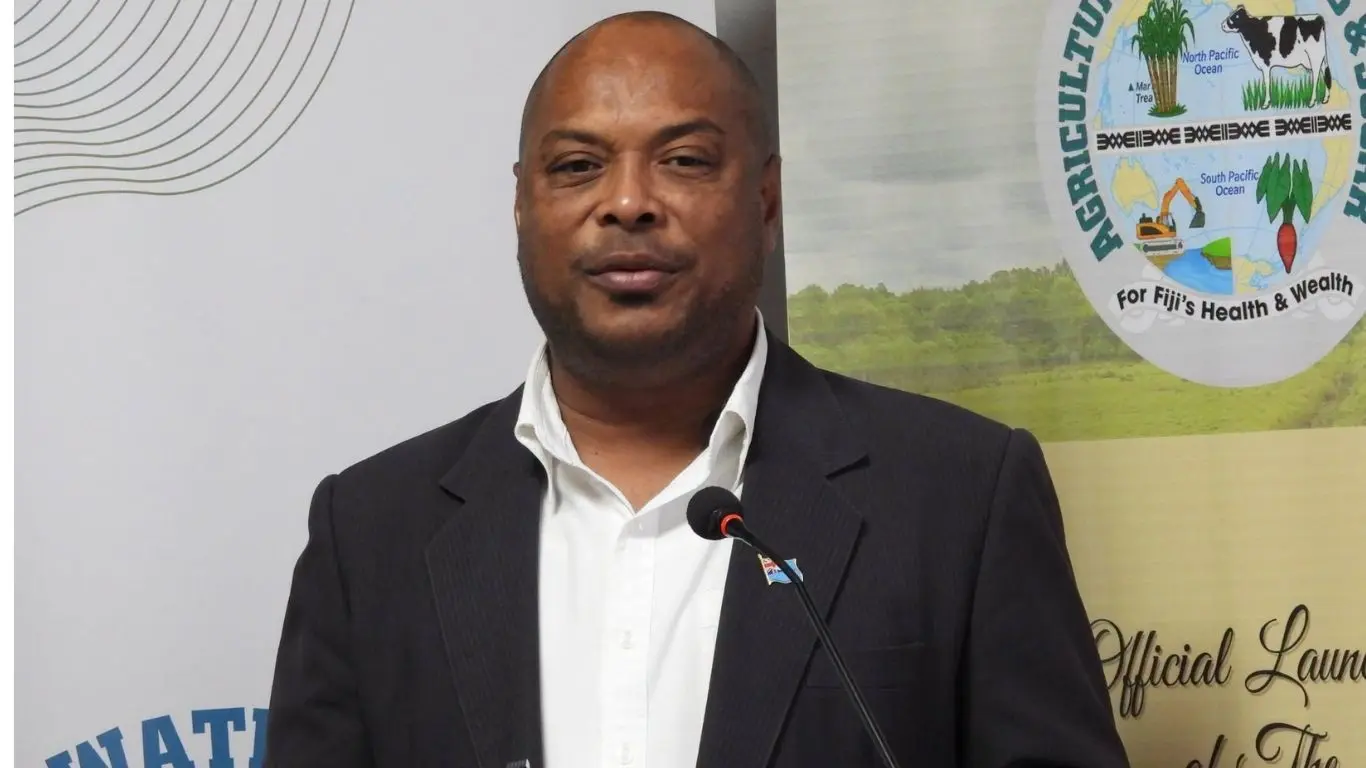
Deputy Secretary for Agricultural Development Tekini Nakidakida.
Photo: Ministry of Agriculture and Waterways
More than 700 farmers received assistance through the Ministry of Agriculture’s Commercial Agriculture Development Project (CADP) in 2022 and 2023, with about $800,000 allocated to support commercial agriculture.
Ministry of Agriculture Deputy Secretary for Agriculture Development (Operations Department) Tekini Nakidakida told the Standing Committee on Natural Resources earlier this week that the project was introduced to strengthen Fiji’s agriculture sector, which was largely driven by small-scale producers.
Mr Nakidakida said the project was first funded in 2022 and managed by the ministry’s Economic Planning Division.
Related stories
The project supported farm mechanisation, irrigation, boreholes and livestock production, including initiatives to strengthen links between agriculture and the tourism sector.
“Other assistance included sheep and goat sheds, farm infrastructure, farm roads and dairy farm roads. The ministry also supported companies that purchased agricultural produce,” Mr Nakidakida said.
Exports of fresh and chilled agricultural products increased by 1.3 per cent during the period, while total export volume rose by 2.6 per cent compared with the previous year.
Mr Nakidakida said the ministry assessed its performance against its annual corporate plan, key performance indicators and programme targets, which were monitored by its Monitoring and Evaluation Team.
However, resource constraints, staff shortages and administrative challenges affected the implementation and monitoring of some activities.
He said 2022 and 2023 were transitional years following the change of government, requiring the ministry to align its work with the new administration’s priorities while continuing its planned programmes.
Vacancies in key positions, a shortage of skilled workers and workforce restructuring also affected implementation, particularly in rural, maritime and highland areas.
Mr Nakidakida said the ministry continued its farmer assistance programmes, expanded mechanisation support and recruited staff to fill vacant positions.
He said leadership appointments were also made following the restructuring, with most divisional directors appointed after the process.
The ministry continued working to rebuild its implementation capacity and carry forward its programmes into 2023 and 2024, he said.