Climate relocation must start now, says expert
Forty-four communities are being considered for relocation because of climate change.
Monday 20 July 2026 | 15:00
Updated 20 July 2026 | 16:48 FJT

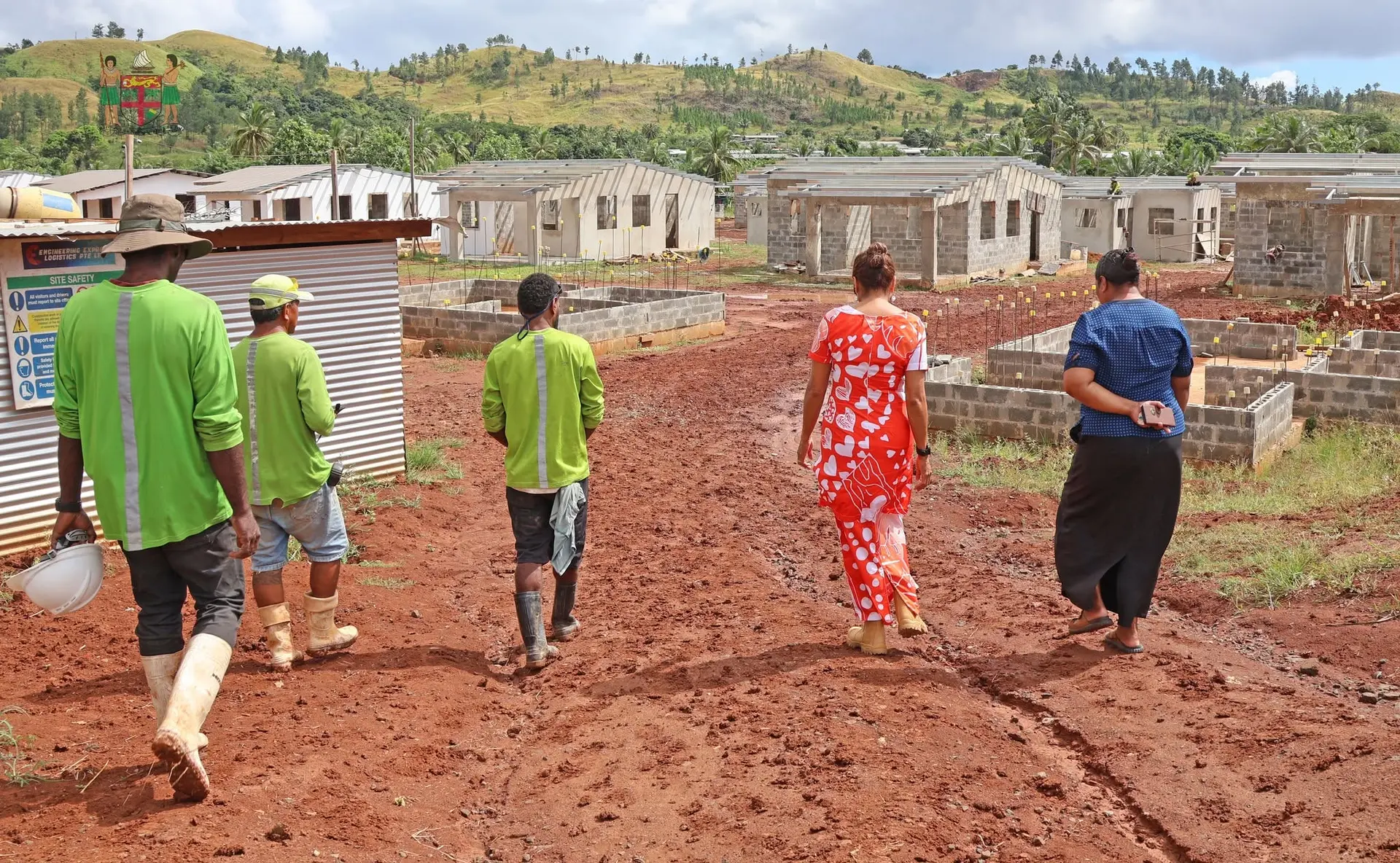
Construction is progressing on 37 new homes at the Nabavatu Relocation Project for families displaced by a cyclone. This photo was taken in May this year.
Photo: DEPTFO News
Fiji should make planned relocation a central part of its long-term climate adaptation strategy as the impacts of climate change intensify, says Pacific Polytech Assistant Director North Pradeep Lal.
Mr Lal said relocation was often viewed as a last resort, but increasing flooding, coastal erosion and rising sea levels meant vulnerable communities needed safer long-term solutions.
"Relocation is realistic, practical and needed, given the various alarming climate projections and the fact that many settled areas in Fiji are at or below sea level," he said.
Related stories
Mr Lal said Fiji had already relocated several communities because of climate-related impacts, including Vunidogoloa in Cakaudrove, Tukuraki in Ba, Narikoso in Kadavu and Nabavatu in Dreketi, Macuata.
He said identifying high-risk areas early would reduce future losses and the cost of disaster recovery.
"Poor families continue to be pushed further into poverty each time their property and family is affected," he said.
Mr Lal said relocation was a complex process that required Government support, community consultation and respect for social and cultural ties.
He said 44 communities affected by climate change were currently under consideration for relocation in Fiji.
According to Mr Lal, planned relocation could reduce damage to homes and infrastructure while lowering Government spending on emergency response, rehabilitation and recovery.
Mangroves offer alternative
Mr Lal said relocation was not the only solution, with nature-based coastal protection measures such as mangrove planting providing a practical alternative for some communities.
He said mangroves helped reduce coastal erosion, trap sediment and strengthen protection against flooding and storm surges.
"Nature-based coastal protection is a cheaper alternative to overcoming the impact of sea level rise and storm surge during cyclones," he said.
Mr Lal highlighted community-led mangrove restoration projects in Sese, Navidamu, Ravi Ravi and Korotogo as examples of sustainable coastal protection.
He said disaster planning should focus on prevention rather than relying heavily on external borrowing after major disasters.
Mr Lal said climate adaptation projects should include proper planning, risk assessments, community engagement and ongoing training.
"Communities must be at the forefront of change; they must take ownership for the overall benefit and success in disaster management," he said.
Mr Lal said the challenge for Fiji was no longer whether communities would be affected by climate change, but whether institutions and communities were prepared for future impacts.