Early warning system endorsements must turn to action, not another document on the shelf: Tawake
Tuesday 15 September 2026 | 10:00

“Warning is only effective when people receive it, understand it, trust it and also act on it.”
Pacific meteorological directors have been challenged to turn the endorsed disability and social inclusion standards into action rather than allow them to become ‘another document on a shelf’.
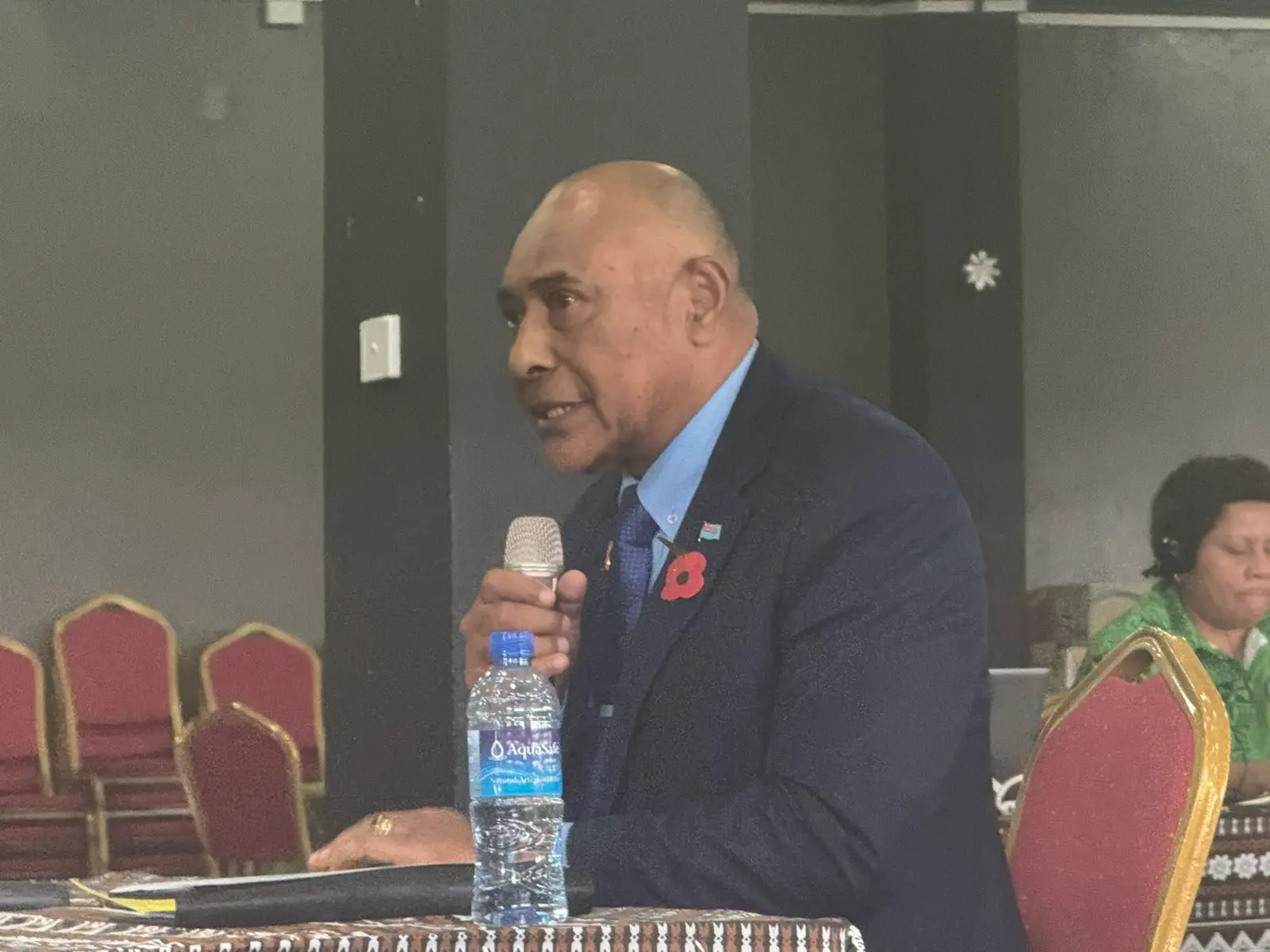
The challenge came from Pacific Disability Forum chief executive officer Sainimili Tawake while presenting an update on Gender Equality, Disability and Social Inclusion (GEDSI) at the 8th Pacific Meteorological Council meeting in Nuku’alofa, Tonga.
“The endorsement must be linked to implementation, not another document on a shelf,” Ms Tawake said.
Related stories
Ms Tawake said effective early warning systems needed to account for the different barriers faced by women, persons with disabilities, older and younger people and those living in remote communities.
“Warning is only effective when people receive it, understand it, trust it and also act on it.”
She said barriers could include access, language, format, mobility, technology and participation in decision-making.
“So when we think of inclusion in this sense, inclusion is that all must not be seen as an administrative addition.
“It is a life safety and service effectiveness requirement across governance, risk knowledge forecasting, communication and preparedness. It also must be seen as a critical form of social protection.”
She called for inclusive early warning systems to become a standing regional standard across National Meteorological and Hydrological Services (NMHS), saying the Pacific already had evidence, practical tools and national initiatives to build on.
“I believe our central message is very simple - the Pacific already has growing evidence, practical tools and national leadership when we are talking about GEDSI and early warning systems.
“What is now needed is a common regional framework that turns these efforts into consistent practise across all national meteorological and hydrological services.
“Today we are asking the council to make inclusive early warning a standing regional standard.”
Gaps remain
Despite progress, Ms Tawake said implementation remained uneven across the region.
“The assessment findings is not that NMHS are inactive.
“Leadership commitment is emerging and important national work is underway.
“However, practise remains partial and uneven.”
Several services did not yet have early warning accessibility protocols combining text, audio and visual formats or reducing reliance on a single communication channel.
Formal partnerships with organisations of persons with disabilities were also absent in some services, while dedicated budget lines were rare and monitoring inconsistent.
“When the same gaps recur across the region, separate project by project responses are inefficient.
“They point to the need for a common standard that each country can apply according to its own context.”
Fiji pilot
Ms Tawake highlighted Fiji as an example of disability inclusion being incorporated into meteorological services.
“In Fiji, the Meteorological Services worked with five organisations of persons with disabilities through two co-designed workshops. Together they defined accessibility requirements for four national products across formats, content and user testing.”
She said Fiji Meteorological Services also reported applying inclusion during Tropical Cyclone Urmil.
“During Tropical Cyclone Urmil, Fiji Meteorological Services reported that inclusion was active in real-time models, not only in product design.”
Other examples included Kiribati drafting inclusion processes into its meteorological regulations and embedding a GEDSI roadmap in its strategic plan.
Tonga had completed GEDSI training, while Solomon Islands had translated its roadmap into a national implementation plan.
“These examples are at different stages but they prove that practical change is possible and can remain nationally owned.”
Early warning system
She called for inclusive early warning systems to become a standing regional standard across National Meteorological and Hydrological Services (NMHS), saying the Pacific already had evidence, practical tools and national initiatives to build on.
“I believe our central message is very simple - the Pacific already has growing evidence, practical tools and national leadership when we are talking about GEDSI and early warning systems.
“What is now needed is a common regional framework that turns these efforts into consistent practise across all national meteorological and hydrological services.
“Today we are asking the council to make inclusive early warning a standing regional standard.”
Members of the council endorsed the paper.
PUBLIC SERVICE BROADCAST: This content is produced with support from the Public Service Broadcast grant. Connecting Fijians with transparent, timely, and trusted information.