El Niño worsens water shortages for Labasa farmers
Prolonged dry weather has left families and sugarcane workers in Tabia struggling to secure enough water for daily needs.
Thursday 22 October 2026 | 18:00

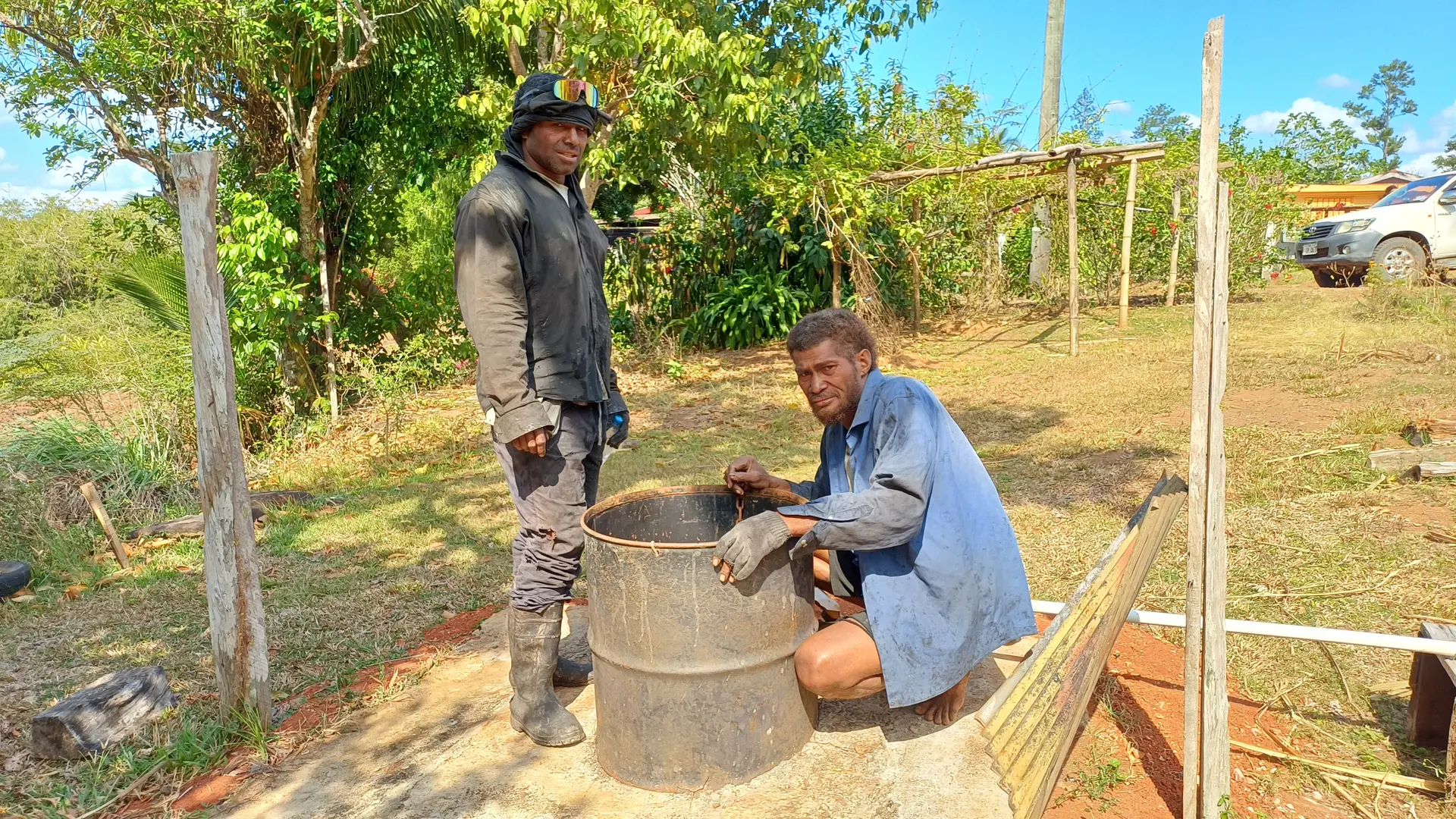
Sugarcane labourers Kevarieli Nacuru and Viliaseri Matebalavu looking at dried up well at Tabia, Labasa on October 21, 2026.
Photo: Shratika Naidu
Sugarcane farmers and labourers in Labasa are already feeling the effects of El Niño, with prolonged dry weather drying up their water sources, including wells and boreholes.
For some families, water shortages are a recurring problem at this time of year, but the current situation is worse than in previous years.
Tabia sugarcane farmer Rajesh Chand said his area had no Government metered water supply, forcing residents to rely on their own water sources.
Related stories
“We rely on our own water source and for my family it has been a well and recently a borehole,” Mr Chand said.
The 61-year-old has 15 sugarcane labourers working on his 20-acre farm, all of whom need water for drinking, cooking and other daily activities.
Mr Chand said that after transporting sugarcane to the Labasa mill in his tractor, he collected water from nearby rivers in buckets for his workers to use for household chores and meal preparation.
He said his family had experienced water problems for four generations.
“I have been working as a sugarcane farmer for 20 years and looking at the ongoing sugar industry crisis, water problems and now El Niño, I think there is no future in the sugarcane farming business,” he said.
“We just have to wait for the land lease to expire or death to come because it seems like no Government wants to assist us, even though numerous attempts have been made by advisory councillors to resolve the water issue in Tabia.”
Mr Chand said that when he requested water deliveries by truck, authorities supplied between 2,000 and 4,000 litres a month to fill his household water tank, which he said was still insufficient.
Kevarieli Nacuru, the headman of the sugarcane labourers from Valeni Village working on Mr Chand’s farm, said the shortage had made daily life difficult.
“Sometimes we can only use water to drink and cook food and bathe every second day because water was not enough,” Mr Nacuru said.
“We work under the sun and rain cutting cane, and it’s important to have a bath every day, but we have to adjust with whatever is available.”
The Ministry of Agriculture, Waterways and Sugar Industry said some parts of Fiji were currently affected by El Niño.
El Niño can bring drier conditions and reduced rainfall across Fiji, affecting water availability, crops, pasture and livestock.
The ministry advised farmers and communities to prepare early and follow updates and advisories from the Fiji Meteorological Service and the Ministry of Agriculture, Waterways and Sugar Industry as conditions develop.