Fijian conjoined twins successfully separated in Saudi Arabia
Surgeons separated the sisters’ shared organs before beginning reconstruction following the complex procedure.
Saturday 17 October 2026 | 07:00
Updated 17 October 2026 | 08:03 FJT
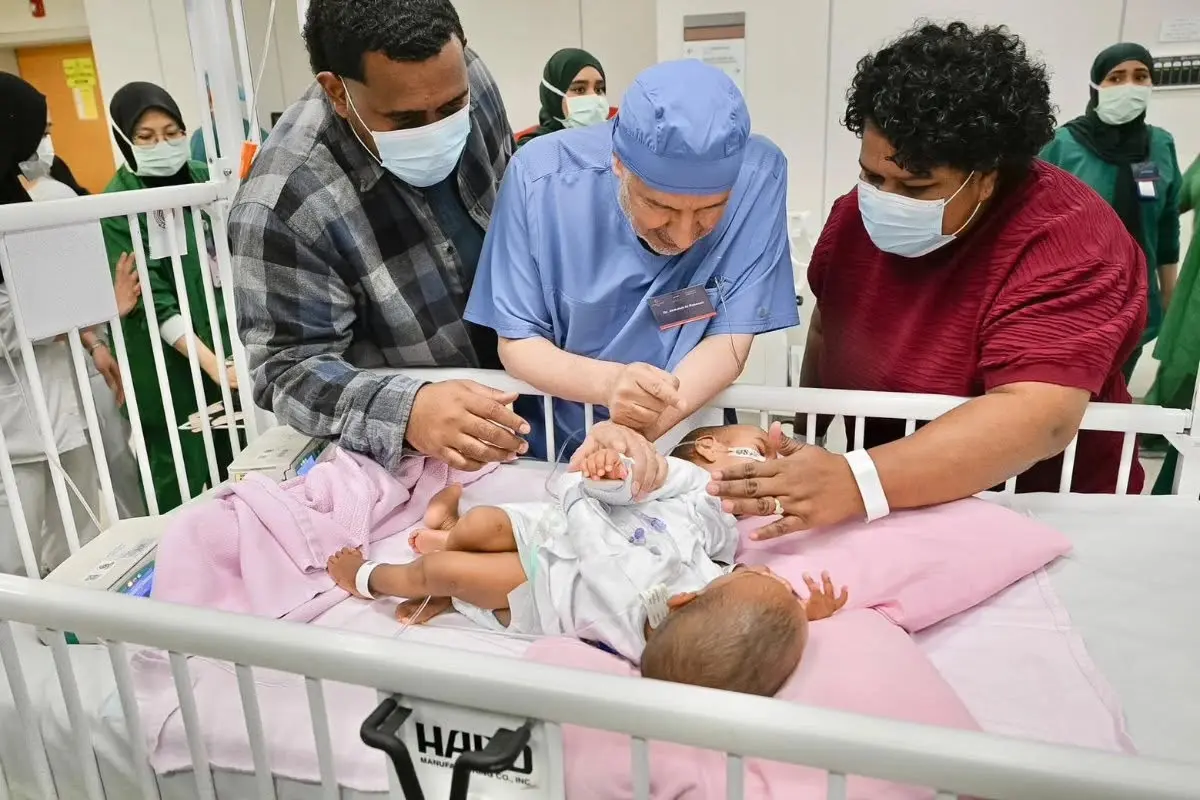
Dr. Abdullah Al-Rabeeah inspecting conjoined twins Jasepeli and Desicia ahead of the operation as their parents wish them well.
Photo: KSrelief
Fijian conjoined twins Jasepeli and Dicecea Kikau have been successfully separated following a 12-hour, 45-minute operation at King Abdullah Specialized Children’s Hospital in Riyadh, the Saudi Press Agency reported.
The operation was the 74th performed under the Saudi Conjoined Twins Programme, bringing hope and relief to the girls’ parents after months of uncertainty over their daughters’ chances of survival.
The 13-month-old sisters were born joined at the lower abdomen and pelvis in an exceptionally rare condition known as omphalo-ischiopagus tetrapus.
Related stories
The procedure involved separating their shared liver, bowel, urinary tract and anal canal before surgeons began reconstructing the affected areas.
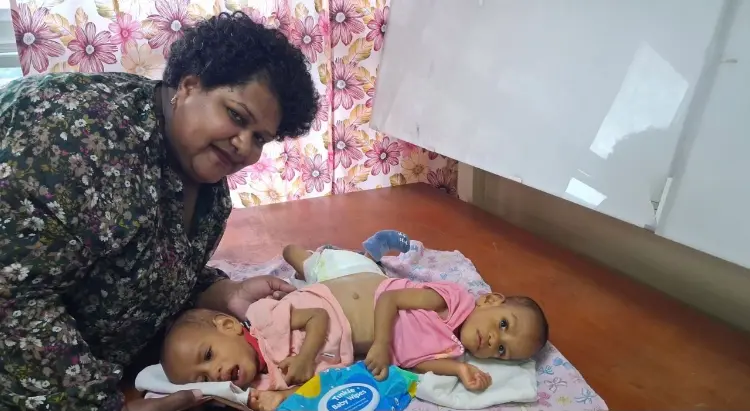
The family’s journey has also drawn support and prayers from Fijians, who are hopeful for a successful outcome as the twins and their parents begin this historic medical journey overseas.
The surgical team, led by Dr Abdullah Al Rabeeah, completed the separation phase on Thursday night, local time, before proceeding with reconstruction. In a report by Arab News, Dr Al Rabeeah described the operation as highly complex but said the initial stages had gone better than expected, with both girls doing well at the time of his update.
For their mother, Akeneta Vulimaiigiladi, the journey to surgery was filled with anxiety and hope. She said she was nervous as her daughters were wheeled into the operating theatre but became less anxious as she watched the procedure through a video link.
“We just kissed them goodbye and we wished our babies well,” she said.
Ms Vulimaiigiladi said the decision to proceed with the operation had not been easy, particularly after doctors in Fiji advised the family that the outcome could be a 50-50 situation, with one twin potentially surviving while the other might not.
Despite the uncertainty, the family held on to their faith and accepted arrangements made by doctors in Fiji for the girls to receive treatment in Saudi Arabia.
The family arrived in Riyadh on July 29. The twins spent five days in hospital before moving to a guest house, then returned to hospital in August to prepare for the operation.
According to the Fijian Government, the Saudi Conjoined Twins Programme offered the family free treatment after hospitals in the United States, the United Kingdom, Australia and Mexico sought substantial upfront payments.
The Government described the Saudi programme’s offer as a lifeline for the family.
According to the hospital, the girls were the 74th set of conjoined twins from 29 countries to undergo separation under the programme.
Born eight weeks premature, the twins also have a triplet sister, Hossana, who was not conjoined. Their case is reportedly the second recorded instance of conjoined twins in Fiji in 50 years.
Before the operation, the parents also chose Arabic names for their daughters: Noorah for Jasepeli and Sarah for Dicecea, marking a significant moment in their journey in Saudi Arabia.
While the successful separation marks a major milestone for the family, the girls’ recovery and reconstructive surgery remain important stages following the lengthy and delicate procedure.