Pacific leaders urged to put people, future generations first
Dr Manumatavai Tupou-Rosen says leadership positions should be treated as responsibilities held in trust
Thursday 13 August 2026 | 10:30
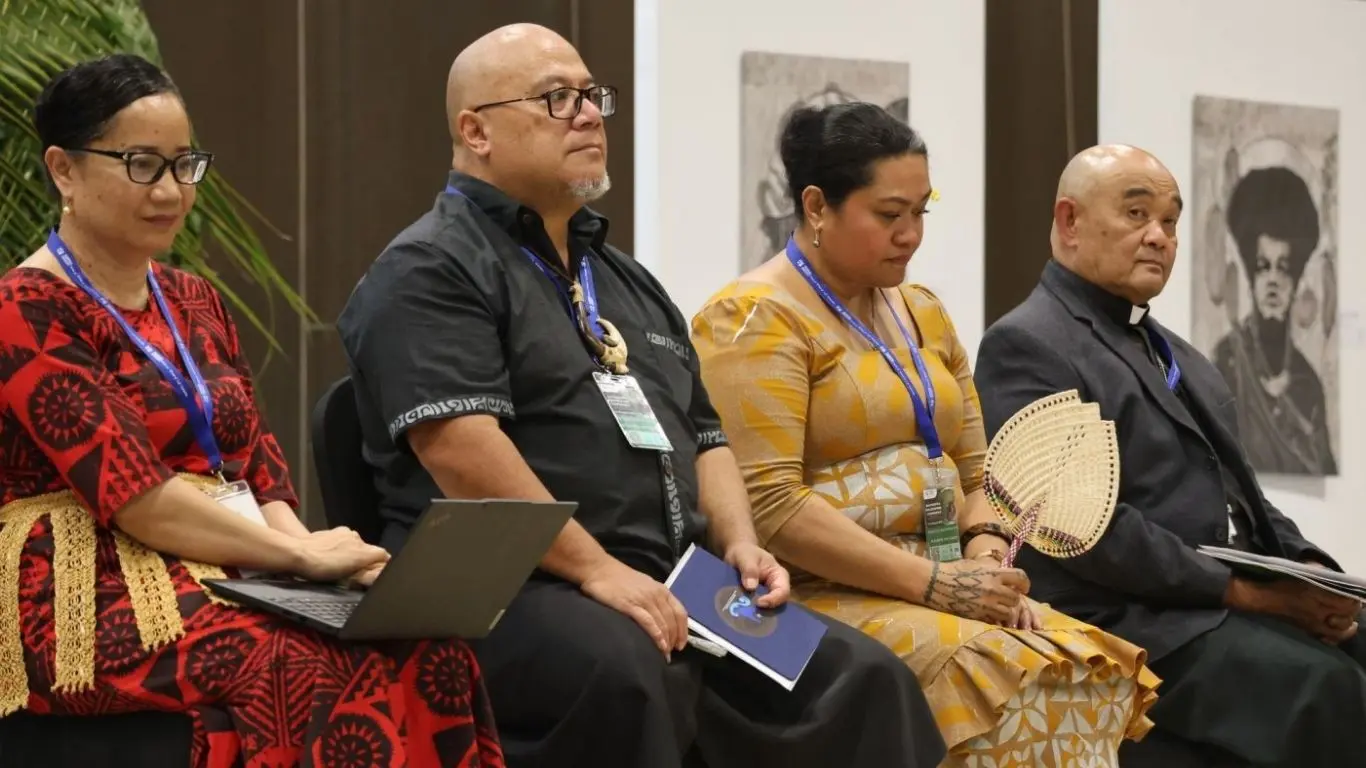
Panellists from left: Dr Manumatavai Tupou-Rosen, Taholo Kami, Leituala Kuiniselani Toelupe Tago and Head of the Catholic Church in Fiji Archbishop Peter Loy Chong during the 2nd Pasifika Philosophies Conference at the Fiji National University (FNU) Nasinu campus on August 12, 2026.
Photo: Asenaca Ratu
Pacific leaders must move away from leadership driven by power and ownership and instead embrace custodianship of their people, communities, environment and future generations, says Dr Manumatavai Tupou-Rosen.
Speaking at the 2nd Pasifika Philosophies Conference in Nasinu yesterday, August 12, Pacifika Communities University Head of the School of Ecology and Resilience Development Dr Manumatavai Tupou-Rosen said the strongest leaders were those who understood that leadership positions were not personal possessions but responsibilities held in trust for others and generations yet to come.
“The strongest leaders are not those who seek ownership. They are those who understand custodianship,” she said.
Related stories
Addressing Pacific leadership, Ms Tupou-Rosen drew on her experience working in the fisheries sector and supporting Pacific Island governments in managing the region’s tuna fishery.
She said her experience had taught her that the most important issues were not simply about fish or money, but about how decisions were made, how power was exercised and how relationships were built.
Ms Tupou-Rosen said resources entrusted to Pacific leaders must be managed for the benefit of communities and future generations.
“Those who recognise that what has been entrusted to them does not belong to them. It is held in trust for others and for generations yet to come,” she said.
She said the Pacific was facing climate change, conflict, economic uncertainty, rapid technological change, migration, social pressures and increasing disconnection from culture and community.
Dr Tupou-Rosen said the region did not have a shortage of leaders, policies or intelligence.
Instead, she said the key question was what kind of leaders the Pacific was nurturing.
She called for leaders who were grounded in identity, values and community and who could balance issues such as the environment and economy, growth and wellbeing, and power and responsibility.
Ms Tupou-Rosen said development decisions must also look beyond immediate benefits such as jobs and revenue.
She said leaders must consider the impact of development on surrounding communities, ecosystems and future generations.
“These are not simply development questions. They are leadership questions,” she said.
Ms Tupou-Rosen said Pacific philosophies, including the concept of vanua, recognised the interconnectedness of people, land, ocean, ancestors, communities and future generations.
She said this understanding should also shape the way leadership was practised in the Pacific.
“Not leadership as status, not leadership as power, but leadership as custodianship,” she said.
Ms Tupou-Rosen said Pacific leaders could learn from their ancestors, who navigated the ocean by understanding their relationship with the land, sea, stars, seasons and their responsibilities.
She challenged leaders to consider the legacy they were leaving for future generations.
“The deeper question is what kind of ancestors do we wish to become,” she said.
Ms Tupou-Rosen said leadership ultimately came down to love, humanity and responsibility.
“Leadership is love. Leadership is our humanity. Leadership is custodianship,” she said.