Why weather station data matters for insurance payouts
Ro Filipe Tuisawau says Fiji needs better weather observation coverage, particularly in remote and maritime areas.
Thursday 01 October 2026 | 11:30
Updated 01 October 2026 | 16:18 FJT

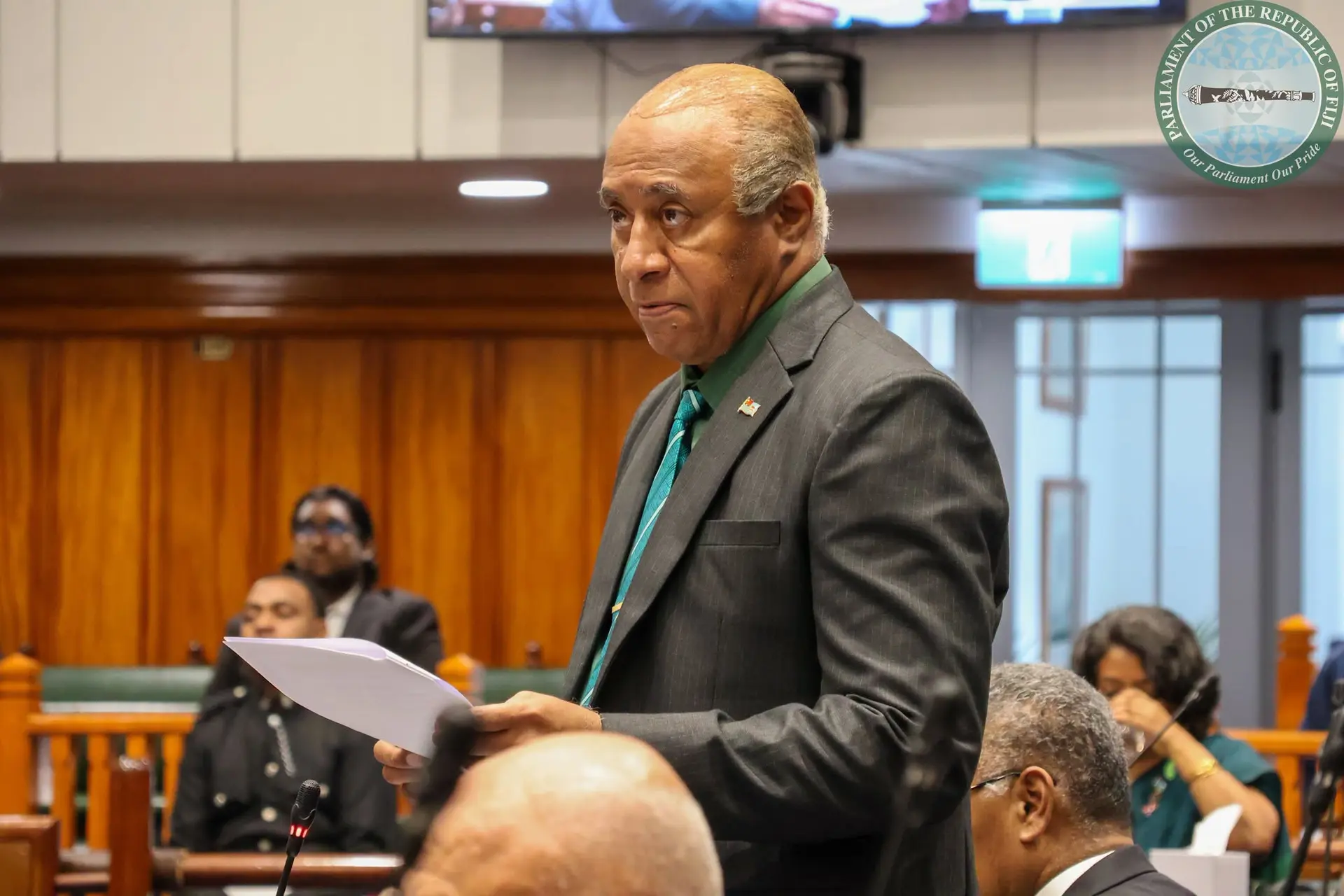
Minister for Public Works, Meteorological Services and Transport Ro Filipe Tuisawau in Parliament on September 30, 2026.
Photo: Parliament of Fiji
Fijians could suffer major weather-related damage but still miss out on parametric insurance payouts if weather stations fail to record the conditions required to trigger payment.
The risk, known as “basis risk”, has been acknowledged by the Government as Fiji works to expand the use of parametric insurance.
The issue was raised in Parliament yesterday by Opposition MP Premila Kumar, who questioned Minister for Public Works, Meteorological Services and Transport Ro Filipe Tuisawau on whether Fiji’s current weather-data network is reliable enough to support parametric insurance.
Related stories
Ms Kumar also questioned whether the network provides sufficient coverage across the country and whether the weather information used to trigger insurance payouts can be independently verified.
Mr Tuisawau said Fiji’s existing weather network provides a reliable foundation for the continued development and wider use of parametric insurance.
However, he acknowledged that the network still needs to be strengthened, particularly in remote and maritime areas.
“Further strengthening of the network is required, particularly in terms of geographic coverage across remote and maritime areas,” Mr Tuisawau said.
He said a denser network of weather observation stations would provide more localised weather information, address data gaps and reduce the difference between actual losses and the weather conditions used to trigger insurance payouts.
Mr Tuisawau said there were also challenges with localised rainfall observations, particularly when equipment experienced technical faults or communication interruptions during severe weather.
“This may contribute to what is known as basis risk, where a policyholder suffers significant damage but the observation recorded at the relevant station does not reach the predetermined threshold required to trigger a payout,” he said.
He said improving the number and resilience of weather stations would help reduce this risk.
Ms Kumar asked whether there was a plan to ensure the weather-data network covered the whole country and met a required standard, rather than leaving insurance companies to make decisions based on information that may not be properly verified.
Mr Tuisawau said the Fiji Meteorological Service was working to improve the network.
He also pointed to a 10-year Weather-Ready programme, which he said would focus on improving remote weather monitoring and upgrading infrastructure.
“Fiji had relatively good coverage across Viti Levu but needed better observation coverage in remote and maritime areas, including Lau and other outer islands,” Mr Tuisawau said.