Opinion: When leadership forgets the people
An opinion piece argues that empathy, accountability and genuine public service have been overshadowed by political survival and power struggles.
Monday 09 November 2026 | 12:30
Updated 09 November 2026 | 14:20 FJT
The tragedy of our politics is not that we lack politicians. It is that we struggle to find
politicians who genuinely understand the people they claim to represent.
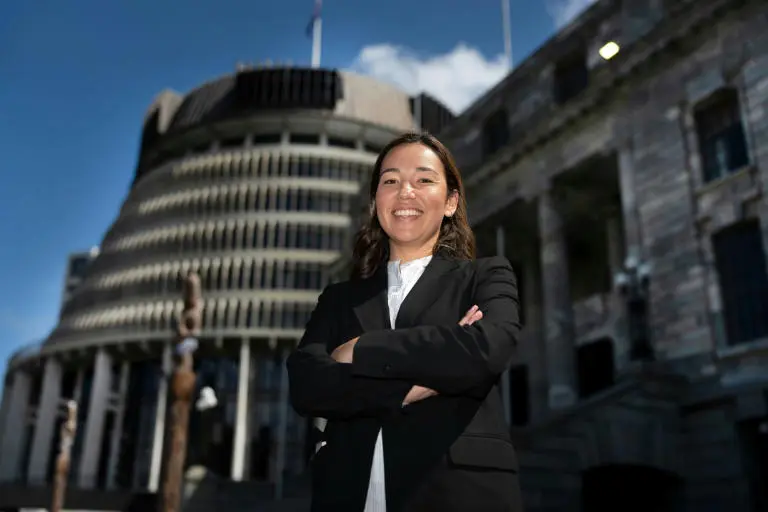
A frustrated Fijian recently asked whether Lenora Qereqeretabua could lead a political party, offering the prospect of a Prime Minister who is approachable rather than another intimidating patriarch shaped by Fiji’s coup culture.
Related stories
There is a certain political naivety in that question. Changing the personality at the top does not necessarily change the system beneath it. Nor does being a woman automatically make someone a better leader.
But beneath that frustration lies something far more revealing: a yearning for leadership that listens, understands and genuinely cares.
And therein lies a damning indictment of our current political establishment.
Where has the empathy gone?
Watching the emergence of younger political leaders during my present visit to the United States, I have been struck by something increasingly absent from Fiji’s politicaldiscourse.
Consider Michigan’s Senator-elect Abdul El-Sayed. Whatever one’s views of his political philosophy, what distinguishes his public communication is his ability to articulate the anxieties of ordinary people.
He speaks about healthcare, housing, economic insecurity and the aspirations of a generation struggling to build a future.
He connects policy with lived experience. He speaks not merely to voters, but to their circumstances.
That distinction matters
Looking across Fiji’s political landscape, from Government to Opposition, I struggle to identify a comparable voice that genuinely moves me.
Where is the politician who speaks with conviction about the indignity of poverty? Who understands the despair of young people unable to find meaningful employment? Who feels the anguish of families watching drugs destroy their communities?
Who recognizes the absurdity of iTaukei families remaining economically disadvantaged despite their extraordinary customary land inheritance?
Instead, we are treated to endless manoeuvring over personalities, political alliances, ministerial appointments and whether the Group of 11 should be accommodated within the People’s Alliance party.
These are, after all, MPs who entered Parliament on the political coattails of Messrs Bainimarama and Sayed-Khaiyum, having previously professed loyalty to the constitutional and political order they established.
Now political accommodation appears more urgent than any convincing explanation of what principles have changed.
One wonders whether the electorate features anywhere in these calculations beyond the arithmetic of parliamentary survival.
Graduates of the colonial school of politics
Sometimes I wonder whether our politicians; including those aspiring to replace them, all attended the same colonial acting school.
The curriculum appears remarkably consistent: cultivate authority, demand respect, surround yourself with loyalists, dispense patronage, speak condescendingly to the electorate and confuse occupying public office with possessing wisdom.
The costumes have changed since independence. The mentality has proved remarkably resistant.
Colonial administration was designed to govern subjects, not empower citizens. Authority flowed downwards, and ordinary people were expected to obey rather than question.
Yet 56 years after Independence, much of that relationship survives in our political institutions and leadership culture.
We replaced colonial governors with elected politicians. But did we replace the colonial understanding of power?
Even Prime Minister Rabuka, despite his experience and opportunities to reshape that culture, has struggled to transcend it. His counterparts across the political divide offer little evidence of a fundamentally different philosophy of leadership.
Some are worse than others, certainly. But the underlying instincts remain depressingly familiar. Samo samo.
This is not to deny that worth worthwhile reforms have occurred or that individuals of integrity serve in politics. Rather, it is to ask why our political system so consistently rewards loyalty, expediency and self-preservation over independent judgment, competence and genuine public service.
The problem is not merely the personalities occupying office. It is the political culture that shapes, rewards and perpetuates them.
The iTaukei paradox
Nowhere is this failure more consequential than among the iTaukei.
We are repeatedly reminded that approximately 94 per cent of Fiji’s land is under iTaukei customary ownership. Yet too many of its traditional owners remain trapped in poverty, economic dependence and limited opportunity.
How can a people inherit such extraordinary wealth in land yet struggle to secure economic dignity?
Surely this should be among the defining questions of Fiji’s unique democracy.
Instead, politicians repeatedly invoke the iTaukei as an electoral constituency, appealing to identity, tradition, grievance or fear while leaving largely untouched the structural conditions that perpetuate disadvantage.
Our people do not simply aspire to preserve their land. They aspire to prosper from it without surrendering their inheritance.
They want educated children, accessible healthcare, meaningful employment, successful enterprises, secure villages and opportunities that do not require abandoning their communities.
They want dignity, not perpetual dependency.
This is also why a revitalised, independent Bose Levu Vakaturaga matters. Not as another political instrument or ceremonial appendage of government, but as an institution capable of articulating the long-term aspirations of the vanua and holding successive governments accountable for their stewardship of iTaukei interests.
A mature political leadership should welcome such an independent voice, not seek to subordinate it.
And none of this diminishes the Government’s equal obligation to every citizen. Poverty does not become less painful because it is experienced outside one’s own community.
When politics becomes an entitlement
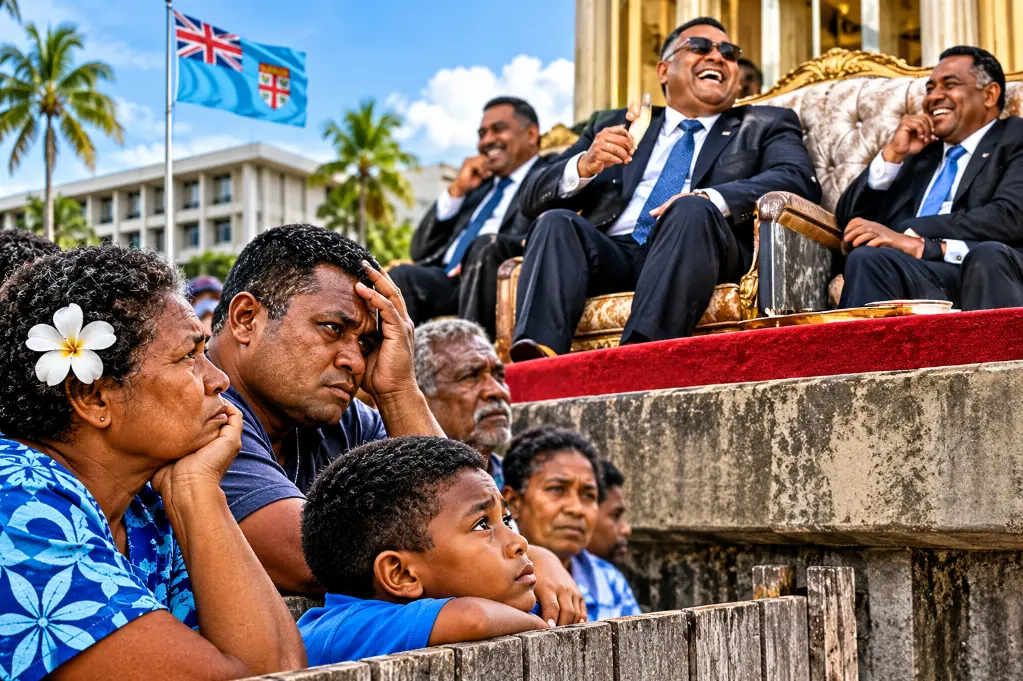
Perhaps the most troubling feature of our political culture is the apparent belief that political leadership is something to be acquired, defended and enjoyed rather than a temporary responsibility entrusted by the electorate.
Public office becomes a prize. Political loyalty becomes more valuable than competence.
Criticism is treated as disrespect. Parliamentary arithmetic displaces public purpose.
And the electorate becomes relevant principally when another election approaches.
This is why the frustration behind the appeal for Lenora Qereqeretabua deserves attention.
The question is not whether she should become Prime Minister. That is ultimately for her, her party and the electorate to determine.
The more revealing question is why the prospect of an approachable, empathetic leader should seem so refreshing that it almost sounds revolutionary.
Surely listening to people should be the minimum expectation of democratic leadership, not an exceptional virtue.
Changing governments is not changing governance
Fiji does not need another political messiah, another paternal figure or another leader who mistakes intimidation for strength.
Nor should we simply exchange one personality cult for another. We need political leaders who understand that winning an election confers a responsibility to serve, not an entitlement to rule. Leaders
prepared to work with independent institutions, including the BLV, while respecting their autonomy. Leaders who see constitutional democracy not merely as a contest for power but as a means of transforming people’s lives.
Empathy alone is insufficient. It must be accompanied by competence, courage, integrity and the willingness to dismantle structures that perpetuate inequality.
But without empathy, even technically competent government risks becoming another form of administration over people rather than leadership with them.
The younger generation increasingly recognises this distinction. Many are less impressed by titles, chiefly status, military credentials, political pedigrees or ideological labels than by whether leaders can deliver meaningful change.
Perhaps our political establishment should listen before dismissing their frustrations as youthful impatience.
For the real naivety may not lie with the Fijian asking for a different kind of Prime Minister.
It may lie with politicians who believe the electorate will indefinitely tolerate the same political circus, recycled personalities, mediocre candidates, opportunistic alliances and unfulfilled promises.
Fiji does not suffer from a shortage of people aspiring to lead. It suffers from too many who appear to have forgotten whom they are supposed to serve. And perhaps the greatest colonial inheritance we have yet to discard is the belief that political authority commands obedience rather than earns public trust.
Until that changes, we will continue changing governments without fundamentally changing governance.
We became independent of colonial rule 56 years ago. Perhaps it is time our political leadership became independent of the colonial mentality as well.