Opinion: Before you judge the vanua, first understand it
Commentary argues that meaningful debate on the Bose Levu Vakaturaga requires a deeper appreciation of indigenous language, culture and customary institutions.
Monday 02 November 2026 | 13:00
We speak confidently of multi-culturalism, equal citizenship and national unity. Yet when discussion turns to the BLV, many inhabit different worlds of understanding.
The issue is not simply whether chiefs have a place in our constitutional arrangements. It is whether those who pronounce upon the vanua understand the civilisation, language and customary relationships from which its institutions emerged.
Language is the most revealing place to begin.
Related stories
A lesson from Kenya
I lived in Kenya for more than a decade, and the contrast is instructive. Many Kenyans of Indian descent speak Swahili, not because they are inherently more culturally sensitive, but because history, commerce and daily interaction made it a practical bridge between communities. After independence, Swahili also became an instrument of national identity.
Fiji followed a different path. Colonial policies encouraged communities to develop in largely separate social and linguistic worlds. English became the language of government, law, education and commerce, while Fiji Hindi and vosa vakaviti remained central to our respective communities.
That inheritance helps explain why many non-iTaukei, including prominent political, business and intellectual figures, can spend their lives in Fiji without acquiring much understanding of vosa vakaViti. But explanation should not become an excuse, particularly for those who seek to influence the affairs of the indigenous people.
One can read the Constitution, debate customary land or pronounce on chiefly institutions without understanding the relationships and obligations that give the vanua its meaning.
There is a difference between knowing about the iTaukei and understanding the iTaukei.
Two Understandings of Belonging Much of our disagreement arises from different understandings of what it means to belong to a nation. One sees Fiji through a modern civic framework: equal citizenship, individual rights, parliamentary representation and the rule of law.
The other also recognises an inherited covenant: the enduring relationship between people, land, ancestry, customary authority and obligations passed between generations.
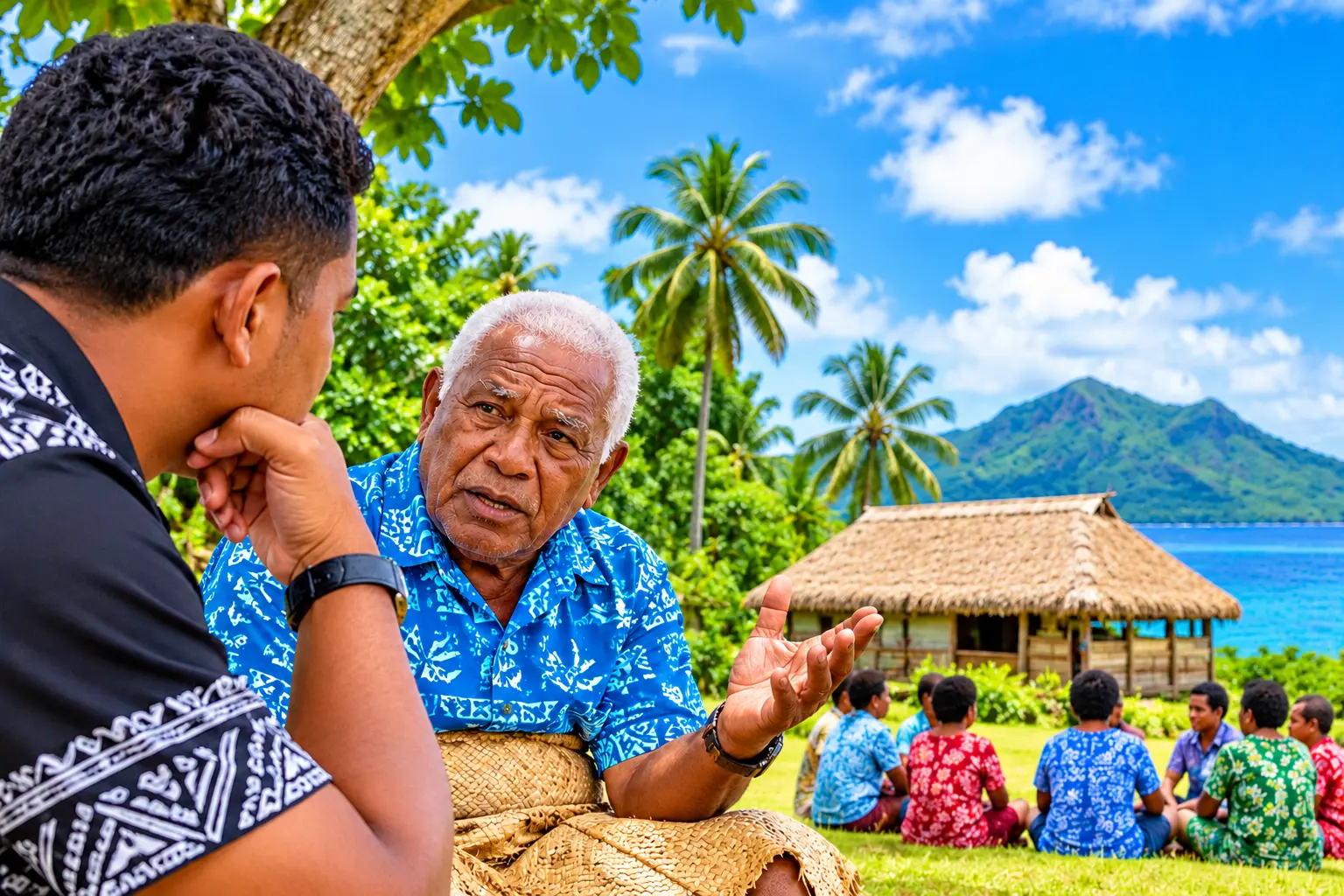
For the iTaukei, the vanua is not simply territory. It embodies identity, belonging, responsibility and continuity.
These understandings need not contradict each other. Our challenge is to hold both within a constitutional democracy that guarantees equal citizenship while recognising the distinctive place of its indigenous people.
Respect is not submission Nowhere is the gap wider than on the question of chiefs and personal freedom. Two views stand in plain opposition.
The first begins with the individual. It holds that inherited hierarchy and personal autonomy cannot coexist, and that authority no one has voted for answers to no one. If people can speak for themselves, why do they need chiefs? On this view, the vanua is a constraint, and the indigenous citizen must eventually choose between his/her chief and his/her own mind.
The second begins with the relationship. It rejects the choice itself. The vanua, it says, is not a chain of command but a web of kinship, obligation and service. The people sustain chiefly leadership; chiefs carry duties towards those they serve.
Respect is given within that bond, not extracted by force. An iTaukei may honour his chief and still vote against his preferences, and our electoral history shows that indigenous voters do exactly that.
One view measures freedom by what a person is released from. The other measures it by what a person belongs to. Each hears the other's vocabulary as either bondage or
abandonment, and neither will persuade the other while both speak past it.
Authority can be misused in any institution, but the possibility of misuse does not invalidate the foundations of the institution itself. An iTaukei should not have to abandon the vanua to prove his or her independence, any more than any citizen should abandon faith or tradition to prove freedom of thought.
Multi-culturalism must be reciprocal
Our leaders frequently speak of multi-culturalism and inclusion. But it cannot mean that indigenous institutions must continually justify their existence while other traditions are accepted as legitimate expressions of identity. Nor should iTaukei be expected to master the language and conventions of modern political and commercial life, while those who wish to influence indigenous affairs feel little obligation to understand the vanua.
Reciprocity matters. The iTaukei should understand the history of indenture, the struggles of lndo-Fijians for political equality and the anxieties of our national upheavals. Equally, non-iTaukei citizens, particularly those in positions of influence, should make a serious effort to understand the history, language and customary institutions of the indigenous people.
This is not a demand for assimilation, nor for fluency in vosa vakaViti before participating in national affairs. It is a call for intellectual humility and cultural curiosity.
The business leader negotiating with landowners, the lawyer interpreting customary rights, the academic and the politician debating the BLV should recognise that professional expertise alone does not provide a complete understanding of the vanua.
Understanding should precede judgment.
BLV is not another Parliament
The BLV is frequently discussed as though it were a competing political institution. It is not. Its authority does not originate from elections or the government of the day.
It comes from the vanua and the customary relationships that have sustained indigenous society across generations. Its concern is the enduring interests of the iTaukei: cultural inheritance, customary institutions, land and collective wellbeing.
Governments come and go. Parties rise and fall. Majorities change. The vanua endures.
That is why the BLV's institutional independence matters: the protection of indigenous identity should not depend solely on the goodwill of whichever party holds office.
Parliament represents citizens through elections. The BLV embodies a distinct sphere of indigenous customary leadership. These roles need not conflict.
The BLV is a shield for the vanua, not a sword against fellow citizens. Its recognition diminishes neither the citizenship nor the dignity of lndo-Fijians, Rotumans or any other community.
It acknowledges that our indigenous civilisation possesses institutions whose legitimacy cannot be measured solely through the ballot box.
Language carries a civilisation
Vosa vakaviti carries memory, relationships, obligations, authority and ways of understanding the world. Concepts such as vanua, veiwekani, veirogorogoci, veidokai and veiliutaki cannot be captured by literal English translation. Their meanings emerge through lived relationships and customary practice.
Those who discuss the BLV without appreciating them, risk treating a living cultural institution as just another administrative body.
This matters not because fluency confers wisdom, but because willingness to learn another community's language often reflects willingness to understand its world. We cannot expect meaningful national dialogue when those most confident in judging indigenous institutions have made little effort to understand their foundations.
Understanding before judgment
For too long, we have confused co-existence with understanding. We have worked in the same institutions, attended the same schools and voted in the same elections, yet we have not always made the effort to understand how our fellow citizens perceive belonging. The
BLV debate exposes that unfinished work.
Those who declare the institution obsolete should first ask whether they understand its purpose.
Those who argue Fiji survived without it under the previous regime, should consider whether administrative survival is an adequate measure of cultural progress. A nation can keep functioning while losing its connection to its historical identity.
Equal citizenship does not require cultural sameness, and respect for indigenous institutions does not diminish anyone else's citizenship. We belong to one nation, but our historical journeys differ.
Understanding those differences should strengthen our common citizenship, not threaten it.
Perhaps the most important question is not whether Fiji can survive without its chiefs, but whether it can truly understand itself while unwilling to understand the language, institutions and inherited obligations of the people whose homeland gave the nation its name.
We have spent generations learning to speak to one another in English. Perhaps it is time we learned to understand one another through the languages and cultures of our shared homeland.
For the vanua does not need to justify its existence to those who have yet to understand it.
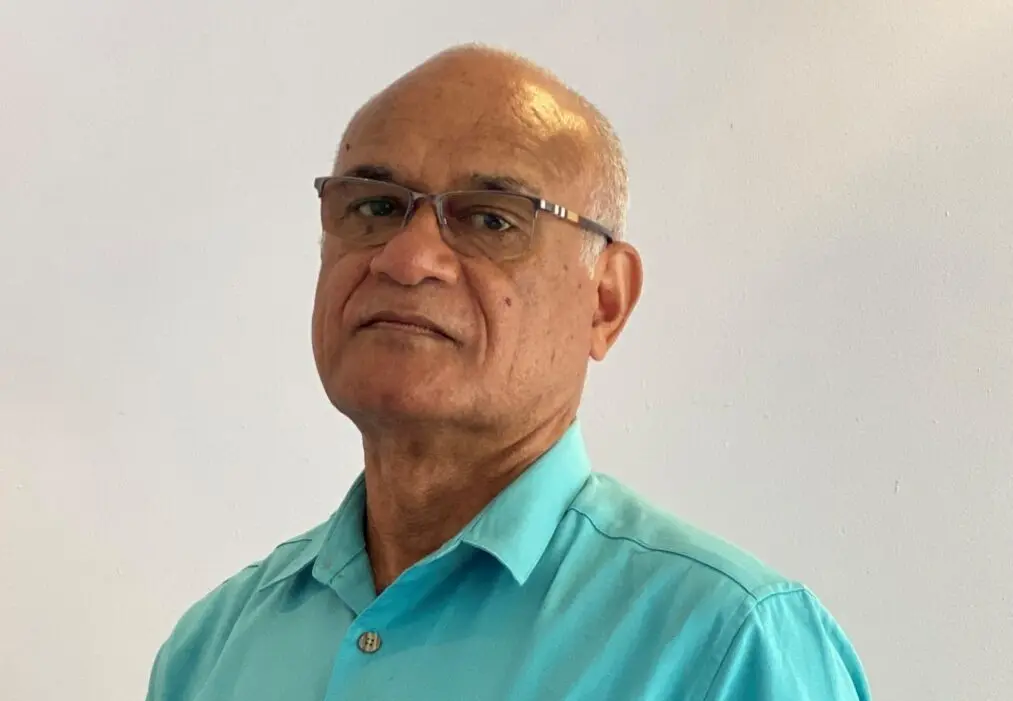
- Ro Naulu Mataitini is a member of the Bose Levu Vakaturaga and a regular columnist on current affairs. The views expressed in the article are of the author alone and not of Fiji Sun and/or its employees.