Floods, drought and rising prices: Rakiraki vendors cry for help
Market sellers say extreme weather is threatening their livelihoods as flooding and water shortages take a toll
Thursday 24 September 2026 | 04:30
Updated 24 September 2026 | 09:55 FJT

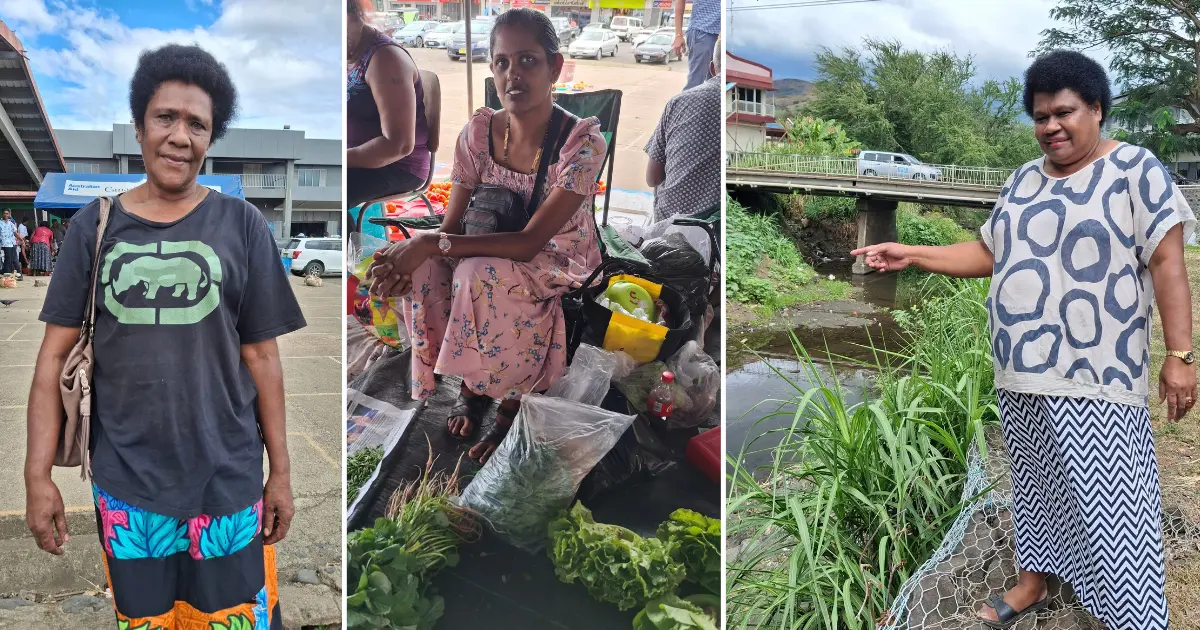
Kinisimere Qereqeretabua, Priya Punam and Tokasa Reutakibula at the Rakiraki Market.
Photo: Mereleki Nai
Rakiraki market vendors say repeated flooding and prolonged dry weather are putting their livelihoods under increasing pressure, with calls for urgent Government action to improve drainage and water management.
Kinisimere Qereqeretabua, secretary of the Rakiraki Market Vendors Association, said flooding had become a major disruption for vendors whenever heavy rain hit the town.
Ms Qereqeretabua said overflowing rivers, creeks and drains in the Naqoro flat sugarcane area contributed to flooding in Rakiraki Town.
Related stories
“When there is heavy rain, the town and market get flooded.”
She said water from the river, creeks and drains could overflow and flood the town, forcing vendors to stay away and the market to close.
For vendors who depended on daily market sales as their main source of income, she said every closure came at a financial cost.
“That prevents vendors from coming to town and the market closes. These vendors, their source of income is what they receive from the market.”
The association is calling on the Government to consider deepening the river, creeks and drains to increase their capacity to carry water during periods of heavy rainfall.
Ms Qereqeretabua said heavy rain also exposed problems with the market infrastructure.
She said parts of the market leaked during heavy rain, particularly areas where handicraft vendors operated.
The combination of flooding and leaks, she said, made it difficult for vendors to protect their goods and maintain their stalls during severe weather.
El nino brings a different threat
While heavy rain created flooding problems, Ms Qereqeretabua said prolonged dry weather associated with El Niño had created another major challenge for farmers.
She said vegetable farmers had struggled with a lack of water and had to collect water from rivers, boreholes and other sources to keep their crops alive.
“These dry weather have significantly affected especially the vegetable farmers.”
She said farmers were having to make additional sacrifices to secure water for their gardens, adding that the impact was eventually being felt in the market through higher produce prices.
“Farmers have been affected and it also affects the price in the market and it also affects our customers.”
Crop farmer Tokasa Reutakibula, 58, of Mataso in Ra, said farmers were among those bearing the greatest burden from the changing weather conditions.
Ms Reutakibula usually sold her produce along the roadside.
She said customers often had limited budgets, but farmers also faced rising costs and difficult growing conditions.
“The customers only spend according to their budget.”
She said farmers had to understand each other’s struggles and recognise that produce prices were influenced by several factors.
Ms Reutakibula said consumers should understand that higher prices were not simply a decision by farmers, but could be linked to weather conditions, water shortages and rising costs.
“This dry weather, the effect of El Niño and the prices of items are going up. We will all need to survive.”
She said farmers were also conscious of the financial difficulties faced by customers.
Ms Reutakibula appealed for greater understanding and compassion between farmers, vendors and consumers, particularly towards families struggling financially.
The concerns raised by Rakiraki vendors and farmers highlight two contrasting weather-related threats — flooding during heavy rainfall and water shortages during prolonged dry periods.
Vendors say flooding can shut down the market and cut off their primary source of income, while farmers say dry conditions are making it harder and more expensive to produce vegetables.
Both groups are calling for greater attention to drainage, river and creek management, market infrastructure and access to water.
For Rakiraki’s market community, extreme weather is no longer only an environmental problem — it is directly affecting livelihoods, food production and the prices paid by consumers.