Government Set to Regulate Native Tobacco, Suki
“The findings of this report underscore the urgent need for comprehensive policy interventions and strengthening our legal framework is a critical first step.
Thursday 30 May 2024 | 16:15

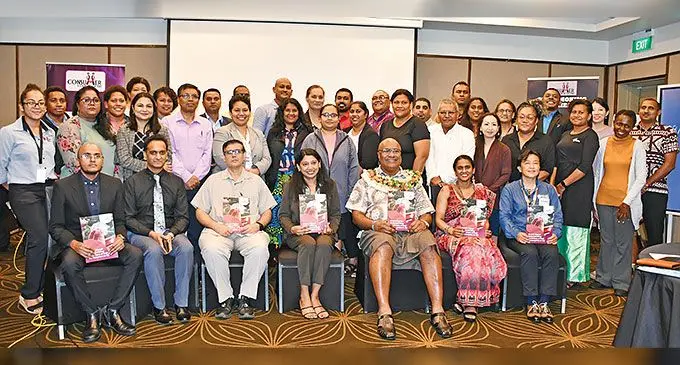
Deputy Prime Minister and Minister for Trade Manoa Kamikamica (fifth from left), Consumer Council of Fiji chief executive officer Seema Shandil (fourth from left), and guests on May 29, 2024. Photo: Ronald Kumar
The Government is looking to amend the Tobacco Control Act to also include suki (native tobacco) within its regulatory scope.
The Deputy Prime Minister and Minister for Trade, Manoa Kamikamica, said that selling this product would follow the same rules as other tobacco products, including advertising bans, labelling requirements, and health warnings.
Mr Kamikamica emphasised this during the launch of the Consumer Council’s ‘Smoke Signal’ Report on Suki Consumption in Fiji at the Holiday Inn, Suva on Tuesday.
Related stories
“The regulatory ambiguity surrounding suki poses a distinct challenge. While the Tobacco Control Act of 2010 addresses many aspects of tobacco control, it lacks specific regulations for suki, creating loopholes that hinder our public health efforts,” Mr Kamikamica said.
“The findings of this report underscore the urgent need for comprehensive policy interventions and strengthening our legal framework is a critical first step.
“Additionally, mandating standardised packaging for suki will facilitate the inclusion of health warnings and information about nicotine content, empowering consumers to make informed choices.”
Key Findings of the Consumer Council Report:
- Accessibility and affordability
The report highlights that 83 per cent of respondents find suki accessible, and 89 per cent find it affordable. This widespread availability supports livelihoods but also perpetuates tobacco addiction and related health risks.
The ease with which consumers can purchase suki, often from local markets for vendors, makes it an attractive option, especially for those in lower-income brackets.
This accessibility is a double-edged sword; while it supports livelihoods, it also perpetuates the cycle of tobacco addiction and associated health risks.
- Transition from cigarettes
Many respondents (71 per cent) have switched to suki from cigarettes due to its lower cost, indicating economic factors as significant influences on tobacco use patterns.
This shift highlights the need for targeted public health campaigns to educate on the health risks associated with suki.
This economic incentive is particularly strong in rural areas, where income levels are generally lower. However, this switch does not mitigate the health risks; instead, it shifts the burden from one form of tobacco to another, often perceived as less harmful but equally detrimental.
- Health awareness and concerns
Although some respondents are aware of the health risks posed by suki, there remains a misconception that it is safer than cigarettes.
While 55 per cent of respondents were aware of the health risks associated with suki use, a significant portion (28 per cent) believed suki has lower health risks compared to cigarettes.
This lack of complete awareness necessitates targeted public health campaigns to educate users about the potential health consequences of suki consumption.
The misconception that suki is safer than cigarettes can undermine efforts to reduce tobacco-related harm. Public health campaigns must address these myths directly, providing clear, evidence-based information about the risks of all forms of tobacco use, including suki.
Economic perspectives
Mr Kamikamica said Government recognised the economic importance of the tobacco trade, including suki, in providing livelihoods to farmers, vendors, and supply chain stakeholders; however, it was also aware of the long-term health costs associated with tobacco consumption.
“To balance these competing interests, the Government is committed to implementing a comprehensive approach considering the tobacco industry’s economic benefits and public health implications.
“This includes investing in public health measures to reduce tobacco consumption, such as awareness campaigns, smoking cessation programs, and tobacco control policies.
“Furthermore, we are exploring strategies to diversify the economy and create alternative livelihood opportunities for those dependent on the tobacco trade,” Mr Kamikamica said.
He said this could involve supporting farmers transitioning to sustainable and healthier agricultural practices, promoted alternative crops, and provided training and resources for individuals to pursue new economic opportunities.
Public health campaigns
He said public health campaigns were vital in raising awareness about the risks associated with suki use.
“These campaigns must be culturally sensitive and targeted, especially towards young adults who are the most vulnerable to starting tobacco use. Schools, community centres, and media platforms can be used to disseminate information and promote tobacco-free lifestyles.”
Feedback: lusiana.tuimaisala@fijisun.com.fj